This is Carol, Roger's wife. So many organizations have stepped forward to lend their support to Legal Schnauzer's ongoing fight for justice against this travesty against our constitutional rights and civil liberties. One of those groups is the Reporters Committee for Freedom of the Press (RCFP) based in Washington, D.C. The RCFP describe themselves on their website as: A nonprofit association dedicated to providing free legal assistance to journalists since 1970.
This outstanding organization, the Reporters Committee for Freedom of the Press (RCFP) in Washington D.C., sent a letter to the court on Nov. 6 in Shelby County, Alabama, outlining the unconstitutionality of the underlying Riley/Duke alleged defamation case and in support of Roger Shuler & Legal Schnauzer's First Amendment case. Here is the RCFP letter:
Thursday, November 7, 2013


Wednesday, November 6, 2013
PayPal Donations Support the Continuing Fight for Justice in the Legal Schnauzer First Amendment Case
This is Carol, Roger's wife. Since Roger's brutal beating and unlawful arrest on Oct 23, we have been gratified by the chorus of folks we've heard from who wanted to help us and offered to lend their support in a variety of ways in our fight for justice. Many of those people have chosen to support this fight by way of the Legal Schnauzer PayPal donation button, which can be found in the upper right-hand corner of the blog.
Fighting against the forces of evil and tyranny does not come cheaply, but the donations that have come to us via the blog's Paypal donation button have made that fight much more feasible. Hopefully, this will mean the release of Roger from Shelby County, Alabama's own little version of Gitmo sooner rather than later.
To those of you who decide to click on the button and support us with your hard-earned funds, we say a hearty "thank you." And we say that on behalf of Murphy Abigail Shuler (1993-2004), the beloved schnauzer to whom our work is dedicated.
Please know that our mission statement remains the same: "The memory of a beloved pet inspires one couple's fight against injustice."

Murphy Abigail Shuler:
the schnauzer who
inspired a blog
inspired a blog
Tuesday, November 5, 2013
American Civil Liberties Union of Alabama Intervenes in Legal Schnauzer First Amendment Case
This is Carol, Roger's wife. We have been heartened by the loud outcry of concerned citizens all over the world regarding Roger Shuler's brutal beating and unlawful arrest on Oct. 23. People everywhere, including scores of media outlets, have stepped forward to help shine a spotlight on this outrageous display of police brutality, as well as, suppression of free speech and freedom of the press. Our civil liberties are under assault and people are saying, "Enough!" Thanks to this outpouring of effort by so many, the American Civil Liberties Union of Alabama has graciously agreed to step in and lend their assistance by filing motions in Roger's case. These motions were filed on Nov. 1. Below is an except from the ACLU email.
The American Civil Liberties Union of Alabama intends to file a motion for leave to appear as amicus curiae in the above cases. Our memorandum will assert that the Court’s TRO and Preliminary Injunction run afoul of both the First Amendment to the U.S. Constitution and Article I, § 4, of the Alabama Constitution. In addition, we will assert that the sealing of the record in these cases unconstitutionally impinges upon the public’s right of access to judicial records and judicial proceedings. Our only interest is in the constitutional issues that are apparent in this litigation.
Monday, November 4, 2013
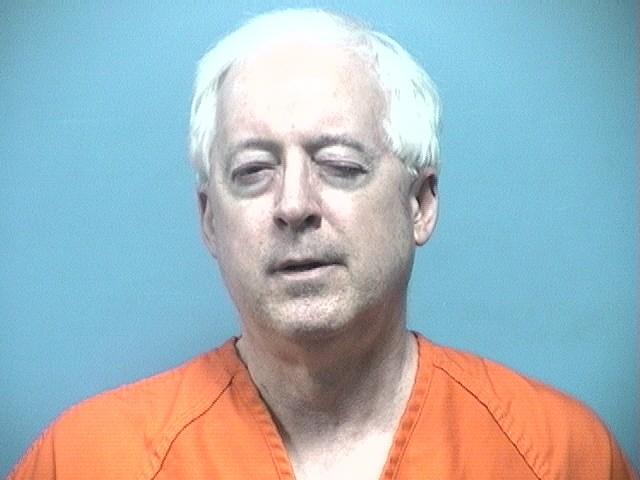
Alabama Deputies Brutally Beat & Unlawfully Arrest Legal Schnauzer Blogger, Roger Shuler
This is Carol, Roger's wife. Roger was severely beaten by four Shelby County sheriff's deputies inside our garage on Oct 23rd at 6 pm. He was hauled off to jail where he remains there without bond on contempt of court. They are also alleging he resisted arrest,but that is a lie. They never said they were there to arrest him, did not read him his rights, did not show a search warrant or arrest warrant. Bond for resisting charge is set at $1,000. It is being reported on nationally and we will continue to work to take it viral to shine a spotlight on this travesty. I was asleep in the house at the time of the assault,but they wanted to arrest me too. I awoke at 11:30 pm and found Roger missing and garage looking like a crime scene. I was horrified and thought he surely had been abducted by criminals, taken off somewhere and murdered. I was partly right. They were criminals...with badges and uniforms. And whose salaries are paid for by taxpayer dollars.
Please read the following post written by Andrew Kreig of the Justice Integrity Project in Washington D.C:
Thursday, October 24, 2013
Liberty Duke Paid A Heavy Price In Quickie Divorce That Was Filed In Talladega County
 |
| Liberty Duke |
Duke and Rob Riley are suing my wife, this blog, and me, claiming that my reporting on certain topics is false and defamatory. But court filings suggest that Liberty Duke's misconduct, of some sort, precipitated her divorce and put her in a weak bargaining position.
William Joseph Duke initiated the divorce on February 27, 2006, and the case was over in roughly five weeks--even though the couple was married 14 years, had two children, and owned a home. The husband filed the case in Talladega County, even though the couple lived in Chilton County. Talladega is known as an Alabama jurisdiction where divorces can be obtained quickly, and court filings are likely to be kept away from prying eyes in the home county.
A divorce agreement the couple reached illustrates the weak position in which Liberty Duke found herself. (See the full document at the end of this post.) Consider what happened with the Dukes' house, from the agreement:
2. Property
2.1 Real Estate
2.1.1--The parties jointly own real estate located at 1155 County Road 368, Verbena, AL 36091 (the House.) The Wife will convey to the Husband all of her right, title, and interest in the House by quitclaim deed. The Husband will have all rights to escrow account. Until August 31, 2006, the Wife will reside in the House and pay all expenses related to the House, including without limitation the mortgage. On or before such date, the Wife will vacate the House. After the Wife vacates, the Wife's obligation to pay the expenses of the House will stop.
We don't know how much the Dukes had invested in the house, but Liberty Duke gave up her share.
Did she make it up on alimony? Not exactly:
4. Alimony
Both the Husband and the Wife waive any and all right to receive periodic alimony, past, present, and future.
On top of that, Liberty Duke got stuck with a major chunk of the household debt:
3. Marital Obligations
3.1.1--The Wife will be responsible for all credit card debts of the marriage and will hold the Husband harmless from any liability arising from indebtedness related to the said accounts.
As for the children, the couple agreed to share joint legal and physical custody, with the kids' primary residence being with Liberty Duke. William Duke agreed to pay $703 a month in child support, but the overall document gives the impression he could have gotten away without paying anything. One assumes, and hopes, that he cares enough for his kids to not go that route--no matter what issues he might have with their mother.
Court papers from Talladega County in 2006 indicate Liberty Duke sure did something that ticked off her ex husband--and she paid for it dearly.
Wednesday, October 23, 2013
Riley and Garrison Lawsuits Against Legal Schnauzer Feature Fraudulent Conduct Right Out Of The Gate
 |
| Jessica Medeiros Garrison |
Aside from the lawsuits' merits (or lack thereof), we see an alarming trend involving the plaintiffs. They and their associates can't even get the complaints served without engaging in fraudulent conduct. And I don't use the "f word" casually here. The cases hardly are off the ground, and court documents show that individuals acting on the plaintiffs' behalf have engaged in fraud on the court.
We already have reported on the improper service that has been attempted in both cases--via a thuggish private process server in the Garrison case; via a Shelby County deputy and his unconstitutional traffic stop in the Riley matter. I filed documents in both cases late last week, seeking to have service quashed.
(See Motions to Quash at the end of this post. The version of the Riley document seen here is not official. It does not include a time stamp because the Shelby County civil clerk's office was closed on Wednesday, when we filed it. We were instructed to place it with the criminal clerk's office, with assurances it would be properly time stamped.)
Some might view service-related matters as mere technicalities. But that is not how the law views them. It is not uncommon for a lawsuit to be dismissed in its entirety due to improper service of process. And if evidence shows that Riley and Garrison knowingly engaged in, or approved of, fraudulent conduct in the service of process, their lawsuits will deserve that fate.
Why is service so important? The same concepts generally apply in both state and U.S. courts, and they are well stated in a 2011 federal case styled Dunagan v. ABBC Inc., in the Southern District of Alabama:
This court lacks jurisdiction to enter judgment against a party that has not properly been served with process. See, e.g., Hemispherx Biopharma, Inc. v. Johannesburg Consol. Investments, 553 F.3d 1351, 1360 (11th Cir. 2008) (“Service of process is a jurisdictional requirement: a court lacks jurisdiction over the person of a defendant when that defendant has not been served.”) (citation omitted); In re Worldwide Web Systems, Inc., 328 F.3d 1291, 1299 (11th Cir. 2003) (“Generally, where service of process is insufficient, the court has no power to render judgment and the judgment is void.”).
Translation: A court has no authority over a defendant who has not been lawfully served. Can a plaintiff get around that little problem if a defendant clearly knows about the action? Nope, and that is clear from an Alabama divorce case styled Cain v. Cain, 892 So. 2d 952 (Ala. Civ. App., 2004):
Judging by the language of the trial court's August 2002 order denying of the former husband's motion to dismiss, which was entered after the alias summons and petition had purportedly been served, the trial court apparently concluded that the former husband's acknowledgment that he had actually received the trial court's order to appear, as evidenced by the former husband's July 2002 letter, was sufficient for it to also conclude that proper service of the summons and petition had been perfected. However actual knowledge of an action “does not confer personal jurisdiction without compliance with Rule 4.” Gaudin v. Collateral Agency, Inc., 624 So.2d 631, 632 (Ala.Civ.App.1993).
The Cain case goes on to make a key point: It's up to the plaintiff to ensure that proper service is completed; that burden does not fall on me or any other defendant:
When the service of process on the defendant is contested as being improper or invalid, the burden of proof is on the plaintiff to prove that service of process was performed correctly and legally.
My Motions to Quash timely challenge service in the Riley and Garrison lawsuits. Now, it is up to plaintiffs to prove "process was performed correctly and legally." They can't possibly do that because it's a matter of fact that process was not legally performed.
 |
| Rob Riley |
Even worse, documents in both cases indicate that the individuals who purported to complete process have made false or incomplete statements under oath to the court. Could that constitute perjury that would merit stiff sanctions against those who made the statements--and those who put them up to it?
If the rule of law still means anything in Alabama, the answer should be yes. In the "reality bites" world of Alabama courtrooms, who knows what will happen?
The fundamental question is this: Do Alabama judges have the cojones to hold GOP power brokers Rob Riley and Jessica Garrison accountable for their bogus attempts to serve process on me (and my wife, in the Riley case)?
We will be on hand to make sure you learn the answers.
(A footnote: We are making progress in identifying the process server who claims he "personally served" me by throwing documents down our driveway, toward the garage, while making no contact with anyone living at our house. The service return includes an illegible signature, but the address is 2012 Magnolia Ave., Birmingham, AL, with a phone of (205) 930-9333. That apparently is home to a company called Investigations Inc., which has a Web site at investigationpro.com. The site's "About Us" page tells us the company is owned by one Charles Hopkins (hopkins@investigationpro.com). Hopkins, or someone who works for him, is anything but a pro; "fraud" would be a more fitting term. More importantly, whoever filed a document stating he personally served me committed a fraud on the court.)
(To be continued)
Jessica Medeiros Garrison's Connections To Bill Pryor Shine Spotlight On Her Hypocrisy About Tobacco

This comes to mind after recently reviewing a document in a divorce/custody case involving Republican operative Jessica Medeiros Garrison and Tuscaloosa school board president Lee Garrison.
Jessica Garrison complains in the document that her ex husband and his current wife are cigarette smokers, causing allergy problems during visitations for the son she has via Lee Garrison. This might be a legitimate concern in a custody case, and as a non-smoker myself, I'm not a big fan of any human (child or otherwise) being forced to inhale second-hand smoke. But coming from Jessica Garrison, it induces guffaws.
That's because it's well documented that Ms. Garrison is philosophical "best buds" with current U.S. Circuit Judge and former Alabama Attorney General Bill Pryor. In fact, she stated in an interview earlier this year that Pryor is her professional mentor--even though he might accurately be described as one of the most notorious tobacco-industry whores in American history.
(We probably can safely assume that Jessica Garrison also has adopted her mentor's strident anti-gay stance. Given what we've learned in recent weeks about Bill Pryor's ties to 1990s gay porn . . . well, that makes mentor and mentee hypocrites of Bunyanesque proportions.)
Is Jessica Garrison even aware how absurd it is for her to claim Bill Pryor as a mentor while decrying the effects of cigarette smoke? I doubt it, so we will spell it out.
First, let's consider that statement from the divorce/custody document. (See full document at the end of this post.) It was part of a general attack on her ex husband that Jessica Garrison used in effort to maintain primary custody of their son. Here is the key part:
The father has repeatedly exhibited a willingness to forfeit time with his son to pursue recreational and social activities that often involve excessive drinking and late nights. He also admittedly has had a gambling problem and takes controlled medications for which he has no prescription or medical need. The father also has a bad temper and a consistent tendency to rage, often in the presence of the child. Moreover, the father and his wife are cigarette smokers and have pets, both of which contribute to the child's ongoing allergies.
Who can Jessica Garrison thank for smoking's pervasive presence in American culture, especially in Alabama? Well, in part, the thanks should go to her mentor, Bill Pryor.
First, we must apologize to whores everywhere for comparing them to Bill Pryor and tobacco. That's a true insult to all self-respecting prostitutes, who actually fill a need in society--unlike Bill Pryor and the cigarette industry.
This all dates to 1997, when Mike Moore, a progressive attorney general in Mississippi, launched litigation to force the tobacco industry to help pay for health-care costs associated with smoking. Billions of dollars were at stake, and the lawsuits would have major implications for the political prosecutions of Don Siegelman in Alabama and Paul Minor in Mississippi. We covered that in an October 2007 post titled "Siegelman, Minor, and Tobacco."
 |
| Bill Pryor, Jessica Garrison and U.S. Sen. Jeff Sessions |
In 1997, after Mississippi and other states led the legal charge against the tobacco companies by filing lawsuits seeking compensation for treating tobacco-related illnesses, Alabama's refusal to join its neighbor to the west ignited a political firestorm.
Then-governor Fob James sided with Attorney General Bill Pryor, who adamantly opposed suing the industry, calling it bad law motivated by greedy trial lawyers. Siegelman did battle with James and Pryor in the media, condemning them for not joining the growing number of states suing the industry and accusing Pryor of being too close to the tobacco industry.
When it became clear that Alabama would not hop on board, Siegelman, though acting in his capacity as a private attorney, met with leaders at USA and the University of Alabama-Birmingham to urge them to sue cigarette makers. The argument was that the hospitals operated by both universities spent millions of dollars treating tobacco-related illnesses.
USA hopped aboard. UAB did too, before bowing out at Pryor's urging.
The Mobile paper did not get that last part quite right. Administrators on the UAB campus in Birmingham wanted to join the lawsuit. But Pryor persuaded members of the University of Alabama Board of Trustees, based in Tuscaloosa, to vote against it. On a 10-2 vote, the UA Trustees stayed out of the lawsuit. That meant the University of South Alabama received about $20 million over 10 years, while UAB got nothing.
An Associated Press article from the time provides insight on some of the "reasoning" behind UA's no vote.
The bottom line? Bill Pryor went to extraordinary lengths to ensure that Birmingham's largest health-care provider missed out on roughly $20 million to which it was lawfully entitled. And it was all so Pryor could protect his benefactors in the tobacco industry.
Jessica Garrison clearly enjoys reaping the benefits of her association with Bill Pryor. She now works for the Republican Attorneys General Association (RAGA), which Pryor started.
So here is some Legal Schnauzer advice for you, Jessica: If you want to continue riding the Pryor gravy train, please keep your trap shut about the dangers of smoking. It makes you look like an outsized hypocrite, even among Republicans.
Tuesday, October 22, 2013
How Did Jessica M. Garrison Pay A Modest $30,000 For A Mountain Brook House Valued At $400,000?
 |
| Jessica Garrison's house in Mountain Brook. |
Jessica Medeiros Garrison, who has engaged in a long-running extramarital affair with Strange, lives at 119 Main Street, in the Crestline section of Birmingham's most exclusive suburb. The house has 2,213 square feet and has an appraised value of $439,900, in part because it is zoned for the most prestigious school district in Alabama.
Property records show the sale of the house was completed "by public outcry" on the steps of the Jefferson County Courthouse in July 2012. But a document from Garrison's divorce/child custody case, dated May 23, 2012, shows that Garrison already had an address of 119 Main Street, Mountain Brook, Alabama. (See property and court documents at the end of this post.) Andther document from custody case shows Garrison had made arrangements to live in Crestline as early as 2011.
How did Garrison have the Mountain Brook address in May 2012, when the house was not sold until July 2012? We tried to ask Garrison that question, and others related to the real-estate transaction, but our query was met two days later with a letter from attorney Bill Baxley, threatening a defamation lawsuit.
That leaves the impression that the home purchase is a mighty sensitive subject, for some reason. We know that Garrison's ability to move into that particular home was crucial in the custody case that grew out of her divorce from Lee Garrison, the recently elected chair of the Tuscaloosa City School Board.
Jessica Garrison initially had taken a job on Luther Strange's staff and was going to move with her son, Michael, to Montgomery. But when Lee Garrison challenged the move in court, Jessica Garrison gave up her job with the AG's office and began work with the Republican Attorneys General Association (RAGA), while also serving in an "of counsel" role with the Birmingham law firm Balch and Bingham.
Under the Alabama Relocation Act, the custodial parent does not need consent of the non-custodial parent if a move is within 60 miles of the non-custodial residence. According to court records, the home on Main Street is less than 60 miles, barely, from Lee Garrison's home in Tuscaloosa--and that allowed Jessica Garrison to maintain primary custody.
Property records show that Robert C. and Hilary J. Maxwell were the previous owners of the Crestline house, and they bought it on June 27, 2007. Default was made on the indebtedness, and a foreclosure sale was held on July 20, 2012, with Jessica Garrison declared the highest bidder in the amount of $30,000.
Why was Jessica Garrison bidding on the Crestline house in July--a house that supposedly was open to bids from other citizens--when she knew in May that her address was set at the Crestline residence? More importantly, how did Garrison pay $30,000 for a house that is appraised at more than 10 times that sum?
Again, we tried to pose such questions to Jessica Garrison, but we were met with a threatening letter from her attorney. There might be reasonable answers to these questions, but we can't figure out what they are--and neither can a knowledgeable real-estate source we consulted on the matter.
For the record, here is the exact language in the Mortgage Foreclosure Deed, dated July 20, 2012:
WHEREAS, Burt W. Newsome was the Auctioneer who conducted said foreclosure sale for the said Renasant Bank, and
WHEREAS, Jessica Medeiros Garrison was the highest bidder in the amount of Thirty Thousand and 00/100 Dollars ($30,000), which sum of money Renasant Bank offered to apply to the costs of foreclosure and then to the remaining balance on the indebtedness secured by said mortgage, and said property was thereupon sold to Jessica Medeiros Garrison.
NOW, THEREFORE IN CONSIDERATION OF THE PREMISES, and the amount of Thirty Thousand and 00/100 Dollars ($30,000) the said Robert C. Maxwell and Hilary J. Maxwell and Renasant Bank by and through Burt W. Newsome, the person acting as auctioneer and conducting said sale as their duly authorized agent and Attorney-in-Fact and Auctioneer does hereby GRANT, BARGAIN, SELL AND CONVEY unto the said Jessica Medeiros Garrison AS IS, WHERE IS, the following described property in Jefferson County, Alabama . . .
How do you apparently buy a house in the Crestline section of Mountain Brook for only $30,000? A lot of people in Alabama would like to be in on that secret.
We will continue to research this matter, and perhaps we will come up with an explanation that makes sense. But then we still have this question: How did Jessica Garrison know her new address in May 2012 (maybe even summer of 2011) when the property was not sold at public auction, subject to open bidding, until July 2012?
Rob Riley Is Writing Court Orders To Benefit Himself In Lawsuit Designed To Stifle Reporting
 |
| Judge Claud D. Neilson |
Jay Murrill, an attorney at Riley's law firm who is representing his boss in the case, appears to have written an order to grant a preliminary injunction and seal the public file, plus an order to hold us in contempt. If granted, the contempt order could subject us to incarceration.
How disturbing is this scenario? Rob Riley, the son of former two-term governor Bob Riley, seems to be serving as a party, legal researcher, court clerk, and de facto judge in a Shelby County Circuit Court case styled Robert R. Riley Jr. and Liberty Duke v. Roger Shuler, Carol T. Shuler and Legal Schnauzer, Civil Action No. 2013--236 and 237.
Do Rob Riley's ties to his father and related GOP heavyweights--not to mention national figures such as Karl Rove and Jack Abramoff--give him the clout to take over a court case and run it for his own benefit? That's exactly what appears to be happening.
No wonder Riley moved for the court file to be sealed, meaning public documents are not available to the public. In fact, this case is more than sealed; it has gone totally underground. When you check electronic files at AlaCourt.com and do a "party search" for my name, the Riley lawsuit does not show up.
In my experience, sealed cases generally show up on a basic docket search. Documents from the case might not be available to the public, and that seems to be standard procedure in a case that has been sealed--the divorce case involving GOP politico Jessica Medeiros Garrison and Tuscaloosa School Board president Lee Garrison is an example. (The Garrison case almost certainly was sealed to ensure that details about Jessica Garrison's affair with Attorney General Luther Strange would not leak to the public.)
Rob Riley apparently has taken sealing one step further, ensuring that a search of public records makes it appear the lawsuit doesn't exist. Mrs. Schnauzer and I only know about the documents because we are parties. And it seems likely that even we have not been provided with copies of all documents in the case.
Why is Rob Riley determined to shroud his lawsuit in secrecy? We can think of a whole bunch of possible reasons. But for now, we will focus on only one, and here it is: Records show the Riley Jackson law firm is writing orders, conducting research--pretty much running the show to benefit partner Rob Riley--and the firm is trying to hide such flagrant corruption from the public.
We have little doubt that retired Marengo County Circuit Judge Claud D. Neilson, appointed by the Alabama Supreme Court to hear the Riley lawsuit, is capable of acting in a corrupt fashion. (Neilson wouldn't be an Alabama judge if that weren't the case.) But for now, we aren't sure Neilson has done anything with the Riley case, one way or another.
Washington,D.C.-based investigative journalist Wayne Madsen noted last week Neilson's leading role in the ugly 2009 case of Herman Thomas. The former Mobile County judge faced multiple counts of sexual abuse, sodomy, and assault, but when a jury could not reach an overall verdict, Neilson stepped in and acquitted his judicial colleague.
We will take a closer look at the Herman Thomas case in an upcoming post. But at the moment, it seems Neilson has done little in the Riley case other than sign his name to documents that Rob Riley's minions prepared. And those signatures might have been stamped by someone else. Has Neilson reviewed relevant law and actually prepared orders? It doesn't look like it. Rob Riley and his lawyers appear to be doing that.
Let's consider an order that purports to hold us in contempt for failing to appear at a hearing last Thursday (October 17) on Riley's preliminary injunction. We showed in yesterday's post that Murrill entered a proposed order, with blank spaces left for someone (supposedly Neilson) to fill in the date/time and sign his name. The order was issued exactly as Murrill wrote it, with "Thursday, October 17th, 2013 at 1:15 p.m." entered by hand for the hearing and "7th day of October, 2013" entered as date of the order. (See the final order at the end of this post.)
Here is where the plot thickens. The order is signed by "Claud D. Neilson, retired circuit judge, assigned by the Alabama Supreme Court." But is that Neilson's handwriting or did someone else fill in the blanks? We have no way of knowing. But we do know that Neilson is based in Demopolis, quite a way from Shelby County, so it might be expeditious for someone to forge the judge's signature.
Aside from the signature, here is perhaps the most disturbing part: If Riley's lawyers prepared the contempt order, a reasonable person might figure they also wrote the preliminary injunction. Court documents in the case, which you aren't supposed to see, show that a hearing on the injunction was held on September 30, the day after we were "served" with court papers during an unlawful traffic stop by Shelby County deputy Mike DeHart.
On October 1, apparently less than 24 hours after the hearing, Neilson issued a four-page order, granting Riley's Petition for a preliminary injunction. The heavily footnoted document includes references to roughly 15 court cases. (See the document here; it also is embedded at the end of this post.) What are the chances that a circuit judge could, or would, prepare such a document and have it issued in less than 24 hours? The answer that forms in my mind is "slim and none."
The preliminary injunction, like the contempt order, was prepared in advance, almost certainly by Rob Riley's law office. To top it off, the preliminary injunction is filled with citations to law that are inaccurate, off point, bogus, or some combination of all three. (More on that in an upcoming post.)
Welcome to a real-time view of how law actually is practiced in Karl Rove's Alabama.
You know what they say about bacon: You might like to eat it, but you don't want to see it being made. The same idea applies to our justice system, in Alabama and probably many other states.
Just how ugly can it get? We have much more coming.
(To be continued)
Monday, October 21, 2013
Alabama Republican Rob Riley Seeks Blogger's Arrest Over Series Of Investigative Posts
 |
| Rob Riley |
Riley, who reportedly plans to seek the U.S. House seat being vacated by Spencer Bachus, wants two citizens arrested for--get this--practicing journalism.
The preceding paragraphs were not taken from The Onion. They also were not pulled from a document that dates to Josef Stalin's Soviet Union. They are for real, and they are happening right now in Karl Rove's Alabama. (What makes my home state "Karl Rove's Alabama"? The answer can be found in Joshua Green's definitive article on the subject, "Karl Rove In a Corner," from a 2004 issue of The Atlantic.)
Rove no longer presides over the White House, but Rob Riley's actions are glaring proof that Rovian arrogance and lawlessness still reign over Alabama and other deep-red states across the South.
Riley's father, two-term GOP governor Bob Riley, took office in 2002 on the "strength" of blatant election theft that Rove acolytes almost certainly engineered. Bob Riley also benefited from $20 million that GOP felon Jack Abramoff has admitted funneling into Alabama because a proposed education lottery from Democrat incumbent Don Siegelman posed a financial threat to Abramoff's Indian-gaming clients in neighboring Mississippi.
The skinny? Rob Riley is deeply connected to some of the most corrupt activities in modern American political history. So it should be no surprise that Riley objects to reporting that calls his "pro family" public stances into question. It also should be no surprise that Riley is trying to quash our reporting on the subject, especially now that Spencer Bachus has surprised many observers by deciding to abandon his safe Congressional seat.
How exactly is Rob Riley trying to circumvent the First Amendment and force our reporting out of public view? The latest salvo is found in a cover letter and proposed court order, dated October 7 and prepared under the name of Jay Murrill, an attorney in the Riley Jackson law firm. (See a copy of the cover letter and proposed order at the end of this post.)
The proposed order explicitly seeks to have my wife and me arrested if we failed to appear at a court hearing that was set for last Thursday (October 18) at the Shelby County Courthouse in Columbiana. The hearing was designed to hold us in contempt for refusing to abide by an unlawful preliminary injunction. Here is the key segment of the proposed order:
Pursuant to Ala. R. Civ. P. 70A(c)(2), Respondents [Mrs. Schnauzer and me] are hereby notified that failure to appear at the aforesaid hearing may result in an issuance of a writ of arrest pursuant to Ala. R. Civ. P. 70A(d) to compel the Respondents' presence.
Did we attend the hearing at Rob Riley's kangaroo court? No, we did not--and here are three reasons why:
* We have not been lawfully served with the summons and complaint, meaning the court has no jurisdiction over us. Shelby County Sheriff's deputy Mike DeHart "served" us during the course of an unconstitutional traffic stop, and service has been challenged as improper and invalid;
* We were not given lawful notice of a hearing on the preliminary injunction, meaning no such injunction currently exists under Alabama law;
* Such an injunction violates the "prior restraint" doctrine that forbids injunctions in defamation lawsuits. Prior restraint grew out of the First Amendment to the U.S. Constitution and has only been around, in one form or another, for about 230 years.
In a semi-functional democracy, Rob Riley would be embarrassed to file such a proposed court order. Retired Circuit Judge Claud D. Neilson, who was appointed by the Alabama Supreme Court to hear this case, would be embarrassed to even think about granting it.
But this is Karl Rove's Alabama. Long-settled law and constitutionally guaranteed civil rights mean little or nothing here.
(To be continued)
Subscribe to:
Posts (Atom)