Showing posts with label Sara Rafsky. Show all posts

Monday, March 23, 2020

Journalism watchdog group designates my "arrest for blogging" in Alabama as a "censorship violation," proving Rob Riley is a liar and Claud Neilson is a fraud


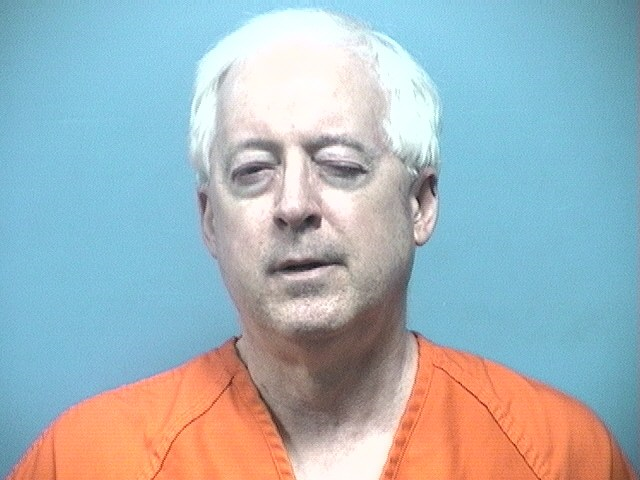
My mugshot from the Shelby County Jail in Alabama.

We recently discovered that my 2013 "arrest for blogging" in Shelby County, Alabama, has been designated a "censorship violation" by the Committee to Protect Journalists (CPJ). That teaches us at least three important characteristics about the defamation case -- a 100 percent civil matter -- brought by Republican thug Rob Riley and lobbyist Liberty Duke, that caused me to spend five months in the Shelby County Jail and become the only U.S. journalist to be imprisoned in the past 14 years.

Our research indicates I am the only American reporter to be incarcerated totally outside the law -- it is legal for a court to jail a journalist for failing to turn over evidence related to a possible criminal case, but mine had nothing to do with a criminal matter -- and perhaps the only one ever to be imprisoned because of a preliminary injunction/temporary restraining order, both of which have been found to be unlawful "prior restraints" under more than 200 years of First Amendment law.

The CPJ's censorship designation also shines unflattering light on some of the bad actors who made my arrest happen, bringing a touch of Russia to the United States, well before Donald Trump aligned us with a country that is controlled by, and associated with, organized crime:

(1) Specially appointed (and retired) Circuit Judge Claud Neilson is a con man, who unlawfully acted as a one-man censor, which is plainly outside U.S. law and makes all of his rulings void as products of fraud on the court;

(2) There was no jury because Riley and Duke never asked for one. Instead, they wanted Neilson, probably under instructions from the Riley camp or its associates, to designate my reporting as defamatory without the slightest bit of discovery or deliberation by jurors. The only evidence was an affidavit from Liberty Duke, essentially claiming she had never engaged in a romantic relationship with Rob Riley; curiously, Riley never filed any document, or made any statement under oath, denying the relationship with Duke. Because I was not allowed to challenge Duke's affidavit via discovery, and no jury was involved, my reporting never has been found to be defamatory, as a matter of law. And yet, I lost five months of my freedom because of journalism that never has been found to be anything other than accurate.

(3) Rob Riley is a liar, which should not be stunning news to anyone who has followed Alabama politics over the past 20 years or so. In an interview with CPJ while I was in jail, Riley declared that the law supported his efforts. He, of course, cited no law to support that claim, and he clearly did not con the folks at CPJ; otherwise, they would not have declared the case a matter of censorship.

Let's take a closer look at these three issues, working from the bottom up:

(3) This is from a November 2013 interview of Rob Riley by CPJ reporter Sara Rafsky, titled "Censorship in Alabama's Shelby County":

Riley said in a telephone interview he has a right to seek injunctive relief in a defamation case and there is legal precedent for doing so. He said someone who decides "to make up a lie, destroy someone's reputation, that's not journalism."

Riley told CPJ: "Shuler has a history of making up things and writing things that are outlandish lies...I am going to pursue every avenue possible to me in the courts to defend my name, my family and my business...He has no proof this is true. He has just decided to be a cyber-bully and make stuff up and I've had enough."

Did Rafsky or her ogranization believe Rob Riley? Well, just look at the headline; it essentially identifies Riley as an accomplice to censorship, meaning the law provides no support for his actions. Also, consider these words from later in Rafsky's article, referencing the Reporters Committee for Freedom of the Press (RCFP):

Leading press freedom and civil rights groups say the ruling contradicts decades of First Amendment jurisprudence and does so in complete secrecy. As the RCFP said: "Neither a default judgment nor a full adjudication on the merits of the defamation claims appears to have occurred...Courts have determined that bans on speech prior to such determinations are prior restraints. The Supreme Court has found prior restraints to be presumptively unconstitutional and has never upheld one." The American Civil Liberties Union, which filed an amicus curiae brief in the case on November 1, expressed exasperation in its motion for leave to file. "Indeed, because the entire record is sealed, the ACLU is forced to rely on Internet postings of documents for information regarding the Court's proceedings. There is simply no legal justification for the filing of every document under seal," the ACLU said, noting the irony that its brief is most likely to now also fall under seal (the document was posted online by Legal Schnauzer).

Both the RCFP, in a letter it filed in the case, and the ACLU mention New York Times Co. v. United States, the landmark 1971 Supreme Court decision which allowed publication of the Pentagon Papers and appeared to settle the issue of prior restraint definitively in the United States. The ruling conceded wiggle room only for the most exceptional situations, such as publishing troop movements in wartime or preventing imminent "nuclear holocaust."

(2) Why is a judge forbidden to act as a one-man censor, as Neilson did in my case? Consider these words from Bernard v. Gulf Oil Co., 619 F. 2d 459 (5th Cir., 1980, citations omitted):

Prior restraint has traditionally been defined as a "predetermined judicial prohibition restraining specified expression . . .." Litwack, The Doctrine of Prior Restraint, 12 Harv.C.R.-C.L.Rev. 519, 520 (1977). This expansive definition has not often been further elaborated. There are, however, four separate but related features that may serve to distinguish prior restraints from limitations on free speech imposed by subsequent restraints.

1. Origin. A prior restraint is generally judicial rather than legislative in origin, although an enabling statute may authorize the judicial suppression of publication. Near v. Minnesota, supra. The essence of prior restraint is that it places specific communications under the personal censorship of the judge. Kalven, Foreword: Even When a Nation is at War, 85 Harv.L.Rev. 3, 33 (1971).

Neilson had every reason to know he could not act as a one-man censor, but he did it anyway. This again points to fraud on the court, perpetrated by Neilson and likely others, which would make all of his rulings void and subject to being vacated.

(1) Press groups have blasted Neilson for his handling of Riley, et al v. Roger Shuler, et al, and perhaps none did a more thorough job than the Thomas Jefferson Center for the Protection of Freedom of Expression, which is based at the University of Virginia. The center issues "Jefferson Muzzles Awards" each year to those who committed one of the year's "more egregious or ridiculous affronts to free expression." Neilson was an "honoree" for 2014-15, and it even drew coverage from al.com. Here is the Jefferson Center's basic citation for Neilson's "award":

Alabama Circuit Court Judge Claud D. Neilson for ignoring a basic tenant of defamation law that “equity will not enjoin a libel” and holding blogger Roger Shuler in contempt of court until he removed allegedly defamatory statements from his website. Shuler spent five months in jail before finally agreeing to remove the statements because he felt he could not endure jail any longer.

The center then takes a deep dive into issues of the case:

Alabama resident Roger Shuler is a former newspaper reporter who since 2007 has maintained the blog Legal Schnauzer. The blog aims to “scale all obstacles in pursuit of truth and justice” and since its founding Shuler has used it to allege a wide variety of illegal or unethical activities by Alabama’s public officials and political figures.

In late 2013, Shuler posted claims that Rob Riley, son of a former Alabama Governor and active member of the Republican Party, was engaged in an extra-marital affair. Riley strongly denied the allegation and went to court seeking an injunction prohibiting Shuler from writing anything further about the alleged affair and asking that all posts about Riley be removed from the blog. At a hearing in which Shuler was not present, acting Circuit Judge Claud Neilson issued the requested injunction, effectively placing a prior restraint on Shuler’s speech. Shuler did not comply with the injunction, however, and not only refused to remove his earlier posts on Riley but also soon wrote a new one. Shuler’s non-compliance landed him in jail for contempt of court. He remained in jail for 5 months until he could not bear incarceration any longer. In March 2014, Shuler had his wife remove the allegedly defamatory posts about Riley and he was released from jail.

While in many circumstances it is not unusual to find someone in contempt of court for refusing to obey a court order, it is virtually unheard of in the context of allegedly defamatory speech. Were it otherwise, individuals could effectively silence critics by merely alleging their speech to be defamatory without actually having to prove it. To avoid this, the established remedy for reputation harming falsehoods is post-publication relief, not pre-publication censorship. Yet Judge Neilson issued an injunction without any finding that Shuler’s posts about Riley were defamatory. By issuing a prior restraint on Shuler’s speech, Judge Neilson employed a legal mechanism that the U.S. Supreme Court has described as “the most serious and the least tolerable infringement on First Amendment rights.” Moreover, Judge Neilson’s unconstitutional injunction deprived a U.S. citizen of his liberty for 5 months. In hopes that it will inspire him to learn what any law student in a basic First Amendment course already knows, Alabama Judge Claud Neilson is awarded a 2015 Jefferson Muzzle.

When a law enforcement officer went to Shuler’s house to arrest him for contempt of court, an altercation occurred resulting in a resisting arrest charge against Shuler. That matter involves legal issues that are not relevant for the purposes of this Muzzle.

Many other questions arise from the trampling of the First Amendment found in Riley v. Shuler. Here are a few:

* Why did Rob Riley produce no affidavit, or any form of sworn statement, denying an affair with Liberty Duke? Why did only Duke produce such a document?

* Why did Birmingham attorney David Gespass, during two visits with me in jail, offer no path to justice? His strategy essentially was to get the whole thing over as quickly as possible, apparently to the benefit of Rob Riley, with no benefit to me. Here are words from a Gesspass letter:

"I do not think the petitioners are expecting money damages, as the complaint alleges you have no resources, but they are asking for costs and attorney fees for the injunctive relief and that can end up being tens of thousands of dollars. Thus, there is something to be said for having this case resolved as quickly as possible at the trial level and appealing the constitutional issues."

Then, we have this, from the same letter:

"Another consideration is how much discovery do you want to engage in. If discovery is conducted, they will want you to identify your source, which I would assume you would not be willing to do unless they were willing to come forward on their own. Obviously, if you do not reveal them, that will weaken your ability to defend the case, and that, too, argues in favor of getting it done quickly, and making constitutional arguments, rather than defending on the grounds that the statements were all true."

Notice the references in both statements to getting he case resolved quickly, with no mention of damages for the harm done to Carol and me. Also notice that Gespass seems to be unaware that the burden of proof is on Riley and Duke. It was their duty to prove my reporting was false, and if they fail at that, I wouldn't have to prove it is true. Gespass refers only to discovery directed at me, without mentioning the discovery (emails, text messages, letters, photographs) we could direct at Riley and Duke.

What kind of attorney is David Gespass? A piss-poor one, who in this case, apparently was trying to protect Rob Riley.

* How did Christina Crow, a small-town attorney (Union Springs) from a small-time firm who served as Liberty Duke's lawyer, wind up as the current president of the Alabama State Bar?

Sources have been providing information that shines light on all of those questions and reveals the real motivations behind a bogus defamation lawsuit that caused me to land in jail for five months.

We invite you to stay tuned


(To be continued)

Thursday, March 21, 2019

Alabama judge Claud Neilson could not come up with an answer when Dothan blogger Rickey Stokes asked what law allowed him to order my arrest for blogging


Claud Neilson
The Alabama judge who ordered my unlawful arrest in October 2013 received a phone call several months later in which he was asked -- in so many words -- "What law gave you the authority to essentially throw someone in jail for blogging?" In what should be a surprise to no one, Judge Claud Neilson could not answer the question.

The caller was Dothan-based blogger Rickey Stokes, publisher of Rickey Stokes News (RSN). I check in on Stokes' site periodically and have written several posts about it over the years. (See here and here.) But his post about the phone call to Claud Neilson escaped my attention -- perhaps because it was published on March 24, 2014, and I still was incarcerated then, with my release coming two days later, on March 26.

One of the ironies of my five-month stay in jail is that it's been almost five years since my release, and I'm still discovering reporting on it for the first time. I was doing a Google search on something the other day and up popped the Stokes-Neilson story. My reaction? "Alleluia, someone actually had the balls to confront Neilson about his actions in my case -- and I didn't even know about it."

(Note: I recently discovered the story of my incarceration prompted coverage and commentary in Russia.)

To my knowledge, Stokes is the only reporter -- non-traditional or otherwise -- who thought to interview Neilson about his decision to incarcerate a journalist, contrary to more than 200 years of First Amendment law.

I'm aware of only one other journalist who interviewed a central con artist in my story of incarceration. That was Sara Rafsky, of the Committee to Protect Journalists (CPJ), who questioned Alabama lawyer and GOP slime bag Rob Riley about the defamation lawsuit in which he and co-plaintiff Liberty Duke sought my arrest. When pressed, Riley lied his ass off, claiming there was law to support the actions he and Duke had taken. Riley, of course, could not cite any such law because none exists

Stokes' post is titled "Since October 23 in Shelby County Jail Because He Will Not Remove Article," and here is how he sets the scene:

Is the Judge lawful and correct, or is he abusing the very Constitution he was sworn to uphold?

A "civil' lawsuit has had a Shelby County man in the Shelby County jail since October 23, 2013. The lawsuit filed by FORMER ALABAMA GOVERNOR/NOW LOBBYIST BOB RILEY'S SON Rob Riley ( Attorney ) against Roger Shuler of Shelby County.

Shuler operated The Legal Schnauzer web site. Shuler wrote articles against Riley and Attorney General Luther Strange and made accusations they were having extra marital affairs. Riley and the female who was alleged to be seeing Strange filed civil lawsuits against Shuler.

Shuler was arrested on October 23, 2013 by Shelby County Sheriff Deputies. Shuler was arrested for Resisting Arrest and two counts of contempt of court. Shuler had a $ 1,000 bond on the Resisting Arrest and two no bonds on the "civil' contempt of court.

CALL TO SHELBY COUNTY JAIL

Today I called the Shelby County Jail. The person who answered said Shuler has two no bonds. My question was how long could Shuler be held on civil contempt. The person said " hold as long as the Judge wants to."

The "Judge," of course, was Claud Neilson, and Stokes was not afraid to call and put him on the spot. Stokes misspelled my name several times in the post, and I cleaned that up in the excerpt above. But, by God, Rickey Stokes proves he is a bulldog of a reporter, and he's got a "pair" -- which is more than can be said for most mainstream media (MSM) types in Alabama.

Stokes shows that he's tough enough to put a hard question to a state judge, and he's smart enough not to fall for the judge's shameless answer. In fact, Stokes is not afraid to use some colorful language to describe Neilson's action -- and believe you me, I appreciate it.


(To be continued)

Monday, December 3, 2018

Could something like the murder of Saudi journalist Jamal Khashoggi happen here? Our experiences in Alabama and Missouri suggest the answer is "Yes"


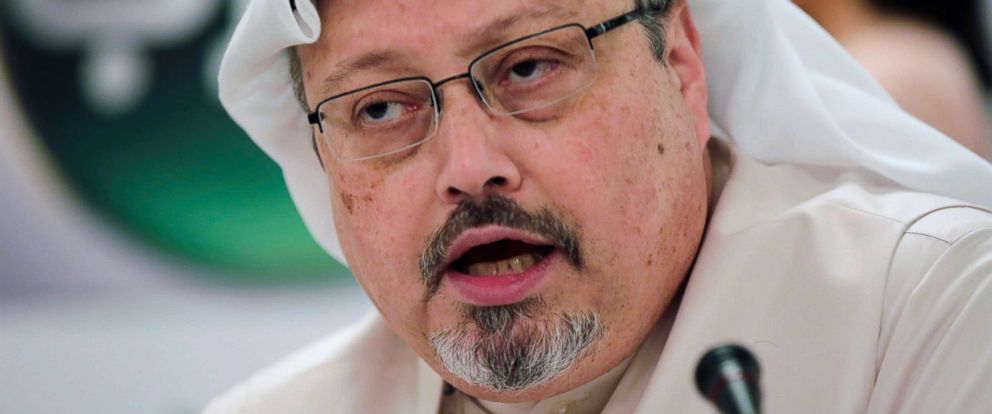
Jamal Khashoggi
The murder of Saudi journalist Jamal Khashoggi --which Crown Prince Mohammed bin Salman ordered, according to the CIA --might be the most barbaric act against an individual in most of our lifetimes. But if you compare events leading to the murder with events surrounding my kidnapping and five-month incarceration in Shelby County, Alabama, you see enough similarities to think maybe the Khashoggi murder wasn't so "out there," after all.

In one respect, the Khashoggi incident was less radical than what happened to a U.S. journalist (me) in the Deep South: At least the Saudi criminals had the decency to abduct Khashoggi in a public place; Shelby County deputy Chris Blevins broke into our house, in broad daylight, to nab me -- an act unlawful on so many levels that it's hard to list all the state and federal laws it violates. And yet, U.S. Judge Virginia Emerson Hopkins (Northern District of Alabama) has found sheriff's deputies under the state constitution, have immunity to commit such acts, as being within "the line and scope of their employment." (No kidding.)

On top of that, we've pointed to evidence that suggests Republican thugs who orchestrated my abduction included my wife, Carol, in the Rob Riley-Liberty Duke lawsuit because the plan was to kidnap and murder both of us. If so, Carol's ability to remain free and get word out to the press -- plus the thugs' apparent reluctance to break into our house a second time -- probably is all that saved us.

Were we slated to be beheaded and dismembered, as Khashoggi reportedly was? Likely not, but who knows, maybe the Saudis have given Alabama thugs ideas to implement in their future endeavors.

How similar were the Khashoggi murder and the Schnauzer kidnapping? Let's examine some of the underlying issues in both:


The judiciary as an "entry drug" for corruption

Over 11-plus years, this blog has provided details -- the kind that probably have never been reported before -- showing that American courts are awash in sewage. My research indicates perhaps the No. 1 indicator of a backward, third-world country is a corrupt judiciary -- specifically, the lack of due process, equal protection, and the rule of law. Our reporting shows the world's foremost democracy is becoming more and more like a banana republic.

Mugshot of U.S. journalist Roger Shuler
Jamal Khashoggi recognized similar, deep-seated problems in Saudi Arabia -- and speaking out about the entrenched judiciary likely contributed to his demise. Here are some of his quotes from a recent report at Newsweek:

[We shouldn't] minimize the issue of judicial reform to women only, even though it is important. . . . Since the time of King Abdulaziz, they have refused codifying the laws. And they think codifying the laws is secular. . . . This is what I mean by reform, by true reform of the judiciary, is to codify the law, introduce due process in the court system and make judges [obey] --what is the word? --a codified law…. This is the reform that is needed.

Making judges obey a codified law? Heck, Khashoggi was talking about judicial reform that would be way more advanced than anything we have in the United States. We have a codified law in America, but no one makes judges obey it. We've seen multiple instances where judges clearly have not even read the applicable law and/or did not consider it in their rulings.


Attacking your job -- your ability to make a living -- as a form of retaliation

We've written numerous posts about the cheat jobs Carol and I experienced in the Alabama workplace -- her at Infinity Insurance, me at UAB -- and evidence makes it clear they were political hit jobs, payback for my reporting at Legal Schnauzer, especially about the Don Siegelman case. Khashoggi had similar experiences in Saudi Arabia. From a report at Bloomberg:

In the 2000s, [Khashoggi] was twice fired from his post as editor-in-chief of the Saudi Al-Watan daily newspaper, which under his leadership ran stories, editorials and cartoons critical of extremists.

Yet he didn’t stay long without a job. In between, he served as an adviser to the Saudi ambassador to London, Prince Turki Al-Faisal, a former long-serving intelligence chief, and stayed on as the prince’s media aide after he was appointed the Saudi envoy to the U.S.

“I got fired from my job twice because I was pushing for reform in Saudi Arabia,” Khashoggi said in a March appearance on Qatari-run Al Jazeera’s “Upfront” program as he explained the worsening environment for journalists under Prince Mohammed. “It wasn’t that easy but people were not being put in jails. There was a breathing space.”

Of thugs and jails

Alabama thugs targeted me for jailing -- essentially arresting me for blogging. Statements from the last days of his life indicate Khashoggi spent a lot of time looking over his shoulder, as any "breathing space" dissipated under the regime of Crown Prince Mohammed bin Salman. From a report at the UK Daily Mail:

Khashoggi also criticised Prince Mohammed's lack of 'proper advisers'.

'He is moving toward a Saudi Arabia according to him, a Saudi Arabia according to Mohammed bin Salman only,' said Khashoggi, who was himself a contributor to the Washington Post newspaper.

Khashoggi described two of the prince's aides, including the since-dismissed media adviser Saud al-Qahtani, as 'very thuggish'.

'People fear them. You challenge them, you might end up in prison, and that has happened,' he said.

Lies, lies, everywhere there's lies

Almost from the moment Khashoggi's disappearance hit the press, Saudi officials produced a string of lies -- finally admitting it was a case of premeditated murder. A recent unmasking of Saudi lies came when a Turkish official said Khashoggi was strangled as soon as he entered the Saudi consulate. So much for Saudi claims that Khashoggi was the victim of a rogue extradition mission that turned into a "brawl." Can't have much of a brawl when one of the participants already is dead from strangulation.

Rob Riley and his daddy, former Alabama Gov. Bob Riley
Alabama GOP thug Rob Riley took a similar tack after I was thrown in jail. In an interview with Sara Rafsky, of the Committee to Protect Journalists (CPJ), Riley told lies of Trumpian proportions. Here is a memorable whopper from Rafsky's article, titled "Censorship in Alabama's Shelby County":

Riley said in a telephone interview he has a right to seek injunctive relief in a defamation case and there is legal precedent for doing so. He said someone who decides "to make up a lie, destroy someone's reputation, that's not journalism."

Riley told CPJ: "Shuler has a history of making up things and writing things that are outlandish lies...I am going to pursue every avenue possible to me in the courts to defend my name, my family and my business...He has no proof this is true. He has just decided to be a cyber-bully and make stuff up and I've had enough."

Is any of that true? Not one word of it. Notice that Riley does not cite any case to support his claim that the law allows for a preliminary injunction in a defamation case -- in a matter where the complained of article has not been proven to be defamatory before a jury trial, as required by law. Riley can cite no such law because there is no such law.

Notice that Riley tells a reporter that my reporting consists of "outlandish lies." Did he ever say -- under oath, in a court of law -- that my reporting on his relationship with lobbyist Liberty Duke was false. Anyone can check the public record and find the answer is "No."

Is there much difference between the oily Rob "Uday" Riley and lying royal officials in Saudi Arabia? Not that I can see.


(NoteLegal Schnauzer needs your help. Loyal readers have sustained this blog for years, and support is urgently needed now that my wife, Carol, is recovering from a fainting spell, which led to a recent broken arm. The healing process has started for Carol, but statements from her doctors indicate this likely was fallout from political thugs cheating both of us out of our jobs [and health insurance] in Birmingham -- and the stress of dealing with financial wreckage that comes from being targeted for right-wing attacks.  If you are able to help along our journalism journey, please click on the yellow donate button in the upper right corner of the blog, under the "Support the Schnauzer" headline. We are deeply grateful for your support through the years.)

Monday, June 22, 2015

Alabama GOPer Rob Riley has a fractured relationship with the truth, leading to plenty of pointed questions


Rob Riley
We have shown that Alabama Republican Rob Riley lied to The New York Times about the defamation lawsuit he and lobbyist Liberty Duke filed against my wife, Carol, and me. But why should Riley stop there? Why not extend his oily ways to an interview on the same subject with the Committee to Protect Journalists (CPJ), the organization that identified me as the only incarcerated journalist in the western hemisphere for 2013?

CPJ's Sara Rafsky interviewed Riley for an article titled "Censorship in Alabama's Shelby County." It sounds like Riley mostly blew off steam while sidestepping substantive questions, but Rafsky summarized his words with these two paragraphs:

Riley said in a telephone interview he has a right to seek injunctive relief in a defamation case and there is legal precedent for doing so. He said someone who decides "to make up a lie, destroy someone's reputation, that's not journalism."

Riley told CPJ: "Shuler has a history of making up things and writing things that are outlandish lies...I am going to pursue every avenue possible to me in the courts to defend my name, my family and my business. . . . He has no proof this is true. He has just decided to be a cyber-bully and make stuff up and I've had enough."

Let's take a closer look at the first paragraph:

* Riley says he has a right to seek injunctive relief in a defamation case--The truth: No he doesn't. Near v. Minnesota, the "foundational" 1931 U.S. Supreme Court case on the subject, makes it clear that a temporary restraining order and preliminary injunction (Riley sought both) are unlawful prior restraints under the First Amendment. Legal experts ranging from Erwin Chemerinsky on the left to Ken White (of the Popehat blog) on the center/right, have shown that Riley's statement is false.

* Riley says there is legal precedent for seeking injunctive relief in a defamation case--The truth: No there isn't. In its amicus brief to the Alabama court, the ACLU showed that key U.S. Supreme Court decisions prohibiting preliminary injunctions were not presented in the Riley/Duke case, and the injunction itself cites cases that do not support its issuance. (See ACLU brief at the end of this post.) This is from Footnote 4 in the ACLU brief, and we will address this issue further in an upcoming post:

Indeed, not only were these substantial U.S. Supreme Court cases not presented to the Court, the cases cited in the Preliminary Injunction (see p. 2 and n.3) demonstrate that injunctive relief in a defamation case requires a final determination on the merits of the litigation.

Now, let's look at the second paragraph from the CPJ article, where Riley claims that I have "a history of making things up and writing things that are outlandish lies"; he is "going to pursue every avenue possible" to defend his name, family, and business; and I have "no proof this is true."

Riley seems to be frothing at the mouth here, and his statements are so generic that perhaps it would be instructive to consider some followup questions the reporter could have asked:

* If Shuler wrote "outlandish lies" about you, why didn't you file an affidavit stating specifically how Shuler's reporting was false and defamatory? Why did you rely only on an affidavit from Liberty Duke, while you filed no similar sworn statement? Why have you never denied under oath the allegations in Shuler's reporting?

* If you were going to pursue "every avenue possible," why didn't you seek a full adjudication at trial, as spelled out in Pittsburgh Press Co. v. Pittsburgh Commission on Human Relations, 413 U.S. 376 (1973)There was no trial in the Shuler case because you didn't seek one, correct?

* Why didn't you pursue the avenue of placing your claim before a jury? Why did you allow Judge Claud Neilson to essentially serve as a one-man censor, in apparent contradiction of Bernard v. Gulf Oil Co., 619 F. 2d 459 (1980). Did you want Neilson to act as censor because he has longstanding ties to Birmingham attorney Bill Baxley, with whom you now are working in the ongoing Lee County grand-jury probe? Was Neilson hand-picked to give you favorable treatment and ensure that you would not have to face scrutiny from a jury--or answer uncomfortable questions under oath?

* You claim Shuler "has no proof this is true," but as plaintiffs, the burden is on you and Ms. Duke to prove the allegations are false, correct? Given that, why did you not engage in the discovery process to prove the allegations are false? Why did you and Ms. Duke not sit for depositions, why were there no interrogatories in this case, why did you not turn over relevant documents (e-mails, text messages, phone records, etc.)? Why did you apparently avoid the discovery process altogether?

* If you are confident about the power of your complaint, why did you try to hide it from the public by insisting that the case file be sealed? You claim that Mr. Shuler reported "lies," but as of now, no jury in any legitimate court of law ever has found his reporting to be false or defamatory, correct?

* You complain about Roger Shuler's reporting, but why did you sue his wife, Carol Shuler? Is this just beating up on an innocent party, someone who had nothing to do with your claims? What does this say about your treatment of women in general? Are you just a bully who happens to wear nice suits?

Wouldn't it be interesting if Sara Rafsky conducted a followup interview with Rob Riley and posed these questions (among others) to him? How long do you suppose Mr. Riley would stay on the phone?


(To be continued)


Wednesday, December 4, 2013

Media Coverage Continues to Expand on Legal Schnauzer First Amendment Case - Part 3

This is Carol, Roger's wife. Over the past couple days, we have written about some of the more interesting articles to appear in the media on  the Legal Schnauzer first amendment case. Another excellent article was written by Sara Rafsky of the outstanding international organization, Committee to Protect Journalists. It appeared on their website's CPJ Blog on Nov. 13. 


According to their website, the "CPJ promotes press freedom worldwide and defends the rights of journalists to report the news without fear of reprisal. We take action wherever journalists are attacked, imprisoned, killed, kidnapped, threatened, censored, or harassed."

Here is the link to the CPJ story by Sara Rafsky: Censorship in Alabama's Shelby County.

Per the bio on the CPJ website, "Sara Rafsky is research associate in CPJ's Americas program. A freelance journalist in South America and Southeast Asia, she was awarded a 2008 Fulbright Grant to research photojournalism and the Colombian armed conflict."

This article was very well done and I appreciate the hard work and effort that went into it. It is also important to note that it was featured in The Huffington Post on Nov. 14. 

Here is the link to Ms. Rafsky's story which appeared on the HuffPost Blog: Censorship at Issue in Alabama Blogger's Case.