Thursday, June 13, 2019

Scott Wells remains behind bars, while fellow Missourian William M. Walker -- caught with 180,000 files of child porn -- never faced pre-trial detention


What kind of "justice" do federal prosecutors in the Western District of Missouri practice in alleged child-pornography cases. We would call it a radically unequal form of justice.

Consider Springfield, MO, resident Scott J. Wells, who has been detained for more than two years on charges of receiving and distributing child porn. The criminal complaint against Wells describes alleged unlawful acts that would be physically impossible to commit. (Details in an upcoming post.) The indictment against Wells contains zero specifics, or particulars, about his alleged wrongdoing, meaning the document is deficient as a matter of law. (Again, details upcoming.) The indictment should be dismissed ASAP, and in fact, never should have been issued. The government has a clunker of a case, but it has held Wells behind bars, as a "threat to society" since spring 2017, with a trial set for August. (Wells detention documents are embedded at the end of this post.)

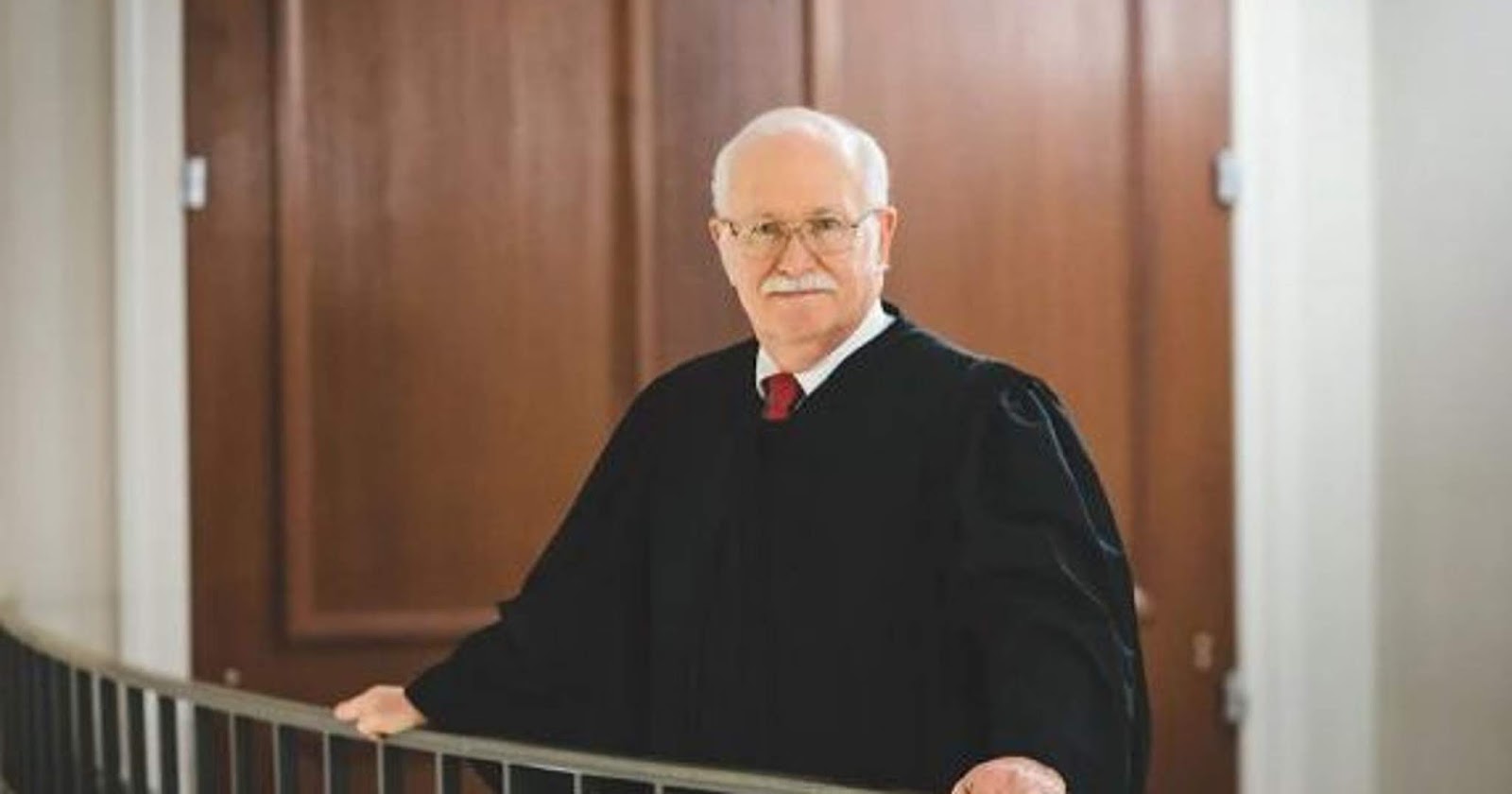
Now, consider Branson, MO, resident William M. Walker. Court documents state that investigators found more than 174,000 image files and 6,500 video files of child pornography on his home computer. The Walker investigation began in June 2016, and he pleaded guilty to receipt and distribution of child porn in 2018. Now 76 years old, Walker currently is housed at a federal prison in Oklahoma City, where he is serving a sentence of five years imposed by U.S. District Judge Doug Harpool.

Heck Walker even was in the process of downloading child pornography when investigators first appeared at his house. (Memo to those considering a "career" in child porn: Be sure you aren't downloading the stuff when the feds knock on your door with a search warrant. Sort of hurts your chances of beating the rap.)

Throughout the court process that followed his arrest, Walker never was detained. In fact, James J. Kelleher -- the same lead prosecutor on the Wells case -- did not seek detention for Walker, even though his misconduct dwarfed that alleged against Wells, in size, scope, and every other measure one might consider.

Why did Kelleher not seek to put Walker behind bars, pending a trial, as he has done with Scott Wells? Well, you know the old expression, "It's who you know, not what you know that counts"? Walker, it turns out, knows some of the most powerful people in Southwest Missouri. Peter Herschend, co-founder and owner of Herschend Family Entertainment Corp. (parent company of the Silver Dollar City theme park in Branson) spoke as a character witness at Walker's sentencing.

It's not clear if Walker knew Herschend from working at Silver Dollar City or its parent company. But it is clear that Walker benefited from connections Scott Wells did not enjoy. How outrageous was the conduct to which Walker pleaded guilty. Let's consider the Government's Sentencing Memorandum (embedded at the end of this post), under the heading "Factual Background":

Between June 28, 2016, and June 29, 2016, a law enforcement computer, using software designed to capture IP addresses of computer users attempting to download files containing depictions of child pornography via the Freenet, detected a remote user requesting a folder known as "Prelolitas-World_Anya A 9.rar." This folder is known by law enforcement to contain 123 images depicting a child under 12 years of age engaged in sexually explicit conduct. The same user also requested to download another folder containing 141 images of a child under 6 years of age engaged in sexually explicit conduct.

An investigative subpoena to Suddenlink Comunications identified the subscriber as William M. Walker, of 530 Oak Bluff Road, Branson, MO. A search warrant for Walker's residence was obtained and executed on August 10, 2016. The search yielded a stunning amount of evidence:

Upon arrival, the investigators located WALKER, the sole occupant of the home, and after advising him of his Miranda rights, questioned him with regard to his use of Freenet. WALKER acknowledged that he used Freenet to download images, but invoked his right to an attorney being directly confronted with the allegation that he was downloading child pornography.

What happened next? Well, it didn't help Walker's cause:

The investigators located WALKER'S computer in a second floor office. The computer was actively running the Freenet application. Detective Larry Roller opened the user interface and noted that the computer was in the process of downloading a batch of files known to law enforcement as containing depictions of child pornography. The computer, along with several USB drives, were seized by investigators. A forensic examination later yielded the discovery of approximately 174,121 images files and 6,572 video files containing depictions of child pornography

After letting this sink in for a moment, we have a few points:

(1) Walker actually was downloading child porn when investigators arrived at his house with a search warrant. Ouch! I'd say prosecutors had a pretty iron-clad case;

(2) Let that number of files sink in. As a total, Walker had more than 180,500 child-porn images on his computer;

(3) Lord, how did the darned thing run? How much memory did the guy have installed? How did the computer keep from collapsing under the weight of all that porn?

For our purposes, the No. 1 question at the moment is this: Why has Scott Wells been behind bars for more than two years -- even though the feds had no probable cause to arrest him or search his home; they charged him with an offense that is physically impossible to commit.

Meanwhile, William Walker, with his ties to the Silver Dollar City hierarchy, never faced pre-trial detention -- even though he was caught red-handed downloading child porn, in massive quantities.

In essence, the court decided Scott Wells is a "danger to society," while prosecutors never even tried to detain William Walker, pending trial. That's not remotely in line with the facts of the two cases.

How in the world did Scott Wells wind up behind bars for more than two years, currently in the Greene County Jail, even though he stands wrongly accused and has been found guilty of nothing? We will examine documents related to that question in an upcoming post.


(To be continued)


Wednesday, June 12, 2019

Defense counsel resorts to all kinds of preposterous scams and trickery as our "Jail Case" is pending before the U.S. Eleventh Circuit Court of Appeals in Atlanta


Virginia Emerson Hopkins
Our federal lawsuit over my wrongful arrest and incarceration in Shelby County, Alabama ("The Jail Case") is pending before the U.S. Eleventh Circuit of Appeals in Atlanta. The process presents a classic example of what defense attorneys can do when they know they have no case, know the case is rigged in their favor -- or maybe both.

Some of defense counsel's actions in Roger Shuler, et al v. Liberty Duke, et al would be comical if the issues at stake were not so serious. An appeal would not be necessary, of course, if U.S. District Judge Virginia Emerson Hopkins (Northern District of Alabama) weren't so crooked and oily that she squeaks when she walks. Hopkins is more than happy to waste your taxpayer dollars by repeatedly ruling contrary to black-letter law and forcing an appeal that should not be necessary. Hopkins and her husband -- Anniston lawyer Chris Hopkins -- essentially bought a judicial seat with donations to the Richard Shelby/Jeff Sessions/George W. Bush crime syndicate, so her bogus rulings were no surprise.

The good news is that Judge Hopkins' unlawful rulings probably rise to the level of fraud on the court, which means her orders are void, and we can pursue that avenue if the Eleventh Circuit screws us again. I'm still researching the fraud-on-the-court issue, but it could prove to be our best path to justice on all of the cases where judges have sullied the "machinery of the court" with fraudulent rulings.

History teaches that we should be prepared for a shock if the Eleventh Circuit actually dispenses justice. This is the same court that already has cheated us on a variety of issues -- employment discrimination and First Amendment violations, wrongful foreclosure, unlawful sheriff'a sale of the full ownership rights to our house, violations of the Fair Debt Collection Practices Act (FDCPA). Oh, and this is the same court that cheated former Alabama Gov. Don Siegelman and former HealthSouth CEO Richard Scrushy, forcing both men to be wrongfully imprisoned for roughly six years each.

The Eleventh Circuit process began with the filing of our appellants' brief (embedded at the end of this post). That gave defendants an opportunity to file response briefs, and most of them did so. (Note: Almost all of those documents were served to us in hard-copy format, and our scanner was stolen during our eviction in Missouri, so we have no means of converting them into a digital format for publication here. The documents can be viewed via PACER [for a fee].)  We then filed a reply brief (embedded at the end of this post, doing our best to point out the mountain of absurdities that defense counsel produced.

Hopkins primary screw-ups in he district court involved the statute of limitations for cases involving allegations of false arrest and imprisonment (as ours does) and state immunity for state agents, such as sheriff's deputies, acting outside the "line and scope of their employment."

Defense counsel must know Hopkins got it wrong on those issues because none of them made a particularly strong effort to argue for her findings. Opposing lawyers, however, came up with some real gems -- failing to get it right on even simple factual issues, matters of public record. It will take more than one post to outline all of the hilarity, but let's start with perhaps the most corrupt outfit of all -- defendant Rob Riley (and other members of his law firm) and their "counsel," Joseph Stott and Freddie Harrington, of the Birmingham firm Stott and Harrington.

Stott and Harrington
The Stott lawyers argued that our complaint was due to be dismissed because of a legal doctrine called res judicata, which essentially means the issues have been, or could have been, decided in a prior action. Another term for it is "claim preclusion." In this instance, the lawyers for Rob Riley and Co. contend our claims against them were litigated, or could have been litigated, in Roger Shuler, et al v. Jessica Garrison, et al, which we call "The House Case." Aside from the fact "The Jail Case" raises a number of claims against the Riley defendants that were not present in "The House Case," the res judicata argument has a bigger problem: There was no "prior action" to "The Jail Case," and that element must be present for claim preclusion to apply. From our reply brief:

Riley’s res judicata argument fails because it is based on the false notion that there was a “prior action” to this one. In fact, Riley admits that res judicata claim preclusion holds “. . . any claim that was, or that could have been, adjudicated in the prior action is barred from further litigation.” A simple review of court records shows there was no “prior action” to this one. The instant case (Shuler, et al v. Duke, et al) was filed on March 26, 2016. The other case (Shuler, et al v. Garrison, et al) was filed on April 29, 2016. In simple language, this case came first. Therefore, res judicata and similar doctrines, such as collateral estoppel, do not apply and do not bar the Shulers’ claims. Also, Riley falsely claims certain issues in the instant case already have been decided in the “prior action.” One, there was no prior action. Two, the Eleventh Circuit has not upheld any of the district court’s findings in Garrison. The Shulers’ appeal was (wrongfully) dismissed on alleged error in the Notice of Appeal, but no trial-court rulings were upheld in Garrison on the merits, so there were no affirmances per the Eleventh Circuit. 
(Note: We have grounds to challenge the dismissal in Garrison on "fraud on the court" grounds, which make the ruling void and subject to attack at any time because, as a matter of law, it is a nullity.)

The Riley defendants also argue our complaint must be dismissed, per the Rooker-Feldman Dostrine, which generally holds that a federal district court cannot review rulings of state courts. The Riley argument, as stated by the Stott attorneys, has a few holes. From our reply brief:

Riley’s Rooker-Feldman argument fails for multiple reasons, but the primary issue is this: Per Nicholson v. Shafe, 558 F. 3d 1266, 1276 (11th Cir., 2009), the Riley-Duke state-court proceeding has not lawfully ended because Roger Shuler had no reasonable opportunity to appeal; the 42-day window for filing a notice of appeal lapsed during his five-month incarceration. When a state-court proceeding has not ended, it cannot be subject to Rooker-Feldman. 
A second reason Riley’s Rooker-Feldman argument fails: The Eleventh Circuit has found that Rooker-Feldman does not apply to interlocutory state-court judgments, such as the preliminary injunction that caused Roger Shuler’s unconstitutional incarceration in the instant case. From "Revisiting Rooker-Feldman," Florida State University Law Review, 2009: “The circuits are split on whether the Rooker-Feldman doctrine bars suits in lower federal courts that challenge state court interlocutory orders. The Fifth, Seventh, and Eleventh Circuits use a narrow approach, applying Rooker-Feldman only to final state court judgments.” Also from "Revisiting RookerFeldman" . . .  (“Federal courts have been somewhat divided about whether Rooker-Feldman can bar lower federal-court jurisdiction when a state court has made an interlocutory ruling, such as granting a preliminary injunction.”) As noted above, the Eleventh Circuit has come down against a bar on state-court interlocutory rulings, such as the preliminary injunction at issue in the present case.

So, there you have it in plain language: The Eleventh Circuit has found that Rooker-Feldman does not bar federal review of state-court interlocutory rulings, such as the preliminary injunction that caused me to lose my freedom for five months. The Riley defendants and their defense counsel -- all of them lawyers -- should know that. But they raised the baseless argument anyway. If you ever have the misfortune to be involved in a court appeal -- federal or state -- you are likely to run across such bilge from the other side.

We've got many more examples of it, some of which rise to the level of outrageous. We will address those in upcoming posts.


(To be continued)


Tuesday, June 11, 2019

The SPLC stands behind a Spanish-language journalist detained in Memphis -- which is good -- but where were they when I was jailed in their own backyard?


Manuel Duran

The Southern Poverty Law Center (SPLC), following the recent departures of three top executives, is facing calls in some quarters for a federal investigation. How did the venerated civil-rights organization in Montgomery, Alabama, land in such an uncomfortable spot? We recently discovered an active SPLC case that -- when juxtaposed with what could be called a "non-case" -- might help provide answers to that question.

The pending case is styled Manuel Duran Ortega v. U.S. Department of Homeland Security, et al, which involves a journalist for a Spanish-language newspaper in Memphis, TN. Police arrested Duran in April 2018 at a peaceful demonstration to mark the 50th anniversary of Martin Luther King's assassination. After those charges were dropped, U.S. Immigration and Customs Enforcement (ICE) detained Duran, moved him to Louisiana, and started deportation proceedings against him. Duran now is being held at a federal detention facility in Gadsden, AL, once run by former Etowah County Sheriff Todd Entrekin, best known as the guy who stole money from an inmate-food fund to help build a beach house on the Gulf Coast.

Duran has been incarcerated at various facilities for more than a year, and SPLC is seeking his release via a writ of habeus corpus. From the writ, prepared by SPLC staff attorneys Meredith B. Stewart, Kristi L. Graunke, and Michelle Lapointe:

The actions pursued by government officials in this case threaten core First Amendment freedoms that are essential to our democracy: the right to criticize and expose the actions of government officials, and the right of members of the press to write and publish about them. Petitioner Manuel Duran Ortega is a 42-year-old journalist from El Salvador who fled to the United States in 2006 after his life was threatened. On April 3, 2018, while reporting on a demonstration in Memphis, Tennessee, Mr. Duran Ortega was illegally arrested by Memphis police and subsequently turned over to and detained by the Department of Homeland Security (DHS) in retaliation for his past critical coverage of immigration enforcement activities. Mr. Duran Ortega was arrested and is being detained by DHS in order to punish and suppress his speech as a journalist, in violation of the First, Fourth, Fifth, and Fourteenth Amendments to the United States Constitution.

What is my take on the SPLC's efforts to defend Mr. Duran? As a believer in due process, equal protection, and constitutional guarantees for all, I'm fully behind them. But what about that "non-case" referenced earlier?

Well, that one hits close to home. It involves my unlawful arrest in October 2013, with deputies from the Shelby County, AL Sheriff's Department entering our home, beating me up, dousing me with pepper spray and hauling me to jail for a five-month stay. It all was in response to an unlawful temporary restraining order (TRO) and preliminary injunction issued in a defamation lawsuit that Rob Riley (son of former Gov. Bob Riley) and his alleged mistress (lobbyist Liberty Duke) brought against me. As a matter of law, this was a 100-percent civil matter, without the slightest whiff of criminal allegations and for which -- under more than two centuries of First Amendment law -- I could not be subject to arrest over material that had not been found defamatory at a jury trial. I was jailed because of bogus rulings issued by Alabama Judge Claud Neilson, essentially acting as a one-man censor, in violation of longstanding law.

I became the only journalist in the Western Hemisphere to be incarcerated in 2013 -- apparently the only one in U.S. history to be jailed in a wholly civil matter, and the only one jailed because of a TRO or preliminary injunction, both of which are unlawful prior restraints in defamation cases. (See Near v. Minnesota.)

The story of my arrest received national and international news coverage, from The New York Times to Al Jazeera, from Think Progress to RU Posters in Russia, and dozens of sites in between. Even the right-wingers at al.com reported on it. So, there is no way the "civil rights big dogs" at the SPLC (including co-founder Morris Dees and president Richard Cohen, both recently ousted) did not know about it. The site of my beating and arrest was less than 90 miles from SPLC's snazzy headquarters in downtown Montgomery.

But on perhaps the most grotesque abuse of First Amendment rights in the modern era -- right in its own backyard -- SPLC was missing in action. The so-called "Southern warriors for civil rights" jumped on the Manuel Duran case -- and I approve of their actions in that matter -- but sat on their hands while I sat in jail for more than five months. SPLC did not even issue a one-page press release -- tsk-tsking what had been done to hammer a free press in their own neck of the woods.

To be fair, SPLC was not the only civil-rights institution to do little or nothing in my case. The ACLU of Alabama, also based in Montgomery, issued a friend-of-the-court brief (and it was well done) but that was it. To my knowledge, there was nothing to keep ACLU director Randall Marshall and his crew from taking up my case and defending it hammer and tongs.

If ACLU headquarters had issued a press statement, imagine how big the story would have become. But once the brief was entered in the record, the ACLU let me sit and rot. I'm not aware that they even issued a press release. It's almost as if they did not want anyone to know of their involvement.

Why is that? Let's return to this passage from our previous post on this matter:

Multiple press reports suggest Morris Dees' primary talent, since founding SPLC in 1971, has been separating liberals from boatloads of cash. On the flip side, he and his staff -- while promoting the notion that "hate groups" are proliferating in America -- did relatively little to stand up for those whose civil rights had been violated, often by judges, lawyers, bar associations (the legal tribe), and law enforcement, and conservative politicians.

In fact, we now known Dees long has been in bed with the very entities that tend to abuse civil rights. One source who has seen Dees operate in an up-close way tells Legal Schnauzer Dees he has a history of manipulating courts -- especially the U.S. Eleventh Circuit Court of Appeals in Atlanta -- to help ensure his allies receive favorable treatment. If this means sucking up to Republicans -- even those with records of opposing civil rights -- Dees is willing to do it.

Some have suggested SPLC practices a form of reverse racism, against white people. From National Vanguard:

"The SPLC works closely with the judiciary, law enforcement, secret police agencies, the media, and academia to quash the rights of White Americans by targeting, terrorizing, and destroying them and their families emotionally, reputationally, economically, and organizationally. . . ."

I'm not sure I buy National Vanguard's claim that SPLC intentionally seeks to abuse white people,  but they definitely are on target about Morris Dees' cozy relationship with courts, law enforcement, and the legal-tribe hierarchy (as in bar associations). It's possible SPLC did not get involved with my case because stories about defending the civil rights of a white journalists is not likely to rake in cash from liberal donors -- and raking in cash seems to be the No. 1 goal at SPLC. But I think Morris Dees and Co. let me rot because it was their buddies in the courts, law enforcement, legal tribe, etc. who caused my arrest. And SPLC did not want to shine an unflattering light on their friends and benefactors.

Roger Shuler
For example, we know the Alabama State Bar strongly discouraged an Alabama lawyer -- Greg Morris, of Fultondale -- from getting involved in my case. And that's likely because the State Bar and its members played a huge role in arranging for my arrest. Th SPLC and ACLU probably were under similar pressure not to help me.

As for the Manuel Duran case, it likely is driven by knuckleheads in the Memphis Police Department, Homeland Security, and ICE. That means the SPLC is free to go after that case because they can do it without unmasking their corrupt comrades.

We will be watching the Duran case. This is from an April 5 article at al.com:

Recently, the Eleventh Circuit Court sent Duran’s case back to the Board of Immigration Appeals. According to his attorneys, this means he could face additional months or even years in detention while his asylum claims work their way through the legal system.

This week Duran also filed a new federal lawsuit, which alleges Shelby County, Tenn. and the city of Memphis targeted Duran because of his unflattering coverage of them.
The lawsuit claims the city police had no probable cause to arrest Duran at the protest and the Sheriff’s department should not have turned him over to immigration officials.

Consider these words from the writ of habeas corpus in the Duran case:

Manuel Duran Ortega is a citizen of El Salvador who has lived in the United States continuously since his arrival in 2006. He has resided in Memphis, Tennessee, for the majority of that time. 
In 2006, Mr. Duran Ortega fled El Salvador, where he had been working as a television station manager. After a rival television station employee used his law enforcement connections to have Mr. Duran Ortega arrested on trumped-up charges, Mr. Duran Ortega reported on corruption in law enforcement and the judicial system. After his report, he began to receive death threats and escaped to the United States.

The highlighted information above sounds a lot like my experience in the United States. But the SPLC has gone to bat big-time for Mr. Duran (a non-citizen) while doing nothing for me (a citizen for 62 years).

SPLC still could help with my case, especially if its real lawyers were allowed to, now that Morris Dees is gone. What I call our "Jail Case" currently is on appeal in the Eleventh Circuit, and we soon will seek to have the case based on theft of our Birmingham home via wrongful foreclosure ("The House Case") re-opened due to massive irregularities at both the district and circuit-court levels that likely amount to fraud on the court.

Does SPLC have the guts to take on such cases, especially if they threaten to step on the toes of Morris Dees' buddies? Perhaps we will find out.

Monday, June 10, 2019

Could companies like Facebook and Best Buy face civil liability for helping law enforcement bring child-porn charges against individuals who prove to be not guilty?


Dr. Mark Rettenmaier
The ongoing Scott J. Wells child-pornography case in Missouri started when Facebook sent a "cyber tip" to federal law enforcement. A similar case in California started roughly two years ago when a Geek Squad supervisor at Best Buy reported child porn was found on a computer that had been turned in for repair.

Dr. Mark Rettenmaier, an Orange County physician who owned the computer in California, wound up facing child-porn charges that were eventually dropped. Our review of the Wells case file indicates the charges against the Springfield resident also should be dropped. In fact, I recently discovered new evidence that points to the government having no case against Wells. (More on that in an upcoming post.)

Documents in the Rettenmaier case showed FBI agents paid Best Buy employees to act as informants -- and the charges were dropped after a judge threw out almost all of the evidence as unlawfully obtained. We have reported on multiple cases where individuals lives were turned upside down because of child porn found on computers that they did not put there and were not aware of. (See here, and here.) In the Missouri case, Scott Wells has been detained in federal prison for more than two years, even though he's had no trial and been convicted of nothing.

Given the suffering wrongfully accused can experience because of baseless child-porn charges, we have this question: Is it wise for companies like Facebook and Best Buy to get involved? My answer is no. Could they face civil liability for siccing law enforcement on individuals who are proven to have violated no law? Under a legal doctrine known as malicious prosecution, I suspect the answer is yes.

Federal law, under 18 U.S.C. 2258A requires anyone engaged in providing an "electronic communication service" or a "remote computing service" to the public . . . who obtains actual knowledge of any facts or circumstances "described in paragraph (2)" shall, as soon as reasonably possible [file a report with the Cyber Tipline of the National Center for Missing and Exploited Children (NCMEC).

What does the all-important paragraph (2) say? Here it is, straight from the statute:

(2) Facts or circumstances.—The facts or circumstances described in this paragraph are any facts or circumstances from which there is an apparent violation of—

(A) section 2251, 2251A, 2252, 2252A, 2252B, or 2260 that involves child pornography; or

(B) section 1466A.
What are the chances that a Facebook or Best Buy employee can accurately dissect those provisions of law? My guess is zero. In the case of Best Buy, it almost certainly does not qualify as an "electronic communication service" or a "remote computing service." It is a retailer or merchandiser, so it's hard to see how it would fall under federal reporting guidelines.

Our research indicates about 20 states have laws that require certain professionals or individuals to report suspected images of child pornography. We suspect these laws use a variety of wording, so it's difficult to say which ones might be lawfully sound and which ones are not. But we see at least three likely problems with reporting laws at the federal or state level:

(1) Receipt, possession, or distribution of child pornography is not a clear-cut offense. If you witness someone punch another person, you can be reasonably assured some kind of law was violated, and authorities should be notified. But the presence of child pornography on a computer is not necessarily an indicator of criminal activity. The images must be there "knowingly," under the users' "dominion and control." to amount to a possible crime.

(2) Thanks to viruses, spam, malware, hackers, and the like, child porn can wind up on a computer without the user's knowledge.

(3) By law, child pornography involves a minor (under 18 years old), engaged in "sexually explicit conduct." How is a Facebook or Best Buy employee going to know the age of a stranger in a photograph? How are such employees going to know how "sexually explicit conduct" is defined under the law?

Statutes seem to be written with a mindset of, "Hey, if you see anything that you think resembles child porn, let's turn it over to authorities and let 'the professionals' handle it." In the Scott Wells case, we've already shown "the professionals" don't always handle cases professionally, and we recently discovered a screw-up in the criminal complaint that is a real jaw-dropper.

Law enforcement handled the Rettenmaier case in California in a farcical manner. This is from a 2018 report at NPR:

The FBI paid Best Buy Geek Squad employees as informants, rewarding them for flagging indecent material when people brought their computers in for repair.

That's according to documents released to the Electronic Frontier Foundation (EFF), a digital civil liberties organization, which filed a Freedom of Information Act lawsuit seeking records that might show warrantless searches of people's devices.

EFF filed its complaint last year after revelations about the FBI's interactions with Geek Squad technicians emerged in the case of Mark Rettenmaier, an Orange County physician and surgeon who took his computer in for repair when it wouldn't boot up. Rettenmaier faced child pornography charges after a Geek Squad employee flagged his computer to the FBI.

Were EFF's concerns well founded? Absolutely:

In May, a federal judge threw out almost all the evidence (which prosecutors said included hundreds of images of child pornography) because of "false and misleading statements" an FBI agent made in an affidavit to get a search warrant for Rettenmaier's house. The government ended up dropping the charges against him.

The records now released to EFF shed a bit more light on the relationship between Best Buy and the FBI. The documents show a range of interactions: a $500 payment from the FBI to a Geek Squad employee, a meeting of the agency's Cyber Working Group at Best Buy's computer repair facility in Kentucky, and a number of investigations in which Geek Squad employees called the FBI field office in Louisville after finding suspected child pornography.

A key question is whether Best Buy employees "go fishing" in customers' devices with the goal of helping the FBI.

That's what Rettenmaier's attorney James Riddet argued a Geek Squad technician had done when he searched the "unallocated space" of Rettenmaier's computer, where he found an image that was used to persuade a judge to grant a search warrant for his home.

"Their relationship is so cozy," Riddet told The Washington Post last year, "and so extensive that it turns searches by Best Buy into government searches. If they're going to set up that network between Best Buy supervisors and FBI agents, you run the risk that Best Buy is a branch of the FBI."

Best Buy officials seem convinced they are following the law, but we aren't so sure about that:

Best Buy tells NPR that it does indeed report discovery of child pornography to law enforcement, citing a "moral and, in more than 20 states, a legal obligation" to do so — but it says it prohibits employees from looking for "anything other than what is necessary to solve the customer's problem." 
EFF says it is concerned the FBI is using Geek Squad informants to conduct private searches as a means of circumventing Fourth Amendment protections against warrantless searches.

The following from NPR should serve as a caution light for employers who might stumble onto supposed evidence of child porn:

The FBI would not comment on the matter, citing ongoing litigation. "In addition," a spokesman said in an email to NPR, "the FBI does not provide any information on the dealings with informants, for obvious reasons."

We are not sure about the status of ongoing litigation, but if it helps companies refrain from fingering innocent people for child-porn charges, that should be a good thing.

Thursday, June 6, 2019

Chris Blevins, the Alabama deputy who beat me up in my own home with no allegations of a crime, shares a capacity for lying with his thuggish Missouri brethren


Chris Blevins

Sandra Bland's video of the dubious arrest that led to her death in a Texas jail has shined new light on the tendency of crooked and abusive law-enforcement officers (LEOs) to reflexively lie when faced with their own wrongdoing. The Schnauzer family has firsthand experience with that from our unlawful eviction in Springfield, MO (Greene County) that ended with deputies slamming my wife, Carol, to the ground and yanking on her limbs so violently that they left her with a comminuted fracture of her left arm that required eight hours of trauma surgery for repair.

But our interactions with thuggish, dishonest cops does not end with Carol -- or Missouri. I've had my own such experience with LEO's in Alabama -- and it caused me to become the only U.S. journalist to be incarcerated since 2006 and apparently the only one in U.S. history to be imprisoned because of a temporary restraining order/preliminary injunction in a wholly civil case, the kind of "prior restraints" that have been prohibited under First Amendment law for more than 200 years.

Lying Missouri cops, it turns out, don't have anything on their brethren in Alabama. Chris Blevins -- the Shelby County deputy, who entered our home without showing a warrant, stating he had a warrant, or even stating his reasons for being on our property -- serves as Exhibit A of corruption among Alabama LEOs. Blevins' actions raise several legal issues that merit examination:

(A) The arrest itself was unlawful, as we explained in this post:

How bad can some rogue officers be in the South, especially in the state I know best--Alabama? How deep is their disregard for the law? To help answer those questions, we can turn to my own arrest on October 23, 2013, which led to five months in jail. What was my crime? As with the Walter Scott case, there weren't even allegations of a crime; I was arrested for blogging--and I'm not making that up.

How absurd did it get? Courtroom evidence suggests that Alabama deputies arrested me without a warrant, making the arrest "unauthorized and illegal" under the law. If that was the case, the deputies likely ran afoul of a landmark U.S. Supreme Court case that generally prohibits warrantless entry into a private home to make an arrest.

Payton v. New York, 455 U.S 573 (1980) specifically forbids such entry in most cases involving felony arrest. My arrest was for civil contempt in a defamation lawsuit and did not involve a crime at all.

What about details of what happened that night in our garage? We don't have to guess about it because the events were caught on dash-cam tape -- much of the video and all of the audio:

Shelby County deputy Chris Blevins entered my home on October 23, 2013, walking into our basement garage to knock me down three times and Mace me before telling me that I was under arrest. It's all caught on a videotape that later was played in open court.

At no point, in a video taken from his police cruiser, does Blevins show an arrest warrant. When the prosecution was told to turn over copies of any warrants at my resisting-arrest trial in January, prosecutor Tonya Willingham replied that she did not have any warrants.

All of that suggests there was no warrant for my arrest, and that raises the issue of Payton v. New York. Here is the key finding in that case:

"The Fourth Amendment, made applicable to the States by the Fourteenth Amendment, prohibits the police from making a warrantless and nonconsensual entry into a suspect's home in order to make a routine felony arrest." I can be heard on the video telling Blevins to get out of my house, so his entry was nonconsensual.

As for the nature of the arrest, I had not even been charged with a crime, much less a felony. Entry into a home can't get much more illegal than that.


(B) As we explained in this post, you can't resist an arrest that was unlawful in the first place:

Evidence strongly suggests that my October 2013 arrest, by an Alabama deputy who neither showed a warrant nor said he had one, was unlawful. So how on earth was I charged with "resisting arrest," and convicted, resulting in a fine of $845? For that matter, how did I wind up incarcerated for five months on an arrest that was conducted outside the law?

None of that can happen in a place where the actual law means anything. But we are talking about Shelby County, Alabama, and District Judge Ron Jackson--who I knew from previous experience has a tendency to pull "law" from some dark place underneath his robe. We also are talking about powerful conservative legal/political figures, led by Rob Riley and lobbyist Liberty Duke (and God knows who else behind the curtains) who wanted me in jail to stop my reporting on this blog.

Here is the fundamental question we asked in a recent post: Can you be charged with resisting an unlawful arrest? The answer is no, and here is why:

Code of Alabama 13A-10-41 (Resisting Arrest) states:

"A person commits the crime of resisting arrest if he intentionally prevents or attempts to prevent a peace officer from affecting a lawful arrest of himself or of another person."

That raises this obvious question: Was my arrest lawful? And the answer is no, on at least three grounds:

(1) Officer Chris Blevins entered our home without showing a warrant or saying he had one. At my resisting-arrest trial, prosecutor Tonya Willingham was instructed to turn over any warrants as evidence, and she said, "Your Honor, we don't have any." At this point, it's a matter of public record that there was no warrant for my arrest. Either that, or Ms. Willingham withheld evidence, which could cost her law license. Entering a dwelling without a valid warrant violates a landmark U.S. Supreme Court case styled Payton v. New York, 445 U.S. 573 (1979).

Shelby County (AL) Jail
(2) Officer Mike DeHart "served" us with Rob Riley's lawsuit via an unconstitutional traffic stop. I contested service as improper and invalid, and that placed the burden on Riley and Duke to prove that service was conducted properly. No hearing ever was held on that subject once I filed a Motion to Quash Service. (I did not "ignore" the lawsuit, or a court order, as has been widely reported: I responded by challenging service, as any semi-competent attorney would have done under similar circumstances.) The plaintiffs never proved lawful service, so that means the court did not have jurisdiction over me. And that means both my arrest and incarceration were unlawful--ordered by a court and a judge (Claud Neilson) who had no authority over me. It's hard to imagine a more grotesque violation of constitutional rights than that.

(3) My arrest was based on alleged violation of a temporary restraining order (TRO) and preliminary injunction in the Riley/Duke defamation case. But more than 200 years of First Amendment law prohibits such actions as "prior restraints" on free speech. In other words, they prohibit speech before it has been found unlawful at trial--and there was no trial in the Riley/Duke case, meaning my reporting still has never been found false or defamatory in any legitimate proceeding. All of this is governed by a landmark U.S. Supreme Court case styled Near v. Minnesota, 283 U.S. 697 (1931). My arrest might represent the most flagrant violation of Near in American history.

What about Alabama case law on the subject of resisting an unlawful arrest? It could not be more clear, spelled out in a 2013 federal-court case styled Rigas v. Rogersville (some citations omitted):

Under Alabama law, a person commits the crime of resisting a lawful arrest by preventing or “attempting to prevent a peace officer from affecting [sic] a lawful arrest of himself or of another person.” Ala. Code § 13A-10-41. An arrest without a warrant, as here, may be effected “if a public offense has been committed or a breach of the peace threatened in the presence of the officer.” Ala. Code § 15-10- 46 3(1). There is no Alabama law or practice criminalizing resistance of an unlawful arrest, however. See Shinault v. City of Huntsville, 579 So. 2d 696, 698 (Ala. Crim. App. 1991) . . .  Indeed, Alabama law has historically permitted use of reasonable force to resist an unlawful arrest. Ala. Code § 13A-3-28 Commentary (1975) . . . 

(C) Even though I had a right to reasonably resist an unlawful arrest, Blevins' own words and actions show that I did not -- as we pointed out in this post:


Let's consider a few elements from my encounter with Shelby County officer Chris Blevins:

(1) In his incident report, Blevins states that he has two warrants for contempt of court in his vehicle. But the video shows that they stayed in his vehicle, and he never showed them to me or mentioned that he had them. . . . He reports walking inside our garage to tap on the trunk of our car--all without showing he had any legal authority to be there or verbally stating why he was there. Despite that, Blevins apparently was surprised when I got out of my vehicle and, in his words, "began yelling for me to get out of his house." Gee, can't imagine why I would do that. An armed stranger, who has shown he has no legal grounds to be there, is walking right into my house--even after being told to get out. Why would that concern me?

(2) Blevins admits he made the initial physical contact after I put my right hand in my right front pocket. Apparently, he thought I was reaching for an assault weapon. (News flash: I was putting my car keys in my pocket, where they always go when I get home.) Blevins also noted that I pushed a button to close the garage door behind us. I don't remember doing that, but I do remember thinking, "Don't close the door because you want this guy out of here." It's possible I reflexively pushed the button because I've been doing it that way when I've come home for 25 years.

(3) Blevins then writes, "I told Mr. Shuler that I had a warrant for his arrest," but this is a lie--and the video proves it. He never mentions an arrest, his apparent purpose for being there, until after I've been knocked to a concrete floor three times and maced in the face.

(4) On the video, Blevins can be heard repeatedly saying, "Don't fight me, don't fight me" as he is shoving me around. But according to Blevins' own words, I wasn't fighting him--it was the other way around. The only physical act that Blevins describes of me is putting my arms in front of me--an effort to try to protect my face and glasses from his flailing arms.

(5) Blevins admits throwing me through boxes, to the floor, three times. Never does he say I took any offensive action against him, other than raising my arms in front of my face. . . .

My entire arrest was captured on video, although it has some flaws. Blevins' vehicle was parked at about a 45-degree angle to our garage, so when we go inside the garage and the door closes, the dash cam loses sight of us and mostly shows our backyard. Audio, however picks up the whole thing--and that shows that Blevins entered our home without showing, or saying he had, a warrant. Blevins' own words, show that he initiated physical contact, and I never lashed out at him; I never cursed or threatened him, and I never tried to run away. Also, after Blevins and I exit the garage, Officer Jason Valenti can be heard threatening to break my arms.

Here are a few facts that surfaced at my resisting-arrest trial:

"In the audio, you can hear Deputy Blevins assaulting me three times and spraying me with mace before he ever said that he was on the premises to conduct an arrest," Shuler said. "The evidence showed that I was defending myself with the only physical act that I did according to Blevins' own words was raising my arms in a defensive posture, and I was defending myself against a grotesque example of police brutality and excessive force. Evidence showed that Blevins likely had no warrant given that the prosecution could produce no warrant at the trial. The notion that a journalist or any other citizen could be arrested and beaten up in their own home without a warrant should be a cause of great concern for all citizens."

Assistant District Attorney Tonya Willingham prosecuted the case and when forced to turn over copies of any warrants she said she did not have one. How can a resisting arrest case be prosecuted when there are no warrants in evidence? That's one of many disturbing questions raised by Tuesday's trial.

Following are some other revelations from the case:

* Blevins admitted that this was a traffic stop and that Shuler had committed no traffic violations that warranted him being stopped;

* Blevins admitted that he made physical contact with Shuler before ever stating that he was on the premises to make an arrest;

* Blevins never instructed Shuler to get in any sort of arrest position and never told Shuler to put his hands behind his back until after the three assaults and macing;

Blevins admitted that he has had citizen complaints about use of excessive force and police brutality; Deputy Jason Valenti, who assisted in the arrest, can be heard on the video threatening to break Shuler's arms;

* The incident in the report has a box that says "Warrant Signed?" and Blevins has inserted the word "No" as an answer.

We are left with this question: Should a citizen ever believe anything a cop says? Based on experience, I would advise against it.

Wednesday, June 5, 2019

Will Alabama's abortion law lead to child support, tax breaks, and protection from incarceration for pregnant women, plus Social Security numbers for fetuses?


Are Alabama pro lifers so intent on overturning Roe v. Wade that they really don't care if they are taken seriously? The answer seems to be yes, based on the state's new unconstitutional anti-choice law -- especially when you consider its likely consequences.

Carliss Chatman, an assistant professor at Washington and Lee University School of Law, has considered those consequences and determined that Alabama is in for a nutty future if a federal court does not overturn the abortion law. Chatman, who studies corporate personhood, corporate governance and ethics, among other legal topics. writes recently at The Washington Post, starting with some background:

Alabama has joined the growing number of states determined to overturn Roe v. Wade by banning abortion from conception forward. The Alabama Human Life Protection Act, as the new statute is called, subjects a doctor who performs an abortion to as many as 99 years in prison. The law . . . has no exceptions for rape or incest. It redefines an “unborn child, child or person” as “a human being, specifically including an unborn child in utero at any stage of development, regardless of viability.”

Chatman seems to come away with the notion that Alabama's abortion law is the result of political gamesmanship, rather than considered, reasoned thought. She writes:

We ought to take our laws seriously. Under the laws, people have all sorts of rights and protections. When a state grants full personhood to a fetus, should they not apply equally?

For example, should child support start at conception? Every state permits the custodial parent — who has primary physical custody of the child and is primarily responsible for his or her day-to-day care — to receive child support from the noncustodial parent. Since a fetus resides in its mother, and receives all nutrition and care from its mother’s body, the mother should be eligible for child support as soon as the fetus is declared a person — at conception in Alabama, at six weeks in states that declare personhood at a fetal heartbeat, at eight weeks in Missouri, which was on the way to passing its law on Friday, but at birth in states that have not banned abortion.

And what about deportation? Can a pregnant immigrant who conceived her child in the United States be expelled? Because doing so would require deporting a U.S. citizen. To determine the citizenship of a fetal person requires examination of Section 1 of the 14th Amendment, which declares, “All persons born or naturalized in the United States and subject to the jurisdiction thereof, are citizens of the United States and of the State wherein they reside.” The word “born” was not defined by the drafters. Presumably, they intended the standard dictionary definition: brought forth by birth. Our dates of birth are traditionally when our lives begin; we do not celebrate our dates of conception or the date of our sixth week in utero. But in states with abortion bans, “born” takes on new meaning. Now legislatures assign an arbitrary time during gestation to indicate when life, personhood and, presumably, the rights that accompany these statuses take hold. This grant of natural personhood at a point before birth brings application of the 14th Amendment into question and may thus give a fetus citizenship rights — but only in those states. There are no laws that allow the United States to deny citizenship rights to a natural-born citizen merely because they reside with, or in, a noncitizen.

Chatman is just getting started with the potential nuttiness. She continues:

Detaining any person without arraignment or trial violates the Constitution and international human rights laws. A fetus has not committed a crime, not been arraigned or charged, not weathered a trial by a jury of its peers, not had the opportunity to confront its accuser. These laws redefining personhood surely mean that a pregnant woman cannot be incarcerated, as doing so requires confining a second person without due process.

Carliss Chatman
If personhood begins in utero, a fetus will need a name and a Social Security number to begin exercising private rights and using public resources. A Social Security number is necessary to claim a child on taxes. It is also a requirement to act on behalf of a child privately, like opening a bank account, buying savings bonds or obtaining insurance coverage. Typically, parents apply for a Social Security number when they obtain a birth certificate, but if states declare that personhood begins at some earlier arbitrary point in time, they will need to provide evidence, perhaps through a life certificate, that this new person exists and resides in their state. Once the life is established, can a mother insure a six-week fetus and collect if she miscarries? Will the tax code be adjusted in these states to allow parents to claim their unborn children as dependents at conception? If so, can a woman who suffers more than one miscarriage in a fiscal year claim all of her children?

Article I, Section 2 of the Constitution requires a census every 10 years to count all persons residing within the United States. If a fetus is granted personhood, it should be included in the count. The census currently asks about the age and date of birth of each household resident. Will it now include the date of conception in select states so that fetuses may be counted? There is the potential to unfairly skew census data and disproportionately apportion representatives and resources to those states.


Chatman, it seems, has put more thought into this than all of Alabama's legislators combined:

These questions highlight the unintended and potentially absurd consequences of sweeping abortion bans. At the heart of the issue is how the 14th Amendment’s definitions of personhood and citizenship should be applied. States have been allowed to define the personhood of unnatural creatures — such as corporations — since very early in our nation’s history. In exchange for this freedom, states are not permitted to go back on their deal. In other words, once personhood rights are granted, a state may not deny life, liberty or property without due process, nor may a state deny equal protection under the law. States have never had the right to define the personhood of people. This was a subject — influenced either by place of birth or by complying with immigration and naturalization requirements — for the Constitution and federal law. State grants of natural personhood challenge this norm.

When states define natural personhood with the goal of overturning Roe v. Wade, they are inadvertently creating a system with two-tiered fetal citizenship. This is because Roe and Planned Parenthood v. Casey create a federal floor for access to the right to choose — a rule that some ability to abort a fetus exists in the United States. If these cases are overturned, that eliminates only the federal right to abortion access. Overturning Roe would not prohibit a state from continuing to allow access. In a post-Roe world, in states like New York that ensure the right to choose through their constitutions and statutes, citizenship will begin at birth. In states that move the line to define life as beginning as early as conception, personhood and citizenship will begin as soon as a woman knows she is pregnant.

Trying to define citizenship and personhood based on the laws of each state creates some far-fetched and even ridiculous scenarios. If we follow that logic, we’ll tie our Constitution into a knot no court can untangle.

Tuesday, June 4, 2019

Lying under oath or dropping a little abuse on women? Whether in Texas, Missouri, or elsewhere, it's all in a day's work for dishonest law-enforcement thugs


Sandra Bland

Sandra Bland's video of the dubious arrest that led to her death in a Texas jail adds to the evidence that law-enforcement officers (LEOs) tend to be monstrously dishonest -- and quite a few of them seem to take pleasure in abusing women. (The Bland video can be viewed at the end of this post.)

My wife, Carol, and I are familiar with both of those tendencies from our experience with Missouri deputies, who conducted an unlawful eviction at our home in Springfield (Greene County) that led to Carol being beaten, with her left arm shattered just above the elbow.

Did the Missouri thugs take responsibility for what they did? Of course not; in fact, they largely blamed Carol. Did they lie under oath about events that led them to break Carol's arm so severely (a comminuted fracture) that her life was in danger from the eight hours of trauma surgery needed for repair? Absolutely.

What was the greatest outrage from Carol's experience with Missouri LEOs? Well, that's hard to say because there is a lot of competition for that "honor." But I would say these form a three-way tie for first place: (1) The cops brought assault charges against CAROL, even though Officer Jeremy Lynn ("victim" of the assault) admitted he initiated contact with Carol -- and that means, as a matter of law, she could not have committed the alleged offense; (2) Cops actually claimed Carol broke her own arm by flailing about in the back seat of a patrol car, even though court testimony showed she was handcuffed and seat-belted into the vehicle; (3) The cops did not just tell garden-variety lies about what happened; they committed perjury in a way that would shock anyone with a conscience.

We have written multiple posts (including here, here, and here) about the deluge of false statements cops made in Carol's trial. And we have an upcoming post about one deputy who committed undeniable and easily provable perjury on the stand. For now, let's examine LEO lies related to the three key issues highlighted in the paragraph above:

Who assaulted whom?

It is undisputed our eviction was based on an interlocutory (non-final) order, meaning deputies had no lawful grounds to be on the property. It also is undisputed that Jeremy Lynn initiated contact with Carol. These items, taken together, mean Lynn, not Carol, committed an assault. But that did not keep the coppers from lying out most every orifice at trial:

All four Missouri deputies who testified at my wife Carol's recent "assault" trial said in written reports that she wound up on the ground either before or just after being handcuffed. But at trial, under oath, none of them mentioned Carol being on the ground -- and one of them went out of her way to say Carol was handcuffed while standing.

Why all the inconsistent statements, which likely amount to perjury? Well, it's obvious Carol's arm was broken for two reasons:

(1) She was seated on the ground, on her butt, where an unknown individual wearing a blue shirt and reflective sun glasses had slammed her;

(2) "Mr. Blue Shirt" then reached down to grab both of Carol's arms just above the elbows, while she still was seated on the ground, and violently yanked on them in an upward and backward motion.

Carol and I both testified to that, under oath, at trial -- and while Carol likely was in a state of shock and might have had a concussion from being slammed to the ground on the day cops beat her-- I saw the whole thing from about 15 feet away, while sitting in the driver's seat of our car. Unlike Carol, I did not have my brains scrambled by having cops slam my head against a wall multiple times after they unlawfully burst into our apartment. And certainly, no one slammed me butt-first to the ground.

Carol's arm likely was broken because she had been slammed into an awkward position, sitting butt-first on the ground, when an ignorant animal in a blue shirt started yanking on both arms as hard as he could.

How vicious was this? From my sportswriting days I've been on the sidelines at numerous college football games -- including pretty fair teams like Alabama, Auburn, Georgia, Kansas State, LSU, Tennessee, UAB, Florida, North Carolina, and many more. I've seen some frightening hits from a few feet away, but I've never seen a level of violence inflicted on anyone that tops what was done to Carol during our unlawful eviction in September 2015.

How do you break your own arm so severely that it needs eight hours of trauma surgery?

This might be the most outrageous lie of all in Carol's case because it describes something that is physically impossible. Cops apparently think the rest of us are too stupid to figure that out:

A Missouri deputy stated at Carol's "assault" trial that she "may not have" been wearing a seat belt when she was initially detained in the caged area of a patrol car near the end of our unlawful eviction in September 2015. The flip side of Deputy Scott Harrison's statement, of course, is this: Carol may HAVE been wearing a seat belt while detained in the patrol car.
Carol Tovich Shuler
That blows to hell the cops' story that Carol broke her own arm by flailing about in the back seat of the patrol car before transport. (Never mind that a comminuted fracture -- a break in more than two places -- is caused by trauma, as in a car crash, and likely is impossible to inflict on one's self, especially while handcuffed and seat belted.) It adds credence to Carol's testimony that she was seat-belted in the back seat from the get-go and could not have flailed about -- even if she had wanted to, and she didn't.

Oath? What oath?

Most of us have seen enough lawyer TV shows to know that when a person takes an oath to tell the truth in court . . . well, he's actually supposed to tell the truth. Missouri cops apparently never watched Perry Mason, Matlock or Law and Order -- or even went to the movies for My Cousin Vinny:

How many lies and inconsistent statements can four cop-witnesses tell in one relatively simple misdemeanor trial? Based on our experience in Missouri with the "assault of a law enforcement officer" case against my wife, Carol, the answer is "a lot."

Judge Jerry A. Harmison Jr., however, was looking out for his cop friends. He unlawfully excluded the Probable Cause (PC) Statement, Misdemeanor Information, and written incident reports in the case, depriving Carol of the opportunity to impeach witnesses and show that their credibility was near zero. [See Davis v. Alaska, 415 U.S. 308 S. Ct. (1974) and State v. Armbruster, 641 S.W. 2d 763 (Mo. banc, 1982).]

And yet, Harmsion stated in his judgment that he found the prosecution witnesses (the four deputies) more "credible" than the defense witnesses (Carol and me). That's because Carol was not allowed to show the cop-witnesses repeatedly lied on the stand -- or, at the least, made statements wildly inconsistent with what they had written earlier.

Carol and I sometimes still shake our heads in disbelief when we think of the flagrant dishonesty of cops in her case. We doubt the family and friends of Sandra Bland would be the least bit surprised by it.


Monday, June 3, 2019

Alabama's nutty anti-abortion law has its origins in "life begins at conception," which is demonstrably false -- meaning the law largely is grounded in fraud


The origins of Alabama's radical anti-abortion law probably can be found in four words: "Life begins at conception."

Those words are included in the Brody Bill, the 2006 legislation that ultimately changed the Alabama criminal code to define a "person" as "a human being, including an unborn child in utero at any stage of development, regardless of viability." The words are all over Stinnett v. Kennedy, a 2016 Alabama Supreme Court ruling that allowed a physician to face a wrongful-death lawsuit for treating a miscarriage. The magic words are not included in the new Alabama abortion law itself, but the "life begins at conception" philosophy is reflected in two of the law's key provisions.

What's wrong with that? "Life begins at conception" is a canard; it's not based in fact, science, or medicine. It is demonstrably false, as should be clear to anyone with a fifth-grader's knowledge of human biology. Does that mean Alabama legislators are dumber than the average kid at the upper levels of elementary school? Bill Nye, the Science Guy, applies the term "ignorant" to anyone who touts the "life begins at conception" nonsense as grounds for restricting reproductive rights. (See video at the top of this post. Says Nye, as reported at USA Today:

“Many, many more hundreds of eggs are fertilized than become humans,” he says, because not all of those eggs will attach to a woman’s uterine wall and result in pregnancy. But if you’re going to hold that as a standard—that life begins at conception and any egg that’s fertilized has the same rights as an individual—well, “Whom do you sue? Whom do you throw in jail?” he asks. “Every woman who has had a fertilized egg pass through her? Every guy whose sperm has fertilized an egg and then it didn’t become a human?”

From there, Nye escalates his argument, saying that legislators who push anti-abortion agendas are straight up “ignorant.” He explains, “It’s a reflection of a deep scientific lack of understanding,” adding, “You [anti-abortionists] literally don’t know what you’re talking about.”

Since Alabama legislators, even Gov. Kay Ivey (a woman), are clueless about how women's bodies work, let's look at some specifics. First, what is conception anyway? Here is a definition from study.com:

Biologically, conception is the moment when a sperm cell from a male breaches the ovum, or egg, from a female. The process is also known as fertilization and is the initial stage of development for human growth.

Does conception start a pregnancy? Nope, that requires implantation into the uterine wall -- and as Nye makes clear, many fertilized eggs (the products of conception) never attach and never lead to pregnancy, much less life. Here is a definition of implantation, from medicine.net:

In embryology, implantation refers specifically to the attachment of the fertilized egg to the uterine lining, which occurs approximately 6 or 7 days after conception (fertilization).

More explanation can be found at avawomen.com, via a post titled "The Biology of Making a Baby":

If one sperm manages to enter, the egg changes instantly to prevent any other sperm from entering. Next, fertilization begins: the genetic material of the sperm and egg combine to create a new cell that rapidly starts dividing. This tiny bundle of cells is called a blastocyst, and it travels down the fallopian tube on a three-day long journey to the uterus.

You aren’t officially pregnant until the blastocyst attaches itself to the wall of the uterus, where it develops into an embryo and placenta. Two weeks later, when you miss your expected next period, it’s time to take a pregnancy test to confirm it.

The reality? Conception does not even launch pregnancy, much less life. Implantation is required to start a pregnancy, and to borrow Bill Nye's language, "many, many hundreds" of fertilized (conceived) eggs do not successfully make that journey. In essence, the body rejects them via a natural process, which (according to Christian orthodoxy) a Creator designed. Does that mean Alabama is going to start charging God or Mother Nature with multiple felonies, punishable by up to 99 years in prison? Salon asks if the Republican Party is on the way to mass lockups for women who have miscarriages.

Here is more from avawomen.com, on the critical and mysterious role of implantation:

We usually think that pregnancy begins at conception—the moment that sperm enters the egg. But it makes more sense to consider the time when the fertilized egg successfully implants into the uterine wall as the true beginning of pregnancy.

Why? Well, implantation may be a bigger hurdle to clear than fertilization. Recent research shows that as many as two thirds of fertilized eggs fail to implant, indicating that embryos are likely predestined for survival or death before even the first cell division. . .

How deeply ingrained is the "life begins at conception" falsehood in Alabama's political and legal culture? The Alabama Supreme Court's ruling in Stinnett v. Kennedy -- especially a concurring opinion from Justice Tom Parker (better known as "Roy Moore Lite") -- gives an idea. Writes Parker:

Today, this Court again reaffirms the principle that unborn children are protected by Alabama's wrongful-death statute from the moment life begins at conception.

It's almost as if Parker drops this into the equation as if it came from pixie dust. He offers no authority that even comes close to proving "life begins at conception." And, of course, he ignores mountains of science that shows life does NOT begin at conception. Parker then blasts the viability standard, set out in Roe v. Wade, as "incoherent." He clearly applies that label because the viability standard blows his "life begins at conception" baloney to smithereens:

The use of the viability standard established in Roe is incoherent as it relates to wrongful-death law because, among other reasons, life begins at the moment of conception. The fact that life begins at conception is beyond refutation.

How does Parker know this? He says advances in medical technology, such as ultrasound, and genetics help him know that. Those technologies, of course, provide insights into the development of an unborn child. But do they prove life begins at conception? Of course not, given that a pregnancy doesn't even begin at conception.

As for the new Alabama abortion law, it contains at least two roundabout references to the "life begins at conception" notion:

(1) Abortion law sez: "As early as six weeks after fertilization, fetal photography shows the clear development of a human being. The Alabama Department of Public Health publication Did You Know . . ? demonstrates through actual pictures at two-week intervals throughout the entire pregnancy the clear images of a developing human being."

Tom Parker
Schnauzer sez: The "six weeks after fertilization language" is a clear reference to conception. Also, note the failure to mention implantation because that interferes with the desired "life begins at conception" narrative.

(2) Abortion law sez, in its definitions: UNBORN CHILD, CHILD or PERSON -- A human being, specifically including an unborn child in utero at any stage of development, regardless of viability

Schnauzer sez: The "any stage of development" language includes conception (even though it occurs before there is a pregnancy), so again, that promotes the desired narrative. The "regardless of viability" language is nothing more than a swipe at Roe and its trimester standard.

We will let Jessica Valenti, writing at Medium, have the last word:

Women’s bodies, lives, and futures are quite literally in the hands of men who seemingly couldn’t pass a high school health class. That’s part of what’s so hard about watching these debates: It’s not just that women’s rights and autonomy are being legislated away, but that it’s being done by complete morons.

This lack of remedial understanding of women’s bodies is not limited to Alabama. Representative John Becker of Ohio, a Republican, for example, sponsored a bill to limit insurance coverage for abortions, but claimed that it would have an exception for ectopic pregnancies, when the fertilized egg implants outside the uterus. “That treatment would be removing the embryo from the fallopian tube and reinserting it in the uterus,” he said, explaining a procedure that doesn’t exist and isn’t medically possible.

There is also Texas state Representative Dan Flynn, a Republican, who believes abortion requires cutting into a woman’s uterus, or Vito Barbieri, the Idaho state Representative, a Republican, who thought you could give a woman a remote gynecological exam by having her swallow a tiny camera. And who among us can forget former Missouri Congressman Todd Akin, who once claimed that women can’t get pregnant if they’ve been raped because “the female body has ways to shut the whole thing down.” (Akin was not the only Republican congressman who believed this: In 1995, North Carolina’s former state Representative Henry Aldridge, claimed that when women are raped, “the juices don’t flow, the body functions don’t work, and they don’t get pregnant.”)

We cannot ask women to follow laws written by men who believe our bodies work like a game of Marble Run.

How deep does the ignorance run? Real deep, writes Valenti:

It’s not just that their science is so woefully wrong. The politicians passing these arcane laws seem to have zero understanding of how the implementation of their legislation will impact real-life women.

When asked how the state would treat women who have had miscarriages — how would they be able to prove they didn’t end the pregnancy? — [Clyde] Chambliss, the Alabama Senator, responded that the burden of proof would be on the prosecution. Does that mean that all miscarriages will be investigated? (If you think that’s out of the realm of possibility, consider that a Virginia lawmaker once tried to pass a bill that would require women to report their miscarriages to the police within 24 hours.)

Sometimes, though, lawmakers’ absolute ignorance over the laws they are passing provides necessary ammunition to American women. When Alabama Senator Bobby Singleton, a Democrat, pointed out that Alabama’s new law could punish those who dispose of fertilized eggs at an IVF clinic, Chambliss responded, “The egg in the lab doesn’t apply. It’s not in a woman. She’s not pregnant.”

So much for “life begins at conception.” Chambliss proved what feminists have been saying all along — this isn’t about protecting fertilized eggs. It never has been. These laws are about men controlling women’s bodies. Even if they don’t know the first thing about how they work.