Monday, January 14, 2019

Missouri lawyer David Shuler missed chances to impeach prosecution witness, leaving his client staring at five life sentences in child sexual abuse case


Daniel Dodson
(Sixth in a series)

How important is it for a criminal-defense attorney to impeach a prosecution witness -- when he has the opportunity -- especially in a child sexual abuse case that carries profound penalties?

Records in State of Missouri v. Scott J. Wells ((No. 31302CF5509) show that missed opportunities to impeach can have profound consequences for a client who is facing a likely punishment of five life sentences, plus 55 years. Still, with so much riding on the outcome, Springfield, MO, attorney David Shuler -- my brother -- missed opportunities to tear holes in the prosecution's case. An expert witness in Scott Wells' subsequent legal-malpractice case shows how David Shuler was center stage in a classic case of ineffective assistance of counsel -- one that almost put an innocent man behind bars for life.

Daniel Dodson, an attorney from Jefferson City, MO, got a guilty verdict overturned after showing a complaining witness falsely stated that Scott Wells had scars on his penis. Why would four complaining witnesses -- two biological daughters, one step-daughter, and a niece -- concoct stories that Scott Wells had sexually abused them? Evidence in the record suggests it was because Wells' ex wife (Cynthia Hedrick) wanted her new husband (Jeff Hedrick) to adopt at least two of the girls -- and Wells refused to go along with the plan.

Dodson showed in a new-trial hearing -- which ended with Judge Don Burrell reversing his own guilty verdict -- that David Shuler had an opportunity to impeach Cynthia Hedrick after she had denied having plans for adoptions. Shuler, however, let the opportunity pass, contributing to a guilty verdict for Scott Wells -- which only was overturned once Dodson came on the scene.

After the guilty verdict was reversed, Wells filed a civil complaint for legal malpractice against Shuler -- with Dodson serving as expert witness for the plaintiff. Dodson shows in a deposition how witnesses in child sexual abuse cases can provide (knowingly or unknowingly) false testimony that proves ruinous for adults. He also shows how David Shuler failed to counter false testimony from the girls -- and convince the trier of fact that it likely originated with the ex-wife's statements about adoption.

Below is testimony from Dodson's deposition, focusing on the sometimes dubious testimony of child witnesses, and Shuler's failure to impeach Cynthia Hedrick. The testimony begins on page 94 of the first document embedded at the end of this post. The questioner is Scott E. Bellm, from the Turner Reid Duncan firm of Springfield, representing David Shuler:


Bellm: Part of what you were going to do -- part of the process that you went through to defend Scott was to develop a theory of the case, true?

Dodson: Yes.

Bellm: And part of the theory that you were going to have to develop and address at trial, a big question at trial, was to explain why these four girls were making up these terrible stories about Mr. Wells, according to him.

Dodson: . . . There are various issues. First of all, the three daughters, the two natural daughters and the stepdaughter, it's very clear, even though the mother was untruthful about it on the stand, that there had been several discussions about them wanting to be adopted by their stepdad. The motivation there, I mean, ultimately take a look at Scott Wells. He's a funny-looking guy. He's not necessarily the dad you want to walk around the shopping center with. He's got an odd demeanor. He has big eyes. He walks funny.

Little girls -- and especially little girls in a family like this, where I don't sense that the mother had a lot of control, there wasn't a lot of incentive for them to develop a sense of right and wrong and truth and dishonesty. Their motivation was they wanted to get away from Scott. And I think that started with Brittany. The suggestion comes in, Courtney's on board, then Alicia's on board, then her cousin, who -- and I think she's the one who at first said, no, I don't remember anything like that. And it's almost like, well, you know, holy cow, if he found Courtney attractive enough to fondle, I can hardly say that I wasn't that attractive, too.

There are various motivations. There is no way to know -- there's also no way to know for sure whether they have convinced themselves that they're telling the truth. But you can certainly present to a jury the reasons to understand how they might have gotten to a point where they're in court, telling things that are not truthful.

Scott Bellm
Bellm: Scott's had no contact with these girls, as far as you know, of any significance since --

Dodson: Since then, no. No.

Bellm: Okay. Are you aware of any proceeding -- conversation with Scott where he was asked to give up his parental rights by any of those girls after the fact?

Dodson: I don't think so. I'm not sure though.

Bellm: Do you know whether, in fact, they have been adopted by anyone?

Dodson: I don't know.

Bellm: If they have not, they have not undertaken to terminate Scott's parental rights in light of all these things, not taken any affirmative steps toward getting an adoption through -- with their stepfather with that theory or motive?

Dodson: I don't think so. They have got -- in effect, they have got what they want. Scott's out of their lives . . .

Bellm: . . . have you done any additional work, whether it be notes or what have you, where you have memorialized any of your opinions or thoughts, just for the civil case?

Dodson: No. I have, and this is an ongoing thing -- I mean, I speak with Scott every now and then, because his family still gets told that they can't have their kids in Scott's presence because of these allegations.

David Shuler
Family Services people don't tend to take acquittals or dismissals of felony charges, they just -- they continue to try to constrain Scott's family in terms of what they can or can't do with Scott around the kids. And I have -- but I don't take notes. I just take a phone call every now and then. . . .

Bellm: But those aren't really issues for Scott, as much as his parents?

Dodson: Oh, they're big issues for Scott. He's told that he can't be around the house when his nieces or nephews are around and so on and so forth. Yeah, it's a huge issue for him. It weighs on him terribly. I can tell when I talk to him.


(To be continued)


Previously in the series:


* Court finds Missouri lawyer David Shuler provided ineffective assistance of counsel (11/13/18)

* Missouri attorney David Shuler took no action at trial . . . (11/27/18)

* David Shuler, unable to react to false testimony that Scott J. Wells had scars on his penis . . . (12/4/18)

* Expert testifies that Missouri lawyer David Shuler did not believe in his own client . . . (12/10/18)

* Record suggests Scott J. Wells faced charges because his ex wife wanted her new husband to adopt girls . . . (1/3/19)




Thursday, January 10, 2019

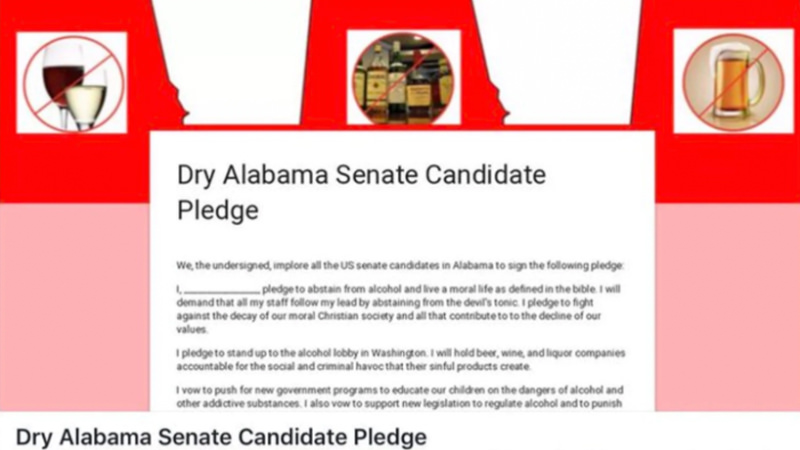
Activist Matt Osborne admits Dry Alabama was a form of voter suppression, but he claims to have acted within legal boundaries while boosting Doug Jones


Matt Osborne
A left-leaning activist at the center of the "Dry Alabama" disinformation campaign admits in an August 2018 article that the project was an act of voter suppression. Matt Osborne, in an interview published yesterday in his hometown Florence (AL) Times Daily, claims the deceptive nature of Dry Alabama did not violate laws. It's unclear if state and federal authorities agree with that.

In a LinkedIn article dated August 9, Osborne discusses Democrat Doug Jones' victory over Republican Roy Moore in Alabama's 2017 special U.S. Senate election. Osborne focuses on Baptist pastors as a key component of Roy Moore's political base, largely because of their shared opposition to alcohol sales and consumption:

Southern Baptists are the largest denomination in the state, accounting for at least 1 million of our 4.8 million residents, and churches in the Southern Baptist Convention have always promoted teetotalism, both as private and public policy. They have led resistance to liberalization of alcohol laws since the heyday of the temperance movement. When Clarke county residents voted on the issue in 2017, Baptist pastors were at the forefront of opposition.

Although he speaks to all sorts of churches, Roy Moore is a Southern Baptist. His abstinence from alcohol is a point of pride, and Breitbart has emphasized it in their promotions of his candidacy. As a candidate, he seems to perform best in the most rural parts of the state.

Osborne provides insightful background on the "politics of alcohol" in Alabama:

Twenty-five of Alabama’s 67 counties are "dry counties" which ban the sale of alcohol, yet all of them now contain wet municipalities. Conversely, there are still dry municipalities in wet counties.

Alabama seemed to reach a tipping point regarding alcohol politics over the last decade. In 2010, a referendum to allow liquor sales failed in Rogersville, a small town at the eastern end of Lauderdale County, by a single vote. . . . Sunday sales were almost impossible to imagine in most of the state just 20 years ago, but they have become common since 2005. Regulation has also begun to shift. Last year saw the Alabama Beverage Control board rescind an unpopular decision to ban margarita pitchers, for example.

It is important to note that this change of climate has coincided with the Republican takeover of the state. After many years of Democratic decline, the GOP swept all state offices and took supermajorities in the legislature in 2010, whereupon the industries with an interest in liberalization (bottlers/distillers, hospitality, municipal convention centers, etc.) finally found their voice and emphasized that such measures were “pro-business.”

That's how Democratic operatives decided on alcohol as an issue that could drive a wedge between "business" conservatives (who favored Luther Strange, loser in the primary to Moore) and "cultural" conservatives (who favored Moore). Dry Alabama, a social-media campaign that falsely claimed Moore supported a statewide ban on alcohol, was a "smashing success," Osborne writes -- essentially using Moore's teetotaling religious base against him:

Finally, it is worth understanding that Moore relies very heavily on this very same network of teetotaling pastors as his primary means of mustering voters to the polls. Indeed, his 2017 US Senate campaign almost exclusively relied on that mostly-Baptist pastor network for GOTV activity until the national party came to his rescue. However, that alliance was interrupted for almost three weeks during the last month of the campaign when the Washington Post reported a series of stories alleging past sexual misconduct. Because Moore has always had trouble bringing the "business wing" of the state party into his fold, this failure to motivate voters left him vulnerable to social media campaigns aimed at driving this alcohol policy wedge.

Which is exactly what happened. Hoping to deter white male suburban voters from voting for Roy Moore, a campaign targeted Facebook users with ‘false flag’ pages for thirteen days prior to the election. This limited run was a smashing success that reached 3 million targeted voters, achieving 4.6 million impressions with 97,000 engagements, posting videos that were watched 430,000 times, and presenting links that received 403,000 clicks. At least one of the associated memes received unexpected amplification on the Facebook page of a Grammy-winning celebrity. Debates broke out in the comments, with "piety Republicans" and "economic Republicans" disagreeing over the issue.

By every available metric, the campaign succeeded in spreading the message that a vote for Roy Moore was a vote against service industry jobs, against brewing industry jobs, and for going backwards to a "Dry Alabama."

Curiously, Osborne does  not admit -- as he recently did to The New York Times -- that he helped conceive the Dry Alabama scheme. He does, however, admit it was designed to help Doug Jones win. So much for the notion that recently uncovered Democratic disinformation campaigns were mostly for purposes of "research":

Given that Doug Jones won by less than 21,000 votes out of more than 1.3 million ballots cast, this campaign -- which was inspired by, and modeled on, the Facebook voter suppression efforts that Roy Moore backer Steve Bannon undertook in 2016 -- appears to have made a real difference at a very small cost compared to TV advertising or other forms of election communications.

While it is impossible to prove that this one effort was solely responsible for Moore's defeat, it is a good example of how to use local culture war wedge issues to limit an opponent's turnout in races that will be won at the margins.

Note the highlighted sections above, where Osborne clearly states: (1) Dry Alabama was modeled on GOP voter-suppression efforts led by former Donald Trump strategist Seve Bannon; (2) Dry Alabama was designed to limit opponent turnout, in this case those who likely would have voted for Roy Moore.

As for the interview with his hometown newspaper, Osborne boldly claims that he acted within the law -- and the Jones campaign was not connected to Dry Alabama:

In a Tuesday interview with the Times Daily, Osborne said part of the reason behind the movement was to get challenger Doug Jones elected. He said the Jones campaign was not connected to the "Dry Alabama" movement.

Jones beat Moore by a narrow margin.

However, Osborne said the effort went beyond that race. He said conservative entities have used "dark money" for similar tactics to benefit Republicans, so he did the same as a way to show the type of impact such tactics can have.

"There's nothing I participated in that crossed any lines of legality," Osborne said. "The real crime here — if there is a crime — is that you can get away with this stuff."

Are we to believe the Jones campaign had no knowledge of Dry Alabama -- or a similar project called Project Birmingham? We have already shown that Osborne contacted me in October 2017 and indicated he had "direct knowledge" of events tied to the Jones campaign -- and we now know Osborne readily admits being connected to Dry Alabama.

Roy Moore
Osborne can't seem to make up his mind on the subject of possible criminality connected to Dry Alabama. First, he proclaims he didn't cross "any lines of legality." Then, he follows immediately with language that hints, "Well, maybe there was a crime here -- who knows?"

Alabama Attorney General Steve Marshall has referred the matter to the Federal Election Commission (FEC) for possible investigation. Elections form a complex, murky area of the law -- involving both state and federal jurisdictions. It's doubtful that Osborne (or a Dry Alabama colleague, such as D.C.-based digital strategist Beth Becker) is qualified to make an assessment about the legality of deceptive election practices.

(Note: According to her Twitter account, Beth Becker seems to have launched an island-based vacation in the past day or two -- with stops at "Jamaica, Caymans, Cozumel and Havana." Has someone suggested Becker "get out of Dodge," due to heat from Dry Alabama and Project Birmingham?)

Special Counsel Robert Mueller's Trump-Russia investigation suggests that election meddling, in general, is unlawful. It seems clear that voter suppression, in some forms, is illegal.

Where does the Dry Alabama variety fall? It might be too early to say, but Osborne's claim to have acted within legal lines probably should not be taken to the bank -- at least not yet.

Wednesday, January 9, 2019

Six weeks before the 2017 Alabama U.S. Senate election, Matt Osborne indicated he was working for Doug Jones on a mission that likely was underhanded


Dry Alabama

A left-wing operative at the center of the "Dry Alabama" social-media scam, which might have decided the Doug Jones-Roy Moore U.S. Senate race, contacted me in October 2017 and indicated he was tied to the Jones campaign and had knowledge of what we now know were underhanded tactics on Jones' behalf.

Matt Osborne, a writer, researcher and would-be consultant from Florence, AL, contacted me via Facebook private message on Oct. 27 -- roughly six weeks before the special election, which Jones won by about 22,000 votes. What can we learn from this? I take away two key points:

(1) Osborne's words in the Facebook message -- plus his location in Alabama -- make it highly likely Doug Jones knew about the sleazy tactics being used on his behalf. That means Jones' claims to have been unaware almost certainly are false.

(2) Osborne suggested a Legal Schnauzer post about the use of Russian bots to produce a cyber attack on Roy Moore's campaign Twitter account was inaccurate and should be retracted. When asked for specifics about possible inaccuracies, Osborne went into hyper-secret mode and never provided information to support his claims. We now know the Russian-bot attack, in fact, happened -- and left-wing activists, apparently aligned with Osborne, launched it. I take that to mean Osborne lied to me about the alleged need to retract the bot story -- and his quick entry into top-secret mode suggests he was involved in nefarious campaign tactics at the time.

Matt Osborne
What was Osborne up to? Well, we now know he's not above engaging in a scam, so we will show you the central part of our communication and let you decide:

Matt: You should retract that entire blog post about the Russian bots. Direct knowledge.

Roger: In what capacity have you been around the Jones campaign? And where does your direct knowledge come from?

Matt: Not going to say in this format. Are you on Signal?

Roger: Nope, not on Signal.

Matt: Got a smart phone?

Roger: No, I don't have a smart phone. Almost everything we owned has been stolen, so a smart phone isn't a high priority.

Osborn then asked -- late in the game -- if the conversation was off the record. I did not agree to that, so I am publishing it now, in light of The New York Times report about Osborn's involvement in the Dry Alabama project.

The conversation ended when Osborn, without explanation, sent me the following link:

password: BRnrMLUAnknfD0L+7V4byKsy1PenoZOvJ3oWkvgDAf/gqfDOEJCfXFibOvFoSUH1 Link: https://cryptobin.co/c3p3c8n1

I had no idea what it was,and I really wasn't interested, so I did not click on it. I had not heard from Matt Osborne since then until the following comment arrived at Legal Schnauzer late Monday, on a post dated Dec. 27, 2018:

Matt Osborne Unsubscribe

Mon, Jan 7, 11:17 PM (13 hours ago)

to me

Matt Osborne has left a new comment on your post "Stories of election meddling involving Jill Stein,...":


This is hilarious, Roger. [Jill] Simpson is leading you right over a cliff again. Jill Stein and Doug Jones are conspiring to do what now?

I was told tonight that you've been yapping about me on Facebook. I can't wait to see what sort of nonsense you contrive to blog about me.

Given the comment's utter lack of meaningful content, I did not publish it. But I'm publishing it now, with the idea that it might provide some insight into Osborne's mindset after making The New York Times for his involvement in electoral skulduggery.

To me, Osborne sounds like a guy who knows he has stepped in thick, gooey, smelly doo-doo -- and is not sure how he's going to get it off his shoes.

Tuesday, January 8, 2019

Matt Osborne, a left-leaning activist from Florence, AL, tried to boost Doug Jones in Senate race by falsely suggesting Roy Moore wanted a statewide alcohol ban


Matt Osborne
A left-leaning political operative was part of a project to boost Democrat Doug Jones in Alabama's 2017 U.S. Senate election by concocting a social-media campaign that suggested Republican Roy Moore favored a statewide alcohol ban, according to a report yesterday at The New York Times.

The campaign, called "Dry Alabama," is the second Russia-style disinformation effort that might have helped Jones beat Moore in a tight race. It is the first such effort to be tied to an Alabama political operative, meaning the public might now be less inclined to believe Jones' claim that he was unaware of any digital skulduggery on his behalf.

The Dry Alabama story hits close to home because I've known one of its central figures, Florence-based writer and activist Matt Osborne, for close to 10 years. I've never met Osborne in person, but he has been in our home, under trying circumstances. About a week after my arrest in October 2013, Osborne contacted my wife, Carol, and came to our house (with a female companion named Melissa Brewer) and took photos and videos of the area in our basement where a Shelby County deputy named Chris Blevins beat me up and essentially kidnapped me by hauling me to jail for a five-month stay -- all with no mention of a warrant, any criminal charges, or his reason for being on our property, not to mention inside our home.

In October 2017, less than two months before the Jones-Moore election, Osborne contacted me via Facebook messenger and indicated he was connected to the Jones campaign -- and that I should retract a post I had written about the race. I did not retract the post, and it now appears Osborne was less-than-honest with me. Going back to read that communication today -- after reading The Times' report on Dry Alabama -- it's hard to believe Doug Jones did not know what Osborne and Co. were up to with their online schemes. (More about my communications with Matt Osborne, and his visit to our house, in upcoming posts.)

Osborne, who describes himself as a "writer, researcher, moving into the consultant space," acknowledged to The Times that he participated in Dry Alabama:

Matt Osborne, a veteran progressive activist who worked on the project, said he hoped that such deceptive tactics would someday be banned from American politics. But in the meantime, he said, he believes that Republicans are using such trickery and that Democrats cannot unilaterally give it up.

“If you don’t do it, you’re fighting with one hand tied behind your back,” said Mr. Osborne, a writer and consultant who lives outside Florence, Ala. “You have a moral imperative to do this — to do whatever it takes.”

Osborne has written for a number of progressive Web sites -- Crooks and Liars, Breitbart Unmasked, Deep State Nation, and his own Osborne Ink, among others. In a dubious example of journalism, which some might label self-serving propaganda, Osborne wrote a piece at Crooks and Liars yesterday on the Dry Alabama effort, claiming his actions were not unlawful. From the article, titled "Swinging a US Senate Race in Alabama, Kremlin-Style Isn't Illegal, But It Should Be,"  which Osborne wrote himself:

. . . the 'Dry Alabama' campaign used real quotes from allies of Moore, who is an outspoken teetotaler supported by anti-alcohol campaigners, to build the impression that a vote for Moore was a vote against beer. We did not have to use any 'fake news' because there was so much real news to work with.

“I don’t think anything this group did crossed any lines,” says Beth Becker, one of the individuals who took part in the Dry Alabama campaign. In fact, we worked very hard to discern the legal lines and stay inside them. . . ."

Yet it is not obvious that any laws were actually broken. Neither Congress nor the Alabama legislature has shown much ability to write effective legislation in the social media era. From my perspective, the real 'crime' here is that political disinformation campaigns are not illegal.

Political disinformation campaigns are not illegal? There does not appear to be universal agreement on that.  Alabama Attorney General Steve Marshall has asked the Federal Election Commission (FEC) to investigate the matter and determine if any federal laws were broken. Doug Jones himself has called for an inquiry that goes beyond Congress, straight to the FEC and the U.S. Justice Department.

Where is this story headed? That's hard to say because it seems to be evolving by the day. From The New York Times report:

The discovery of Dry Alabama, the second so-called false flag operation by Democrats in the fiercely contested Alabama race, underscores how dirty tricks on social media are creeping into American politics. The New York Times reported last month on a separate project that used its own bogus conservative Facebook page and sent a horde of Russian-looking Twitter accounts to follow Mr. Moore’s to make it appear as if he enjoyed Russian support.

The revelations about the first project, run in part by a cyber-security company called New Knowledge, led Facebook to shut down five accounts that it said had violated its rules, and prompted Senator Jones to call for a federal investigation. There is no evidence that Mr. Jones encouraged or knew of either of the deceptive social media projects. His spokeswoman, Heather Fluit, said his legal advisers were preparing to file a formal complaint with the Federal Election Commission.

Consider this section from The Times' report, which raises all kinds of questions:

The first of the Alabama efforts was funded by Reid Hoffman, the billionaire co-founder of LinkedIn, who apologized and said he had been unaware of the project and did not approve of the underhanded methods. The second was funded by two Virginia donors who wanted to defeat Mr. Moore — a former judge accused of pursuing sexual relationships with underage girls — according to a participant who would speak about the secret project only on the condition of anonymity and who declined to name the funders.
Doug Jones
The two projects each received $100,000, funneled in both cases through the same organization: Investing in Us, which finances political operations in support of progressive causes. Dmitri Mehlhorn, the group’s managing partner, declined to comment on whether he approved of the tactics he had helped pay for. But after the Times report in December, he acknowledged, in a post on the online forum Medium, a “concern that our tactics might cause us to become like those we are fighting.” He declared that “some tactics are beyond the pale.”

Another organizer of the project, according to two participants, was Evan Coren, a progressive activist who works for the National Archives unit that handles classified documents. He did not respond to requests for comment. Beth Becker, a social media trainer and consultant in Washington who handled Facebook ad spending for the Dry Alabama page and the project’s other Facebook page, called Southern Caller, said in an interview that a nondisclosure agreement prohibited her from saying much about the project.

But, she added, “I don’t think anything this group did crossed any lines.”

Ms. Becker might be whistling past the graveyard with that last comment. In fact, our impression is that left-wing activists do not want to confront perhaps the most important questions hovering over the Alabama disinformation story:

(1) Were crimes committed?

(2) Did Doug Jones know about underhanded efforts to help him win?


I have information that might shine light on one, maybe both, of those questions.


(To be continued)

Monday, January 7, 2019

Under a U.S. Supreme Court case called Alabama v. Shelton, Carol's sentence of probation in Missouri "assault" case is invalid and due to be reversed


Ruth Bader Ginsburg
The suspended sentence that a Missouri judge placed on my wife, Carol, in a bogus "assault of a law enforcement officer" case is "invalid" and a "nullity," and it must be reversed,  according to U.S. Supreme Court (SCOTUS) precedent.

We already have shown that, by placing a suspended imposition of sentence (SIS) on Carol, Judge Jerry Harmison Jr. ensured there is no final, appealable judgment in the case and no conviction (even though Carol, contrary to fact and law, was found guilty). Now, we learn that the SIS and two-year probation Harmison imposed are unlawful and due to be vacated.

How many ways can one compromised judge screw up a case?

This all goes back to Missouri's denial of Carol's right to counsel, and the relevant law comes from the nation's highest court in a case styled Alabama v. Shelton, 535 U.S. 654 (2002). How rich is the irony that the cheat job heaped on Carol in Missouri would be -- or should be -- decided by a SCOTUS case that originated in Alabama?

Justice Ruth Bader Ginsburg (with dissents from -- surprise, surprise -- Antonin Scalia, Clarence Thomas, William Rehnquist, and Anthony Kennedy) wrote the opinion in Shelton. Here is it's central holding:

Held: A suspended sentence that may "end up in the actual deprivation of a person's liberty" may not be imposed unless the defendant was accorded "the guiding hand of counsel" in the prosecution for the crime charged. Argersinger, 407 U. S., at 40. Pp. 660-674.

What does this mean for Carol's case?

(1) She was placed on probation, but a violation of its terms could lead to a jail term. That, SCOTUS found in its 2002 Shelton ruling, is not allowed under the Sixth Amendment;

(2) Carol at one point had an attorney -- public defender Patty Poe -- but when Poe bailed out of the case, jail was waived as a possible punishment, by law;

(3) Carol never had another attorney, and she never waived her right to counsel, so Harmison committed a huge blunder by adding probation to the equation -- and probation, by definition, means jail is on the table. And that, Justice Ginsburg found, is a no-no.

(4) Both Poe and Margaret Palmietto (the original judge in Carol's case) apparently have more functioning brain cells than Harmison, who took over after Palmietto recused -- or maybe Poe and Palmietto are slightly less corrupt than Harmison. Either way, Poe told us upon exiting that, with jail off the table, the court could only sentence Carol to a fine, community service, or some type of educational course. Palmietto, in her final days on the case, said multiple times in open court "it's just a fine" -- as if Carol should have no problem being fined for an offense she did not commit, even according to the written and verbal statements of the so-called "victim."

Carol Tovich Shuler
Where does the SCOTUS case have its roots? The answer is Etowah County, Alabama, (county seat is Gadsden), where LeReed Shelton represented himself and twice was found guilty of third-degree assault -- being sentenced to a suspended 30-day jail term and unsupervised probation. Shelton appealed, and the Alabama Supreme Court ultimately reversed his sentence, finding it invalid because he did not have counsel, violating his Sixth Amendment rights.

SCOTUS upheld the Alabama Supreme Court's finding, with these words from Ginsburg:

Defendant-respondent Shelton represented himself in an Alabama Circuit Court criminal trial. The court repeatedly warned Shelton about the problems self-representation entailed, but at no time offered him assistance of counsel at state expense. He was convicted of misdemeanor assault and sentenced to a 30-day jail term, which the trial court immediately suspended, placing Shelton on two years' unsupervised probation. The Alabama Supreme Court reversed Shelton's suspended jail sentence, reasoning that this Court's decisions in Argersinger v. Hamlin, 407 U. S. 25, and Scott v. Illinois, 440 U. S. 367, require provision of counsel in any petty offense, misdemeanor, or felony prosecution, Argersinger, 407 U. S., at 37, "that actually leads to imprisonment even for a brief period," id., at 33. The State Supreme Court concluded, inter alia, that because a defendant may not be imprisoned absent provision of counsel, Shelton's suspended sentence could never be activated and was therefore invalid. . . .

The Sixth Amendment does not permit activation of a suspended sentence upon an indigent defendant's violation of the terms of his probation where the State did not provide him counsel during the prosecution of the offense for which he is imprisoned. A suspended sentence is a prison term imposed for the offense of conviction. Once the prison term is triggered, the defendant is incarcerated not for the probation violation, but for the underlying offense. The uncounseled conviction at that point "result[s] in imprisonment," Nichols v. United States, 511 U. S. 738, 746; it "end[s] up in the actual deprivation of a person's liberty," Argersinger, 407 U. S., at 40. This is precisely what the Sixth Amendment, as interpreted in Argersinger and Scott, does not allow.

Carol was the victim of an uncounseled (and unlawful) conviction, and SCOTUS makes clear that her sentence must be reversed as invalid. Whether the dictates of the nation's highest court has any impact on Jerry Harmison Jr. -- or anyone else in Missouri's perverse "justice system" -- remains to be seen. But it's clear Carol's sentence is a nullity, meaning it is legally void and is based on . . . well, nothing.

Thursday, January 3, 2019

Record suggests Scott J. Wells faced child sexual abuse charges because his ex wife wanted her new husband to adopt girls who became complaining witnesses


Scott J. Wells
(Fifth in a series)

How did four girls concoct stories of child sexual abuse that were so dubious a judge overturned his own guilty verdict in State of Missouri v. Scott J. Wells (No. 31302CF5509) -- a case where the defendant was the biological father of two complaining witnesses, the step-father of one, and the uncle of a fourth? The answer is not 100-percent clear, but the public record suggests the stories of abuse surfaced after Mr. Wells' ex wife, Cynthia Hedrick, informed at least two of the girls that she wanted her new husband to adopt them -- and Scott Wells refused to go along with the idea.

The record also indicates Ms. Hedrick testified falsely about the adoption plans, and Scott Wells' defense attorney -- my brother, David Shuler, of Springfield, MO -- failed to drive that point home to the trier of fact (Judge Don Burrell, who oversaw a bench trial in the case.)

What can happen to a father who refuses to turn his children over for adoption? The Scott J. Wells case -- with my brother providing what a court found to be ineffective assistance of counsel -- suggests such a father can face false allegations of child sexual abuse that bring him to the edge of ruination.

The adoption issue arises at several places in the case file, first when Wells' second attorney (Daniel Dodson, of Jefferson City, MO) sought a new-trial hearing that included testimony about David Shuler's inadequate work as a defense lawyer -- which had his client looking at a likely punishment of five life sentences, plus 55 years.

Following is testimony from Dodson's examination of David Shuler at the new-trial hearing. It begins on page 110 in the third document embedded at the end of this post. (The other documents are Part 1 and Part 2 of Dodson's testimony in the legal-malpractice case.). Dodson asks Shuler to read from a transcript of Cynthia Hedrick's testimony. We begin with Shuler's response:

Shuler: "And isn't it true that you were the one that told Brittanie [complaining witness, Brittanie Wells] that she could be adopted? You wanted your new husband to adopt her, isn't that true? Answer: "No." "Isn't it true that you would adopt her or rather that your new husband, Jeff, would adopt her?" "No." "You didn't tell them that?" "No."

Dodson: Okay. One of the things that you tried to present to the Court as a reason why these girls might be making something up would be to please their mother and her desire to have Scott step out of the picture and allow her new husband to adopt them. Is that correct?

Shuler: Correct.

Dodson: Okay. She basically shot you down at that point and denied that that was the case. Is that not correct, also?

Shuler: That's correct. she denied that, consistently, I believe.


Dodson then turns his attention to a document where Courtney Wells [another complaining witness] states that her mother (Cynthia Hedrick) wanted her new husband (Jeff Hedrick) to adopt Courtney, so that the child would not see Scott Wells again. Dodson's examination of David Shuler on this issue begins on page 112 of the third document embedded at the end of this post.


David Shuler
Dodson: Okay. Is that not an indicator that there had been some previous discussion, and she was aware that the possibility of Jeff adopting her existed?

Shuler: Brittanie?

Dodson: Courtney, in this case?

Shuler: Courtney? Okay, yes.

Dodson: Okay. So would that not have been an opportunity, had you been familiar enough with this document, to call Cindy Hedrick on her denial that she's discussed these issues with the girls by saying obviously, here Courtney knew about that. "Where would she have gotten that idea, for instance?" I believe the transcript part is questioning on Brittanie. I don't know why you didn't question on all the girls but --

Shuler: I don't -- I guess I'm not tracking your -- I don't think she -- I don't think she denied that there was ever discussion of adoption, but I guess she's saying she didn't.

Dodson: Well, you asked -- actually, this is -- isn't it true that you were the one who told Brittanie she could be adopted and then later isn't it true that you told Courtney you would adopt her and your husband would adopt her? Is this not an indicator that at least discussions had been had on that subject?

Shuler: Yes --

Dodson: And --

Shuler: -- it is.

Dodson: Somewhat of value in impeaching Cynthia Hedrick in her denial that there was any motive that could have caused some untruth on the part of the complaining witnesses?

Shuler: Somewhat, yes.


Was that the last time the adoption issue came up in the Scott Wells matter? Nope. It arose again when Wells brought a legal-malpractice case against David Shuler. At that point, Daniel Dodson was serving as an expert witness for Wells, and he had plenty to say about Shuler's failure to pursue impeachment of Cynthia Hedrick on what might have been the single most important issue in the criminal case.


(To be continued)

Previously in the series:


* Court finds Missouri lawyer David Shuler provided ineffective assistance of counsel (11/13/18)

* Missouri attorney David Shuler took no action at trial . . . (11/27/18)

* David Shuler, unable to react to false testimony that Scott J. Wells had scars on his penis . . . (12/4/18)

* Expert testifies that Missouri lawyer David Shuler did not believe in his own client . . . (12/10/18)


Wednesday, January 2, 2019

Alabama's crooked system of starving inmates so that sheriffs can use the money for personal expenses finally is being exposed for the whole nation to see


Outgoing Moran Sheriff Ana Franklin
(Decatur Daily)

An Alabama prosecutor is suing his county sheriff for using funds intended for feeding jail inmates to pay her own legal fees. In another sign that nontraditional journalism has immense value, a groundbreaking blog puts the important (and largely unseen) issue in perspective.

Morgan County District Attorney Scott Anderson filed a lawsuit on December 21 seeking to recover funds outgoing Sheriff Ana Franklin allegedly had used for personal expenses. William Gray of Birmingham, one of Franklin's attorneys, said the sheriff used surplus jail-food money to pay lawyers who helped negotiate a deal with federal prosecutors that recently ended with Franklin pleading guilty to a misdemeanor for willful failure to file a tax return. From an article by Eric Fleischauer, of the Decatur Daily:

Some money originally earmarked for feeding Morgan County jail inmates has gone to pay lawyers for Sheriff Ana Franklin, one of her attorneys said.

The legal expenses may be part of at least $105,000 in jail-food money that Morgan County District Attorney Scott Anderson alleges the sheriff has taken or spent.

Anderson [on Dec. 21] filed a civil lawsuit against Franklin alleging she has illegally kept and spent state-issued jail food money that she should have been holding in trust exclusively for the feeding of inmates.

This issue has particular resonance here at Legal Schnauzer since I spent more than five months in an Alabama jail (Shelby County) in 2013-14 for reporting on state legal and political corruption, mostly among Republicans. I became the only U.S. journalist to be incarcerated since 2006 and probably the only American in history to essentially be "arrested for blogging," due to a preliminary injunction that has been an unlawful "prior restraint" under more than 200 years of First Amendment law.

I know what it's like to eat Alabama jail food; I survived on it for more than five months. Since then, we've learned that Alabama sheriffs make it a practice to pocket money intended for jail food and use it for their own purposes. That issue first hit the press in early 2018 when former Etowah County Sheriff Todd Entrekin was found to have pocketed $750,000 in jail-food funds and used most of the money to purchase a beach house in north Florida.

A recent report at al.com shows Entrekin, who lost his bid for re-election, made more than $1.5 million from funds that were supposed to be used for feeding federal immigration detainees at the Etowah County Detention Center in Gadsden.

Morgan County Prosecuting Attorney Scott Anderson
(Decatur Daily)
Here is the equation for Entrekin, Franklin, and other sticky-fingered Alabama sheriffs: The less money you spend on feeding inmates, the more money you will have for your own ventures. The headline on this post might as well be "Alabama sheriffs live in high style by starving inmates." I once was one of those starving inmates; I lost 25 pounds during my five months in jail, and it would have been worse if I had not had resources to take one of the few survival options available to Alabama inmates.

Morgan County Whistle Blower, a ground-breaking blog that has broken one story after another in the Ana Franklin scandal, summarized Alabama's inmate-food crisis in a Dec. 23 post that focused on the Lawrence County Jail:

Folks these jails have become all about the almighty dollar. They are no longer about corrections or punishment. They are about how much money can we make off the inmates and their families or loved ones.

In Lawrence County, if you bond someone out of jail they now charge a $35.00 jail processing fee. Not sure where this money goes or what it is used for or who gets it. Not sure what the purpose of this fee is since in Lawrence County everyone who is arrested or gets a ticket when paying their fine and court costs pays a $35.00 jail fee. This fee is to pay for the construction of the current jail which is 20 years old. Just another burden added to the families for the money maker. This applies to property bonds and bail bondsmen but the $35.00 is separate from what you have to pay the bondsman and must be paid by the person making the bonds. I think this is a clear case of double dipping. The $35.00 jail fee is being paid twice.

As if that is not bad enough as soon as you walk into the doors of the jail you immediately have access to two machines, the first is so you can put money into their account so they can buy items from the jail including food. This seems like a racket to me; first, you don’t feed them adequately and then sell them overpriced food all the while getting rich off leftover jail food money. Next to the first money machine is another money machine to put money into an account so they can use the phones.

These things put a burden on the families, many of whom are already struggling financially. The phones they can do without but when a loved one calls and says they are hungry and it has been well documented they are not being fed properly by these greedy sheriffs it is hard to not rake and scrape and come up with money for them to buy something to eat.

This whole operation just seems to swirl around how we can make money off people who are in jail and contrary to popular belief most are not hardened criminals like the sheriff portrays them. The food is about like this jail processing fee, it all seems like double dipping to me, getting money from the State for food and then getting money from the inmates for food.

The operations of the Sheriff's Department has gone from one of law enforcement to one with multiple systems within the organization that is totally focused on making money.

That is very well stated, and the highlighted portion particularly hits home because I lived under those conditions for five months. I can add one point to this, and I know about it only because I've experienced it firsthand. Bottom line: An inmate does not suffer from Alabama's crooked jail-food system only while he's incarcerated; its impact can stay with him long after he has been set free.


(To be continued)

Thursday, December 27, 2018

Stories of election meddling involving Jill Stein, Doug Jones, and Russia-style disinformation efforts might soon merge, leaving political ambitions on the brink


Doug Jones

Reporting on the Russia-style disinformation campaign that benefited Doug Jones in Alabama's 2017 special U.S. Senate election continues to evolve, with a billionaire financial backer issuing a public apology yesterday. Meanwhile, 2016 Green Party presidential candidate Jill Stein has been unmasked as the recipient of a Russia-backed social-media blitz designed to help Donald Trump defeat Hillary Clinton.

Those two stories likely will soon merge, putting Jones' senatorial career at risk almost before it has begun, according to one of Alabama's most knowledgeable political insiders. It probably is too early to say where the Jones story is going, but here are some of the signs that could be alarming for Alabama's junior senator -- a Democrat in a red state, who pulled off a stunning victory last November over Republican Roy Moore:

(1) Reid Hoffman, founder of LinkedIn and an early investor in Facebook, largely funded the effort (to the tune of $750,000) and now has issued an apology, acknowledging that he finds the actions taken with his money are "highly disturbing."

(2) Where did Hoffman's money go? Mostly it went to American Engagement Technologies (AET), a firm headed by former Obama administration official and Google engineer Mikey Dickerson.

(3) Hoffman's funds apparently trickled down to Jonathon Morgan, chief executive at the research firm New Knowledge, who said he "created a Facebook page under false pretenses to test his ability to appeal to conservative voters." Facebook has suspended Morgan's account, plus those of at least four unnamed individuals who worked with him on the project.

(4) Jones claims he wants a federal investigation into New Knowledge's actions on his behalf, but the senator seems slightly unhinged in his public statements on the matter. Jones cursed multiple times in his initial reaction after The New York Times broke the Morgan story? How many times have you heard a U.S. senator curse while cameras and microphones were running? I don't think I've ever seen it happen.

How could the Jill Stein and Doug Jones stories merge? Jill Simpson (retired attorney, opposition researcher, and whistle blower) provides insight in a recent post at Facebook. Writes Simpson:

Some of the Stein folks showed up in Alabama to help Doug Jones with election machinery, and they had told us it would be better if republican Trump won in Wisconsin. We knew then Russian bots were on the way to probably help Jones, and we reported this to old press friends to watch closely. We have one family in America that has been funding these folks, and we and the feds know who it is, and their ties to Mother Russia involve money being made back to the early 1990s. That said, this bunch funded Stein to beat Hillary and to beat Moore. This is not about political parties, this is about one of America's richest families being in bed with Russians and certain politicians on both sides. It is huge. Stein was owned by this bunch, and it became apparent to us when we were in Wisconsin. The greens would be well advised to cut Stein and her Russian butt-kissing ass loose from the party.

As for Hoffman's apology, The Washington Post says it left key questions unanswered:

Hoffman named a group he funded, American Engagement Technologies, or AET, as being involved in the effort to spread disinformation targeting Moore. Hoffman invested $750,000 in the organization, some of which covered its work in Alabama, according to a person close to the matter but not authorized to discuss Hoffman's spending.

But the statement left key facts unaddressed, including a full accounting of everyone who crafted and executed the campaign. The effort was the subject of a presentation in September to a group of progressive technology experts who met in downtown Washington to discuss electoral tactics, according to documents from that meeting obtained by The Washington Post and one of the attendees. This person spoke on the condition of anonymity because those at the gathering were required to sign nondisclosure agreements.

Does it sound like multiple individuals are trying to cover for actions taken under what became known as Project Birmingham? It sure sounds that way from here. The Post reports, for example, hat Mikey Dickerson has failed to respond to multiple interview requests.

Jill Stein and her campaign also have been less than forthcoming. Reports Think Progress:

Stein has long been a key figure in Special Counsel Robert Mueller’s ongoing Russia investigation. The environmental activist and erstwhile presidential candidate was in frequent communication with individuals inside Russia, and she herself made a trip to Moscow in 2015 to attend, among other things, a dinner hosted by Russian propaganda network RT, where she sat alongside future Trump campaign aide Michael Flynn and Russian President Vladimir Putin.

Jill Stein
Stein and her presidential campaign have largely refused to cooperate with the Senate’s own investigation into Russia’s efforts to interfere with the 2016 election. She refused to turn over any communication between her campaign and “Russian persons, or representatives of Russian government, media, or business interests” earlier this year.

Stein long has been of interest to Special Counsel Robert Mueller, and we now know her operatives were in touch with the Doug Jones campaign? Perhaps that explains Jones' recent public statements, which might best be described as bizarre. Consider this account from Politico:

Even though the effort was minor and was not used against him, Jones said he is “outraged” and that congressional hearings wouldn’t be enough: “It needs to not just be a congressional inquiry. People get called in front of Congress all the damn time. There needs to be a look to see if there were any laws that were broke.”

“What is obvious now is that we have focused so much on Russia that we haven’t focused on the fact that people in this country could take the same playbook and do the same damn thing,” Jones said. “I’d like to see the FEC and the Justice Department look at this and see if any laws are being violated or were violated. And if there were, do it. Go after them.”

Then, we have this from Yellowhammer News:

Jones expressed that he was “outraged” and called for the Federal Elections Commission and the Department of Justice to investigate the allegations and prosecute if necessary.

Hell, I’m as outraged as everybody else about it,” Jones said. “I have railed against Russian interference in our election process ever since I started campaigning and during this first year in the Senate. I think we have all focused too much on just the Russians and not picked up on the fact that you know what? Some nefarious groups, whether they’re right or left, can take those same playbooks and interfere with the electors for their own damn benefit. I got to tell you, I’m not happy about it.”

Doug Jones can't discuss this subject without sprinkling in words like "damn" and "hell" -- for public consumption? Does he even have the class or dignity to serve in the U.S. Senate?

This kind of language from Jones was not a surprise to us. We've tried to interview him several times on serious matters and were treated to the smart-alecky, classless, dismissive, and duplicitous tone that represents the real Doug Jones. We invite you to check it out in the videos below:


Wednesday, December 26, 2018

Prosecution of crowd-funding scam near Philadelphia raises questions about dubious cash grabs involving Missouri lawyers Jason Kander and David Shuler


Jason and Diana Kander
Crowdfunding scams have become a regular topic for our reporting at Legal Schnauzer, and such a story even was in the news over the Christmas holiday. We have reported on two such incidents where we currently live (in Missouri) -- both involving lawyers, surprise, surprise -- with no signs that authorities have taken note. Recent events in the Philadelphia area, however, suggest using sites like GoFundMe (GFM) and Kickstarter to fraudulently relieve donors of their money might not be such a hot idea.

How far will crowdfunding go? Donald Trump supporters have started several sites to raise money for a border wall with Mexico, and one such site reportedly has raised more than $14 million. That's a long way from the $5 billion Trump is seeking from Congress, but where will that crowdfunding cash actually go? The possibilities for fraud seem endless.

Authorities near Philadelphia have made it clear they will go after those who perpetrate such scams. We intend to notify the appropriate Web sites and law-enforcement authorities about stories of which we are aware in Missouri. We will keep you posted about determinations law-and-order types in the Midwest make on these matters.

Folks in and around Mount Holly, New Jersey, have reason to know crowd-funding scams are taken seriously in their neck of the woods. That's where a couple -- Johnny Bobbitt and Katelyn McClure -- allegedly schemed with a homeless veteran from Philadelphia, Mark D'Amico, to scam donors out of more than $400,000GoFundMe announced on Christmas Day that it has refunded everyone who contributed to the campaign. From a report at Associated Press:

GoFundMe spokesman Bobby Whithorne said Tuesday that "all donors who contributed to this GoFundMe campaign have been fully refunded" and the organization is cooperating fully with law enforcement. . . .

Whithorne said campaigns involving misuse "make up less than one tenth of one percent" of all GoFundMe campaigns, but such behavior "is unacceptable" and "has consequences."

"We have a zero tolerance policy for fraudulent behavior," he said. "If fraud occurs, donors get refunded and we work with law enforcement officials to recover the money."

What about consequences in the Philadelphia case? Here is more from AP:

Burlington County prosecutors allege in a criminal complaint that Johnny Bobbitt conspired with Katelyn McClure and her boyfriend at the time, Mark D'Amico, to concoct a feel-good story about Bobbitt giving McClure his last $20 when her car ran out of gas. They raised $400,000, which authorities say was spent on luxury items and casino trips.

What about apparently underhanded crowdfunding cases in Missouri? One involves former secretary of state and U.S. Senate candidate Jason Kander and his wife -- New York Times best-selling author Diana Kander. From an October 2016 post about information released from a watchdog group in a 127-page, heavily research document called The Kander Memo:

Beginning in spring 2014, evidence shows the Kanders operated an Internet "crowdfunding" effort to raise online charitable donations. But the memo alleges the Kanders used the money, more than $31,000, to buy new-author Diana Kander's way onto The New York Times bestseller list. In fact, amazon.com promotes Ms. Kander's book, All In Startup: Launching a New Idea When Everything Is On the Line, as part of the prestigious New York Times lists, and the book is promoted as such at the author's Web site, dianakander.com.

How did this benefit the Kanders and Jason Kander's U.S. Senate campaign. From The Kander Memo:

The success of the Kander scheme has: (1) Provided the Kanders with a ruse to represent to the American public and Missouri voters that Diana Kander is "a New York Times Bestselling Author," when the truth is the Kanders used a deceptive scheme to raise money from the public in order to help Diana Kander buy her way onto those prestigious bestseller lists; (2) Empowered Diana Kander to break into the lucrative U.S. "Public-Speakers Circuit" so she can now pocket substantial speaker fees as a purported "New York Times Bestselling Author"; and (3) Enabled the Kanders to use the public contributions they collected from their Internet "crowdfunding" campaign in order to make the Kanders look . . . more prestigious and more accomplished, and to help Jason Kander win election to the United States Senate.

Jason Kander lost his U.S. Senate race to incumbent Roy Blunt, but questions remain about the Kanders' deceptive use of crowd-funding. From our earlier post:

According to The Kander Memo, the book effort likely violated solicitation-registration and felony anti-fraud statutes in every U.S. jurisdiction -- federal and state. It also likely violated statutes in all 50 states that make it a crime to commit, or attempt to commit, theft by deceit. From the memo:

[This] is not only an audacious and shameless scheme, it is a patently criminal scheme . . . a "50-state crime spree."

What about the second story of dubious crowdfunding in Missouri? It involves my brother, Missouri lawyer David Shuler. We first reported on it in an Oct. 3, 2017, post titled "My lawyer-brother and his wife, owners of more than $1 million in real estate, seek funds to help cover costs of therapy for their son with Hurler syndrome":

A Missouri couple who own more than $1 million in real estate have established a GoFundMe (GFM) site seeking money for their disabled son's therapy.

The couple are Gina Hayes and David Neal Shuler, my sister-in-law and lawyer/brother. Is it proper for a couple of such wealth to seek crowd-sourcing funds, especially for their own family needs -- which public records indicate they clearly can pay on their own? I'm hardly an expert on the rules, regulations, and etiquette of crowd-sourcing, so I have a few questions:

Gina and David Shuler
 * Is GFM meant to directly assist people who own more than $1 million in real estate -- and that doesn't reach their total net worth, which likely includes cash, savings, investments, personal property, real property in other counties or states (the $1 million is just in Greene County, MO), and other assets. Gina and David Shuler might be millionaires several times over. Are they supposed to be directly benefiting from GFM?

* Could this be unlawful, even fraud? I'm familiar with a site called GoFraudMe, which apparently researches possible incidents of crowd-sourcing fraud. Is this something GoFraudMe should look into?

Here is perhaps the central question in the Shuler situation:

Most of the cases of fraud that I've read about involve a precipitating event that did not really occur. For example, someone claims to need funds to recover from a house fire, but the fire did not happen. Is it fraud for a couple to seek money for an issue they clearly can cover on their own -- probably with no hardship whatsoever on the family?

The issue for Gina and David Shuler is real. Their 15-year-old son, Jack, has Hurler syndrome, a vicious metabolic disease, which can effect almost every organ system of the body. . . .

The GFM page, of course, makes no mention that Jack's parents are millionaires. Should it? Should a campaign like this even be on GoFundMe?

We will let officials with GFM and law enforcement ponder those questions. By satute, Missouri has an offense called "stealing by deceit." Facts of the Shuler case suggest it might come under that statute, with the key questions: Does this constitute deceit? Is it deceit to advertise that you need money when you really don't -- even though the cause in question (an illness) is real?

This is from a followup post, titled "David and Gina Shuler, who own more than $1.161 million in Missouri real estate, are seeking financial assistance for their son's therapy on GoFundMe": The post includes a listing of the Shulers' real-estate holdings, and the list might not be complete:

Is it OK for wealthy people to seek crowd-sourcing funds for their own family needs, which public records indicate they easily could pay for themselves . . . ?

Different people might answer the question in different ways. But the individual who tipped me off to the story -- I call that person a Source Close to the Situation (SCTS) -- had strong feelings on the matter, and they were not favorable to Gina and David. Said SCTS:

Here's my bitch of the day. Gina and David are on gofundme raising money for rehab for Jack. Now i feel sympathy for Jack, but gina and david don't need any sort of financial assistance. what does david make a year? $250,000??? or more. Gina probably made $100,000 before she retired [as an air-traffic controller]. my god they live in Millwood in a house appraised at $634,000. disgusting.

people like them don't deserve any help with medical bills when so many are suffering with no help. outrageous. arrogant. privileged.

I added my two cents on the issue:

It didn't take me long to decide I agreed with SCTS. In fact, I could even add a few descriptive terms to describe David and Gina's actions -- "shameless," "tasteless," "conniving," "self-centered," "attention-seeking."

My understanding is that David and Gina have not let much cramp their style. They have taken vacations to California, Utah, and various parts of Europe, family members have told me.

How wealthy are these folks who claim on GFM to need money? As SCTS notes, they live in Millwood, a golf-course/tennis club community southeast of Springfield, MO. Their residence, 3825 San Poppi Ct., is listed as being in Ozark, MO. Greene County property records show the residence is appraised at $621,300, so SCTS was almost right on the nose.

That figure, however, does not reflect the house's actual market value. It has 4 bedrooms. 4.5 baths, 5,557 square feet, and Zillow puts the market value at $718, 345.

The residence is only the beginning of Gina and David Shuler's real-estate holdings. They own seven properties in Greene County, Missouri, totaling more than $1 million. The exact appraised total is $1,161,500. A reasonable estimate of the market value is $1.3 million.

Thursday, December 20, 2018

Alabama Ethics Commission, led by Republican racist Frank "Butch" Ellis of Shelby County, gives AG Steve Marshall a free pass on unlawful campaign donation


Steve Marshall and "Luv Guv" Robert Bentley
The Alabama Ethics Commission yesterday voted to give Attorney General Steve Marshall a free pass for accepting more than $700,000 in unlawful campaign contributions from the Republican Attorneys General Association (RAGA). In what should be a surprise to no one, the vote largely was engineered by Frank C. "Butch" Ellis, a commissioner from Shelby County, which widely is considered the most Republican, crooked, and racist county in Alabama.

From a report at al.com:

The Alabama Ethics Commission voted 3-2 today that there was insufficient evidence that Attorney General Steve Marshall violated the state campaign finance law.

Former Attorney General Troy King had filed the complaint and was at today’s meeting but left before the vote was taken.

King had alleged that Marshall’s campaign contributions from the Republican Attorneys General Association violated the state campaign finance law. Marshall has said the contributions were legal. King filed the complaint in July, while he and Marshall were engaged in a runoff campaign for the Republican nomination for attorney general. Marshall won the runoff and went on to win the general election over Joe Siegelman.

USA Today brought national attention to the RAGA donation in an article published on Nov. 5, the day before the midterm elections. How outrageous is the Alabama Ethics Commission's conduct in the Marshall matter. As we showed in a Dec. 5 post, it did not just start getting nutty with yesterday's vote:

Marshall, appointed AG in February 2017 before scandal-plagued governor Robert Bentley left office, defeated Democrat Joseph Siegelman in the November midterms despite national reports that he had accepted $735,000 from the Republican Attorneys General Association (RAGA), which officials from both parties said violated Alabama law.

The Alabama Ethics Commission failed to resolve the issue before the Nov. 6 election, so complaints are pending, both with the ethics commission and the Montgomery County district attorney's office. Before the election, Siegelman noted that Marshall could be forced from office if the ethics commission applied state law properly.

Was there serious doubt the donation violated Alabama ethics law? Consider these words from Bill Britt, publisher of Alabama Political Reporter (APR), written on Oct. 11 about Marshall's cozy relationship with 3M, a major polluter in Alabama:

RAGA is not registered with the state and commingles its funds with other political action committees, masking the donors contrary to Alabama law. Ethics Commission Executive Director Tom Albritton knows Marshall’s contributions were unlawful, so does Secretary of State John Merrill, but no one is willing to act. Even Marshall himself is on the record saying the type of contributions he received from RAGA are illegal and banning such contributions was, “the only legal protection standing between Alabama voters and the reality or appearance of quid pro quo corruption.”

Troy King
 Perhaps the larger question for the Commission and the Alabama Republican Party is should a candidate who willingly takes illegal campaign contributions be allowed to remain on the ballot? . . .

The right remedy in the Marshall situation lies with the Alabama Republican Party, which is responsible for pursuing such violations and taking appropriate action, but the so-called party of law and order has taken a pass on the Marshall fiasco, choosing to remain silent.

So, even Republicans know the RAGA donations are unlawful, but Marshall is a favorite of the Mike Hubbard-Robert Bentley-Bob Riley wing of the party -- as evidenced by his recent firing of special-prosecutions chief Matt Hart. Does anyone expect that crowd to take ethics violations seriously?

APR reported yesterday that Troy King received notice of the hearing less than 24 hours in advance, and he was the primary complainant. That was a sign the fix was in.

Butch Ellis proved to be the fixer, a role with which he is quite familiar from his years of turning Shelby County into a racist, ethical sewer. How racist? Butch Ellis played a central role in a U.S. Supreme Court decision that overturned a key provision of the Voting Rights Act. Butch Ellis' father, Handy Ellis, joined with notorious Birmingham Safety Commissioner Bull Connor to lead a walkout of Alabama delegates at the 1948 Democratic Convention. The issue of contention? Civil rights, primarily for black Americans:

Butch Ellis’s father was Handy Ellis, a former lieutenant governor and the chairman of the Alabama delegation at the 1948 Democratic National Convention in Philadelphia.

With Birmingham Commissioner of Safety Bull Connor, Ellis led the Dixiecrat walkout of the convention after declaring that Alabama delegates were instructed “never to cast their vote for any candidate associated with a civil rights program such as adopted by this convention.”

Bottom line: Butch Ellis is the son of a prominent Dixiecrat, meaning he has been a thinly veiled white supremacist for much of his life. At yesterday's Ethics Commission meeting, Ellis stood up for the white elites who want a do-nothing AG like Steve Marshall, so they can keep Alabama as one of the most corrupt states in the nation. From al.com:

The commission heard a number of other cases behind closed doors today. After the commission reopened the meeting, Commissioner Butch Ellis made a motion that there was insufficient evidence that Marshall violated the state campaign finance law. Commissioner Beverlye Brady offered a substitute motion saying there were “ample facts” to show that Marshall had violated the law.

Butch Ellis
Brady’s motion was rejected on a 3-2 vote. Brady and Commissioner Charles Price voted for it. Voting no were Ellis, Commissioner John Plunk and Commission Chairman Jerry Fielding. The commission then voted to approve the Ellis motion on insufficient evidence on an identical 3-2 vote. That closed the case.

The Ethics Commission determines whether there is probable cause that the law was broken. Had Brady’s vote prevailed, the case would have been referred to a district attorney.

Brady and Fielding declined to comment on the case after the meeting ended.

Brady and Fielding probably could not comment because they were trying not to puke.

As noted above, complaints regarding the RAGA donation remain with Montgomery County District Attorney Daryl Bailey. Attorneys Julian McPhillips and Melissa Isaak apparently filed the complaint with Bailey's office because they expected a sham ruling from the Alabama Ethics Commission.

If that was the case, McPhillips and Isaak certainly proved to be on target. Is there any chance Daryl Bailey will be different, that he actually has respect for the rule of law? I'm not holding my breath.