Showing posts with label U.S. Supreme Court. Show all posts

Tuesday, March 17, 2020

Retired Hawaii judge James Dannenberg resigns from U.S. Supreme Court Bar, blasting John Roberts and Co. as a political extension of the Republican Party


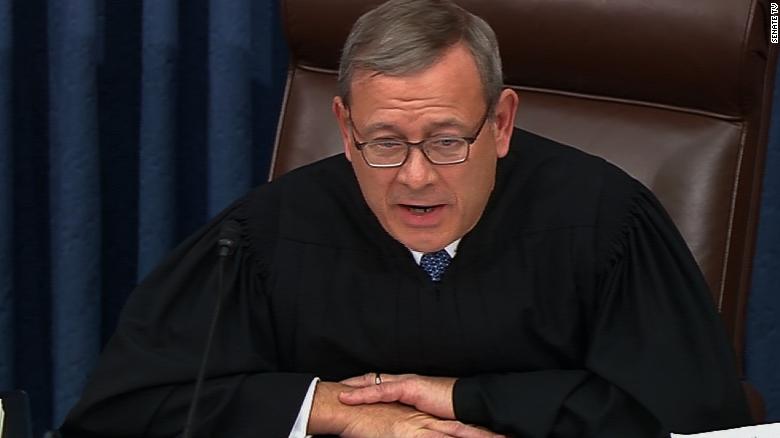
John Roberts

 Chief Justice John Roberts and his colleagues on the U.S. Supreme Court amount to little more than the Trump administration's "errand boy," according to a scathing letter from a retired state judge in Hawaii. James Dannenberg wrote the letter to announce his resignation from the Supreme Court Bar, of which he had been a member for 50 years, but Dannenberg made it clear he is disgusted with actions of the Roberts court.

It's rare to hear a lawyer publicly criticize another lawyer, especially when one of them is head of the nation's highest court. But Dannenberg apparently considers Roberts and Co. to be little more than a political arm of the White House, according to a report from Staci Zaretsky at Above the Law:

Last week, while the world at large was growing rightfully concerned about the burgeoning threat of the coronavirus, one judge found himself even more concerned about the state of the nation’s highest court.

Meet James Dannenberg. He’s a retired Hawaii judge who served for 27 years on the state’s 1st Circuit District Court. Prior to sitting on the bench, Dannenberg worked as the state’s deputy attorney general, teaching federal jurisdiction as an adjunct professor at the University of Hawaii Richardson School of Law, for more than a decade. The retired judge had also been a member of the prestigious Supreme Court Bar for almost 50 years — until he quit.

On Wednesday, he submitted a resignation letter to Chief Justice John Roberts, going so far as to refer to the Roberts Court as the Trump administration’s “errand boy.”

Zaretsky then provides an excerpt from Dannenberg's letter, which can be read in full at this link:

The Court, under your leadership and with your votes, has wantonly flouted established precedent. Your “conservative” majority has cynically undermined basic freedoms by hypocritically weaponizing others. The ideas of free speech and religious liberty have been transmogrified to allow officially sanctioned bigotry and discrimination, as well as to elevate the grossest forms of political bribery beyond the ability of the federal government or states to rationally regulate it. More than a score of decisions during your tenure have overturned established precedents—some more than forty years old– and you voted with the majority in most. There is nothing “conservative” about this trend. This is radical “legal activism” at its worst.

Without trying to write a law review article, I believe that the Court majority, under your leadership, has become little more than a result-oriented extension of the right wing of the Republican Party, as vetted by the Federalist Society.

That last line, about the Federalist Society, is a dagger -- with a serious purpose. Trump has been packing federal courts with Federalist Society hacks, and that story has a strong Alabama flavor. Birmingham-based Judge Bill Pryor, of the U.S. Eleventh Circuit Court of Appeals, has been known as the "Johnny Appleseed of the Federalist Society" for his zealous efforts to help the organization grow, especially in the Deep South. That's the same Bill Pryor who is infamous for his 1990s foray into gay pornography at the Web site badpuppy.com. From a summary of a recent New York Times article about Trump's court-packing efforts, with assistance from Mitch McConnell:

President Trump has tilted the appellate courts rightward with conservative judges who are young, white, male and uncompromising, our analysis shows.

Working with his Republican allies in the Senate, he installed 51 judges in just three years — appointing more than a quarter of the appellate bench at a record pace. At least seven had previous jobs with Mr. Trump’s campaign or his administration, and all but eight had ties to the Federalist Society, a legal group with views once considered on “the fringe.”

Dannenberg does not ease up with the Federalist Society, taking shots at other sacred holdings of modern conservative "legal thought":

Yes, politics has always been a factor in the Court’s history, but not to today’s extent. Even routine rules of statutory construction get subverted or ignored to achieve transparently political goals. The rationales of “textualism” and “originalism” are mere fig leaves masking right wing political goals; sheer casuistry.

What about other "inconvenient truths" in Dannenberg's letter. Consider his introductory paragraphs:

Dear Chief Justice Roberts:

I hereby resign my membership in the Supreme Court Bar.

This was not an easy decision. I have been a member of the Supreme Court Bar since 1972, far longer than you have, and appeared before the Court, both in person and on briefs, on several occasions as Deputy and First Deputy Attorney General of Hawaii before being appointed as a Hawaii District Court judge in 1986. I have a high regard for the work of the Federal Judiciary and taught the Federal Courts course at the University of Hawaii Richardson School of Law for a decade in the 1980s and 1990s. This due regard spanned the tenures of Chief Justices Warren, Burger, and Rehnquist before your appointment and confirmation in 2005. I have not always agreed with the Court’s decisions, but until recently I have generally seen them as products of mainstream legal reasoning, whether liberal or conservative. The legal conservatism I have respected– that of, for example, Justice Lewis Powell, Alexander Bickel or Paul Bator– at a minimum enshrined the idea of stare decisis and eschewed the idea of radical change in legal doctrine for political ends.

I can no longer say that with any confidence. You are doing far more— and far worse– than “calling balls and strikes.” You are allowing the Court to become an “errand boy” for an administration that has little respect for the rule of law.

Finally, let's consider these parting shots from the Dannenberg letter, which seem directed at Roberts' vaunted backside:

Your public pronouncements suggest that you seem concerned about the legitimacy of the Court in today’s polarized environment. We all should be. Yet your actions, despite a few bromides about objectivity, say otherwise.

It is clear to me that your Court is willfully hurtling back to the cruel days of Lochner and even Plessy. The only constitutional freedoms ultimately recognized may soon be limited to those useful to wealthy, Republican, White, straight, Christian, and armed males— and the corporations they control. This is wrong. Period. This is not America.

I predict that your legacy will ultimately be as diminished as that of Chief Justice Melville Fuller, who presided over both Plessy and Lochner. It still could become that of his revered fellow Justice John Harlan the elder, an honest conservative, but I doubt that it will. Feel free to prove me wrong.

The Supreme Court of the United States is respected when it wields authority and not mere power. As has often been said, you are infallible because you are final, but not the other way around.

I no longer have respect for you or your majority, and I have little hope for change. I can’t vote you out of office because you have life tenure, but I can withdraw whatever insignificant support my Bar membership might seem to provide.

Please remove my name from the rolls.

With deepest regret,

James Dannenberg

Monday, January 7, 2019

Under a U.S. Supreme Court case called Alabama v. Shelton, Carol's sentence of probation in Missouri "assault" case is invalid and due to be reversed


Ruth Bader Ginsburg
The suspended sentence that a Missouri judge placed on my wife, Carol, in a bogus "assault of a law enforcement officer" case is "invalid" and a "nullity," and it must be reversed,  according to U.S. Supreme Court (SCOTUS) precedent.

We already have shown that, by placing a suspended imposition of sentence (SIS) on Carol, Judge Jerry Harmison Jr. ensured there is no final, appealable judgment in the case and no conviction (even though Carol, contrary to fact and law, was found guilty). Now, we learn that the SIS and two-year probation Harmison imposed are unlawful and due to be vacated.

How many ways can one compromised judge screw up a case?

This all goes back to Missouri's denial of Carol's right to counsel, and the relevant law comes from the nation's highest court in a case styled Alabama v. Shelton, 535 U.S. 654 (2002). How rich is the irony that the cheat job heaped on Carol in Missouri would be -- or should be -- decided by a SCOTUS case that originated in Alabama?

Justice Ruth Bader Ginsburg (with dissents from -- surprise, surprise -- Antonin Scalia, Clarence Thomas, William Rehnquist, and Anthony Kennedy) wrote the opinion in Shelton. Here is it's central holding:

Held: A suspended sentence that may "end up in the actual deprivation of a person's liberty" may not be imposed unless the defendant was accorded "the guiding hand of counsel" in the prosecution for the crime charged. Argersinger, 407 U. S., at 40. Pp. 660-674.

What does this mean for Carol's case?

(1) She was placed on probation, but a violation of its terms could lead to a jail term. That, SCOTUS found in its 2002 Shelton ruling, is not allowed under the Sixth Amendment;

(2) Carol at one point had an attorney -- public defender Patty Poe -- but when Poe bailed out of the case, jail was waived as a possible punishment, by law;

(3) Carol never had another attorney, and she never waived her right to counsel, so Harmison committed a huge blunder by adding probation to the equation -- and probation, by definition, means jail is on the table. And that, Justice Ginsburg found, is a no-no.

(4) Both Poe and Margaret Palmietto (the original judge in Carol's case) apparently have more functioning brain cells than Harmison, who took over after Palmietto recused -- or maybe Poe and Palmietto are slightly less corrupt than Harmison. Either way, Poe told us upon exiting that, with jail off the table, the court could only sentence Carol to a fine, community service, or some type of educational course. Palmietto, in her final days on the case, said multiple times in open court "it's just a fine" -- as if Carol should have no problem being fined for an offense she did not commit, even according to the written and verbal statements of the so-called "victim."

Carol Tovich Shuler
Where does the SCOTUS case have its roots? The answer is Etowah County, Alabama, (county seat is Gadsden), where LeReed Shelton represented himself and twice was found guilty of third-degree assault -- being sentenced to a suspended 30-day jail term and unsupervised probation. Shelton appealed, and the Alabama Supreme Court ultimately reversed his sentence, finding it invalid because he did not have counsel, violating his Sixth Amendment rights.

SCOTUS upheld the Alabama Supreme Court's finding, with these words from Ginsburg:

Defendant-respondent Shelton represented himself in an Alabama Circuit Court criminal trial. The court repeatedly warned Shelton about the problems self-representation entailed, but at no time offered him assistance of counsel at state expense. He was convicted of misdemeanor assault and sentenced to a 30-day jail term, which the trial court immediately suspended, placing Shelton on two years' unsupervised probation. The Alabama Supreme Court reversed Shelton's suspended jail sentence, reasoning that this Court's decisions in Argersinger v. Hamlin, 407 U. S. 25, and Scott v. Illinois, 440 U. S. 367, require provision of counsel in any petty offense, misdemeanor, or felony prosecution, Argersinger, 407 U. S., at 37, "that actually leads to imprisonment even for a brief period," id., at 33. The State Supreme Court concluded, inter alia, that because a defendant may not be imprisoned absent provision of counsel, Shelton's suspended sentence could never be activated and was therefore invalid. . . .

The Sixth Amendment does not permit activation of a suspended sentence upon an indigent defendant's violation of the terms of his probation where the State did not provide him counsel during the prosecution of the offense for which he is imprisoned. A suspended sentence is a prison term imposed for the offense of conviction. Once the prison term is triggered, the defendant is incarcerated not for the probation violation, but for the underlying offense. The uncounseled conviction at that point "result[s] in imprisonment," Nichols v. United States, 511 U. S. 738, 746; it "end[s] up in the actual deprivation of a person's liberty," Argersinger, 407 U. S., at 40. This is precisely what the Sixth Amendment, as interpreted in Argersinger and Scott, does not allow.

Carol was the victim of an uncounseled (and unlawful) conviction, and SCOTUS makes clear that her sentence must be reversed as invalid. Whether the dictates of the nation's highest court has any impact on Jerry Harmison Jr. -- or anyone else in Missouri's perverse "justice system" -- remains to be seen. But it's clear Carol's sentence is a nullity, meaning it is legally void and is based on . . . well, nothing.

Friday, June 29, 2018

Trump and Gorsuch pressure Anthony Kennedy to retire, hoping to replace him with SCOTUS justice who would be favorable in rulings on Mueller investigation


Donald Trump, Neil Gorsuch, and Anthony Kennedy
Donald Trump and Neil Gorsuch conspired to pressure U.S. Supreme Court Justice Anthony Kennedy to retire, according to a report from a D.C.-based investigative journalist. The move is designed to let Trump appoint a justice who would be in his corner should issues related to the Robert Mueller investigation wind up before the nation's highest court.

Gorsuch, from Colorado, was Trump's first appointee to SCOTUS, and he combined with Kennedy's sons and Trump to force an opening on the Supreme Court via the elder Kennedy's exit, reports Wayne Madsen. The mainstream media, led by The New York Times, also reports that Anthony Kennedy was pressured to resign, but it's story is much more cautious than the one Madsen produced.

Madsen's report suggests the No. 1 characteristic Trump will look for in a nominee is one who might side with him in any case that comes before the court regarding the Mueller probe.

Meanwhile, some Democrats -- in a rare showing of spine -- say a president who is under criminal investigation should not be allowed to make a nomination to the U.S. Supreme Court, according to HuffPost.

The Times makes no mention that the pressure was designed to possibly give Trump an upper hand in the Mueller investigation. And the newspaper portrays such pressure to create a high-court opening as standard political theater. Madsen, however, says such collusion to influence SCOTUS could be criminal. From the Wayne Madsen Report (WMR):

There are multiple reports coming out of congressional and media circles in Washington, DC that Donald Trump colluded with Supreme Court Associate Justice Neil Gorsuch and the sons of Associate Justice Anthony Kennedy to convince Justice Kennedy to retire. Kennedy's announcement that he is retiring sent shock waves through the country, with fears that Trump's replacement will provide a solid 5-4 court majority that will help Trump roll back several fundamental constitutional rights.

More importantly, a 5-4 Republican majority on the court is seen by Trump as protecting him from any indictment or recommendation for impeachment arising from the Justice Department investigation of Trump and his associates being conducted by special counsel Robert Mueller.

If Trump colluded with Gorsuch and Kennedy to "pack the court" in Trump's favor, that would represent impeachable offenses by both Trump and Gorsuch. The Supreme Court's independence from interference by the other two branches of the federal government -- executive and legislative -- is sacrosanct under the Constitution.

The 81-year old Kennedy was not only pressured to retire by his Trump-appointed court colleague, Gorsuch, but also by his son, Justin Kennedy, a personal friend of Donald Trump, Jr.

Justice Kennedy also saw pressure to step down from his other son, Gregory Kennedy, a Stanford Law School classmate of Peter Thiel, Donald Trump's high-tech adviser. Thiel's Palantir Technology, which has several U.S. intelligence and law enforcement contracts -- including one with Immigration and Customs Enforcement (ICE) for identifying immigrants in the United States for deportation -- is partnered with Gregory Kennedy's former firm, which is ominously called Disruptive Technology Advisers, LLC and which is billed as a "merchant bank" in Los Angeles.

Trump and Gorsuch were particularly forceful in encouraging Anthony Kennedy to step aside, reports Madsen:

Reportedly, Trump personally pressed Gorsuch, who once clerked for Kennedy, to ask the associate justice to retire. Whether or not Trump told Gorsuch that the move was to ensure that the president would remain immune to the court upholding any moves by Mueller, Gorsuch, as a constitutional expert with experience working at the court, would have known what the request meant. Gorsuch would have also known that by cajoling him to pressure a Supreme Court justice to retire, Trump's actions were not only unconstitutional and illegal, but also exposed himself to charges of judicial malfeasance and potential impeachment.

Compared to Madsen's report, The New York Times article has a "let's shrug our shoulders" feel to it. From The Times:

There were no direct efforts to pressure or lobby Kennedy to announce his resignation Wednesday, and it was hardly the first time a president had done his best to create a court opening. “In the past half-century, presidents have repeatedly been dying to take advantage of timely vacancies,” said Laura Kalman, a historian at the University of California, Santa Barbara.

But in subtle and not so subtle ways, the Trump administration waged a quiet campaign to ensure that the president had a second opportunity in his administration’s first 18 months to fulfill one of his most important campaign promises to his conservative followers: that he would change the complexion and direction of the Supreme Court. . . .

There is nothing unusual in urging older justices to retire for partisan reasons. During the Obama administration, prominent liberals called for Justice Ruth Bader Ginsburg to retire so that Obama could name her successor.

Kennedy’s departure is a triumph for Trump, who has taken particular satisfaction in his judicial appointments. Naming justices and judges is easier than forging legislative compromises, and Trump understands that his judicial appointments represent a legacy that will long outlast his presidency.

Meanwhile, a few Democrats were making a rare display of toughness regarding the SCOTUS opening. From Amanda Terkel, of HuffPost:

Some Democratic senators and their allies are starting to make the argument that not only should there be no Supreme Court pick until after the November elections, but that there shouldn’t be one at all while the president remains under criminal investigation.

Special counsel Robert Mueller is investigating President Donald Trump as part of his probe into Russia’s interference in the 2016 election to defeat Hillary Clinton. Trump is not, however, a criminal target of Mueller’s.

During a judiciary committee hearing Thursday, Sen. Cory Booker (D-N.J.) noted that a challenge to the investigation could very well end up before the Supreme Court at some point ― potentially creating a conflict of interest for a president who has asked nonpartisan officials for their loyalty.

“If we’re not going to thoroughly discuss what it means to have a president with this ongoing investigation happening, who is now going to interview Supreme Court justices, and potentially continue with his tradition of doing litmus tests, loyalty tests, for that person, we could be participating in a process that could undermine that criminal investigation,” Booker said. “I do not believe this committee should or can in good conscience consider a nominee put forward by this president until that investigation is concluded.”

Booker was not alone in speaking out:

Sen. Jack Reed (D-R.I.) also mentioned the Russia investigation Wednesday in his statement on Justice Anthony Kennedy’s upcoming retirement, saying Republicans will be “conveniently ignoring the serious investigation into Russia’s pro-Trump campaign interference in our democracy” if they try to rush a nominee through.

According to HuffPo, the Russian investigation is likely to hang over the Trump nomination, for a variety of reasons:

The Russia investigation is likely to come up more if Trump chooses Brett Kavanaugh, a circuit court judge who is on the president’s shortlist of potential nominees. Kavanaugh is one of the most outspoken champions of unitary executive theory ― essentially, unchecked presidential power over the executive branch ― on the bench, and Democrats would no doubt press him about his views on the constitutionality of the special counsel and other matters regarding the probe.

Trump and his GOP allies in the Senate have said they want to have a nominee confirmed by the midterm elections in November. Democrats have argued that they are being hypocrites, as Senate Majority Leader Mitch McConnell (R-Ky.) refused to give a hearing or a vote to Merrick Garland, President Barack Obama’s nominee to replace the late Justice Antonin Scalia, in March 2016. McConnell argued at the time that a Supreme Court confirmation should not happen until after the election.

Trump, of course, won that election, and he nominated Gorsuch for the bench, stealing the seat away from liberals and securing a 5-4 conservative majority.

Monday, May 1, 2017

Federal judge Bill Pryor's history in gay-pornography, like a ghost that won't go away, rears its head again with the emergence of nudie photograph No. 4


Bill Pryor No. 1, with special guest
Donald Trump
(From Metro Weekly)
Bill Pryor, the fiercely anti-LGBT federal judge who almost became Donald Trump's nominee to the U.S. Supreme Court (SCOTUS), has a gay-porn past that keeps on giving.

We broke the story in September 2013 of Pryor's appearance at badpuppy.com, a Cocoa, Florida-based site that has grown to become a "super store" of gay-porn images. Less than one week after the story broke, and became somewhat of a viral Web sensation, deputies from Shelby County, Alabama, started making regular appearances (in twos and threes, with multiple vehicles) on our property. Less than a month after that, Deputy Chris Blevins entered our basement garage (without showing a warrant, stating he had a warrant, or stating his purpose for being on the premises) and beat me up, doused me with pepper spray, and hauled me to the Shelby County Jail for a five-month stay.

That's the price you pay for reporting accurately and forcefully about judicial and political corruption -- most of it Republican based -- in a Deep Red state. And you thought the First Amendment protected your rights to free speech and a free press.

I unearthed gay-porn photo No. 1 and broke the original story with old-fashioned, shoe-leather journalism. But the story has not ended there. We are blessed with a bunch of dedicated and sharp-eyed readers, and they have found other nudie photos of Pryor, part of a gallery that reportedly included eight to 12 images.

Bill Pryor No. 2
Readers helped us publish gay-porn photo No. 2 on March 22, 2017. That's the one featuring a youthful Pryor, then an undergraduate at Northeast Louisiana University (now the University of Louisiana Monroe, ULM), straddling a block of wood -- he's got wood, get it?

Photo No. 3, again dug up by enterprising readers, ran on April 5, 2017. It featured Pryor holding what we thought was a gourd, with a male face drawn on it. This seemed to mark a major step forward in artistic expression for the future federal judge. A helpful reader informed us that Pryor actually was holding a coconut, not a gourd. (See, I told you we had smart readers.)

Now, Legal Schnauzer readers have struck again, helping ensure that gay-porn photo No. 4 would land in our laps. (Isn't teamwork fun?) I never dreamed that we would wind up with a full, or almost full, gallery to Bill Pryor's nudie oeuvre. But at the rate our readers are digging things up, I think we might just make it -- and it might not take too much longer.

(Note: Redacted versions of photos 1-3 are published within this post. Links to NSFW versions of the photos, plus an amusing meme about Trump's one-time infatuation with Pryor, are at the end of this post.)

Photo No. 4 has appeared at three tumblr sites, that we know of: (Warning: All three links contain explicit images.)

* Oldies But Hotties!

* Vintage Gay

* Who's a Big Boy?

Our plans are to run photo No. 4 later this week. While this story undeniably has titillating qualities -- or perhaps "prickly qualities" would be a more accurate term -- there is serious junk going on beneath the surface. (He said "junk" . . . uh huh . . . uh huh.)

Multiple press reports during the 2016 presidential campaign indicated Pryor was the favorite to be Trump's choice for SCOTUS. Those reports picked up steam when U.S. Sen. Jeff Sessions (R-AL), long a champion of Pryor's career (perhaps because of the pair's deeply personal attachment), became the first major political figure to jump on the Trump Train -- eventually being named attorney general and lying during his confirmation hearings about meetings with a Russian ambassador.

Bill Pryor No. 3, with special guest
"Mr. Coconut"
Why did Pryor's SCOTUS hopes sink into the depths, with the seat eventually going to Neil Gorsuch, of Colorado? We addressed that issue in a recent post, titled "Did Legal Schnauzer reporting on his nude photos at the badpuppy.com gay-pornography Web site cost Alabama's Bill Pryor a seat on the U.S. Supreme Court?" From that post:

Alabama federal judge Bill Pryor came in no better than third last night in the race to become Donald Trump's first (and, hopefully, only) nominee to the U.S. Supreme Court. That was quite a fall for a candidate who widely was considered the front-runner just a few weeks ago. And that raises this question: Did our reporting here at Legal Schnauzer about Pryor's ties to 1990s gay pornography cost him a lifetime appointment on the nation's highest court?

I don't know the answer to that question, and I admit that even raising it sounds like I'm tooting my own horn. (Perhaps that's because I am tooting my own horn.) But a number of intelligent people I like and admire -- a doctor, a retired lawyer, my wife -- have told me in recent days they thought Pryor's fading prospects were directly related to our reports about his nudie photos that appeared at badpuppy.com in the 1990s. The hypocrisy, my friends and loved ones said, of an ardently anti-gay rights judge appearing at a gay-porn Web site (in photos taken during his college days in the 1980s), would be too much for the Trump administration to stomach.

Here's more:

The conventional wisdom holds that Pryor's star fell because Team Trump was concerned his controversial statements about abortion rights, gay rights, privacy, and other hot-button cultural issues would make it difficult to get him confirmed. That might be the case, but such a scenario suggests reasonable, rational, and deliberate thought -- and we've seen no sign that exists in the Trump White House.

So, did Legal Schnauzer cause Pryor's downfall? (Hah! Sorry, couldn't contain myself.) Well, my friends and loved ones say they've seen signs that our reports about Pryor's BadPuppy days have made their way into conservative circles. And that, they say, spelled doom for Pryor, especially in the homophobic environment of the modern GOP.

For now, we don't know for sure what caused Pryor's slide, even though Jeff Sessions surely was whispering sweet nothings about his "boy toy" into the head Cheeto's ears. Heck, Pryor might even be resurrected for a future SCOTUS seat if Trump and Sessions can avoid being indicted long enough.

But here's the key point: At the rate our readers are digging up gay-porn photos of Pryor, we might have a full set before long. You can't say much positive about the Trump administration in its first 100 days, but there is this: The "Gang That Couldn't Shoot Straight" does appear to be somewhat Web savvy. Mr. Orange himself is the diabolical prince of Twitter, so it's hard to imagine that word of Pryor's adventures in homo-erotica have not reached 1600 Pennsylvania Avenue -- assuming Trump is ever there.

Will our readers ensure that Bill Pryor's judicial career goes into a deep, quiet slumber? Looks to me like they are well on their way.


From The Sword

Bill Pryor No. 1 (NSFW)


Bill Pryor No. 2 (NSFW)


Bill Pryor No. 3 (NSFW)


Wednesday, April 5, 2017

Gay-porn photograph No. 3 shows true artistic growth as U.S. Circuit Judge Bill Pryor introduces a gourd to his oeuvre of nudie images from the 1980s

Bill Pryor and his gourd

As each nude photograph of U.S. Circuit Judge Bill Pryor surfaces, you can see Pryor grow as a gay-porn artiste. We're not kidding.

Photo No. 1 was nothing more than Pryor and his erection. Not much going on there, but it was a start.

Photo No. 2 was Pryor sitting on a block of wood. ("He's got wood, get it?") That's an artistic statement on the Beavis and Butt-Head level, but it shows the beginnings of some depth in the Pryor oeuvre.

Photo No. 3, to which we introduce you now (right), shows signs of real growth. It features Pryor, with his ever-present schlong (of which he seems quite proud), holding what appears to be a gourd. (A full-blown, NSFW version of the photo can be viewed by clicking on a link at the end of this post.)

But wait, it's not just any old gourd. Someone appears to have drawn a face on the gourd -- two eyes, a nose, hair, maybe lips. The hair is styled a bit like Pryor's, so maybe we have a self portrait -- Pryor's face on a gourd, with his schlong co-starring in all of its glory.

This is the artistic equivalent of playing a Beatles record backward in the late '60s so you could hear "I buried Paul." (Yes, I tried that; no, I never heard anything but static.) Nobody seems to know what it means, but it sure is weird so . . . hey, that's cool.

What kind of intellect does it take to be considered for a seat on the U.S. Supreme Court? Bill Pryor seems to provide the answer: You have to be able to draw a face on a gourd and hold it up for the camera, while your schlong is on full display.

That sets the bar pretty darned low doesn't it? Just what we need in an era of Donald Trump, "alternative facts," and complete lack of respect for the rule of law.

Our crack Legal Schnauzer researchers are scouring Europe-based porn sites to find the remaining images in the Pryor gallery; they reportedly total eight to 12. We hope to have a full set within the next two or three months.


Bill Pryor NSFW No. 3

Tuesday, November 22, 2016

Snopes.com, the famed Web fact-checking site, weighs in on the story of U.S. Judge Bill Pryor and his connections to 1990s gay porn via badpuppy.com


Bill Pryor, from badpuppy.com
The Web's best-known fact-checking site has weighed in on the story of U.S. District Judge Bill Pryor and a nude photo of him that appeared at several gay-pornography media outlets in the 1980s and '90s. We broke the Pryor-porn story in September 2013, and interest in it skyrocketed recently in the wake of Donald Trump's election, with the possibility that Pryor will be nominated to a seat on the U.S. Supreme Court.

Snopes.com reportedly attracted 7 to 8 million unique visits in one month during 2010, making it almost certainly the most widely read fact-checking site on the Web. With a recent post titled "Derobed: A photograph of a nude young man has been claimed to picture Judge William Pryor, a potential Supreme Court nominee," Snopes has applied its research capabilities to a story that has been big in Alabama and the Southeast for some time -- and might soon become a story of national importance.

What is Snopes conclusion about the Pryor story? It labels the story as "unproven." Does that bother me? Absolutely not. For one, I welcome the analysis of  a widely read, and generally respected, site such as Snopes. Two, despite its solid reputation, Snopes' analysis of this story has problems; the site gets key facts wrong, and it's analysis is flawed. I, however, am happy to have the attention for a story that could soon be vitally important to America's future.

From the Snopes article, by Dan Evon:

CLAIM: A photograph of a nude young man pictures Judge William Pryor, a potential Supreme Court nominee.

ORIGIN:Judge William H. Pryor of the 11th Circuit U.S. Court of Appeals has been in the news lately, both because his name reportedly appeared on President-Elect Donald Trump's definitive list of potential Supreme Court nominees, and because while serving as Alabama's attorney general Pryor filed an amicus brief in support of a Texas anti-sodomy law.

It was with some sense of irony, then, that in November 2016, an old image purportedly showing William Pryor posing nude for a gay porn magazine as a young man was recirculated online in November 2016:

Snopes gave us credit for breaking the story, and we appreciate that, although we object to the characterization that the "rumor" originated with our Web site. We didn't engage in rumor dissemination; we engaged in journalism:

The rumor that Pryor once posed nude for a gay porn magazine originated with a web site called "Legal Schnauzer" back in 2013. That web site claimed that the photograph "likely appeared in at least one print publication in the 1980s" and was later published by the web site Badpuppy.com in 1997. However, the former reference is too vague to verify, and we were unable to find the image on Badpuppy. (Legal Schnauzer claims the image was removed from Badpuppy, but not before the Alabama Bureau of Investigations managed to capture a screenshot of it.)

Where does Snopes go off the tracks? It starts here, with a paragraph that is below a redacted version of the nude Pryor photo we first published:

The assertion that the above-displayed photograph is a picture of Judge William Pryor is based on three factors: a supposed headshot of the model appears next to the name "Bill Pryor," colleagues of the judge reportedly saw the photograph and exclaimed that it looked like him, and that the model and Pryor both allegedly have "strabismus" (i.e., crossed-eyes). 
Whatever the evidence provided by Legal Schnauzer, the alleged opinion of two unidentified officials isn't proof of anything. Furthermore, while whoever posed for the photograph may resemble Pryor at first glance, a side-by-side comparison shows that certain features (such as the nose) seemingly don't match.

What problems are present here?

(1) Snopes ignores the fact that we interviewed two former state law-enforcement officials who were directly involving in investigating the photos out of concern that Pryor, then Alabama's freshly named attorney general, might be vulnerable to blackmail. Snopes apparently glossed over this paragraph from our original report on the Pryor photos:

Alabama law-enforcement officials became aware of the photos at badpuppy.com in 1997, not long before Governor Fob James appointed Pryor attorney general. An investigation ensued, and multiple officials familiar with that process have told Legal Schnauzer that the photos are, in fact, of the Bill Pryor who now sits on the U.S. Eleventh Circuit Court of Appeals. Sources say the photos were taken while Pryor was a student at Northeast Louisiana University (now University of Louisiana Monroe) from 1980 to 1984.

Bottom line? Our reporting was not based on just the three factors Snopes lists above. It also was based on interviews with multiple law-enforcement officials who were directly involved in the matter and said their investigation showed the nude individual was "the" Bill Pryor.

(2) Snopes claims the noses in the two photos do not match, but it does not say how. The older Pryor weighs more than the younger Pryor, and his face is more full, but I see no other difference in the noses. Snopes fails to mention that both images clearly do involve strabismus and attached earlobes.

Finally, we have this from Snopes:

But perhaps the most unbelievable aspect of this claim is simply that this photograph, which the Alabama Bureau of Investigations (ABI) and public officials have allegedly known about since the 1990s, has never been directly linked to Pryor. The judge, who was nominated to the Eleventh Circuit by President George W. Bush in 2003, told the Justice Integrity Project in 2013 that:

"I have been smeared by a widely discredited blogger with a political agenda. His allegations have now been picked up by other bloggers. The person in the unsourced, undated photographs is not me, and I deny these allegations. I have been twice vetted by the FBI, including as recently as this past year; I have won two contested statewide elections; and I have been in the public eye for almost twenty years. I will not dignify these disgraceful accusations with any further comment."

The first highlighted section simply is not true. Multiple law-enforcement officials have directly linked the photo to Pryor, based on their investigation, which took them to Monroe, Louisiana, where Pryor went to college.

The second highlighted section does not tell the whole story. Pryor did not tell the Justice Integrity Project (JIP) anything in 2013. In fact, he apparently did not speak to JIP publisher Andrew Kreig at all, and definitely did not take any questions. Instead, Pryor had a former law clerk named Jennifer Bandy issue the "official statement" Snopes cites above.

Does Snopes reveal Andrew Kreig's assessment, based on research that included an attempt to interview Pryor, which Snopes apparently made no effort to do? No, it doesn't, but here is the conclusion that Kreig reached:

My opinion is that the photo is Pryor more likely than not, despite his denial.

Perhaps Snopes and Dan Evon would be wise to provide their audience with more context to this story. They could inform their readers that I broke the Pryor story on September 17, 2013, and one week later, Alabama deputies (in groups of two and three, always with multiple vehicles) started regularly appearing at our house, with no lawful grounds for trampling all over our property. Less than one month after the show of law-enforcement thuggery began, a deputy walked into our garage (without showing a warrant, stating he had a warrant, or stating his reasons for being present), beat me up, doused me with pepper spray and hauled me to the Shelby County Jail for a five-month stay -- all with no legal grounds for doing so.

I became the only American journalist since 2006 to be incarcerated -- and apparently the only one in American history to be arrested over a preliminary injunction that is unlawful in a defamation case under 230 years of First Amendment law. Is it a coincidence that this happened just weeks after I broke the story of Bill Pryor's youthful foray into gay porn?

I don't think so, and I would invite an inquiry from Snopes into the really important, and disturbing, aspects of this story. Dan Evon likely has no idea how deep the ugliness goes -- and it even includes an effort to have a bogus "content warning" placed on my blog.

An in-depth inquiry would show that the individual in the nude photo is, in fact, "the" Bill Pryor -- and the judge and his allies, in a show of Stalinesque force, had a journalist kidnapped and thrown in jail for reporting accurately on the story.

Life in America likely will get ugly under Donald Trump, and the Pryor story provides a glimpse of how far entitled, white right-wingers will go when they feel threatened by the truth.

Tuesday, June 28, 2016

U.S. Supreme Court overturns white-collar corruption convictions of former Virginia Gov. Robert McDonnell, but what about Don Siegelman, of Alabama?


Robert McDonnell
(From slate.com)
The U.S. Supreme Court (SCOTUS) yesterday overturned the convictions of former Virginia Gov. Robert McDonnell, leaving many Alabamians and justice activists asking: Does this create a pathway to freedom for Don Siegelman? Our answer is . . . maybe.

In fact, Siegelman's best hope might have little to do with the McDonnell case and everything to do with the fact that trial judge Mark Fuller no longer is on the federal bench.

Appellate-court decisions often focus on narrow issues that might, or might not, apply to similar cases. Such rulings are written in a form that is . . . well, let's just say they hardly are models of clarity. Both of those qualifiers apply to McDonnell v. United States, which was issued yesterday morning (The opinion is embedded at the end of this post.), and that makes it difficult to come to solid conclusions about how it might apply to the Siegelman case.

First, McDonnell dealt almost entirely with this narrow question: Did McDonnell take "official action" to benefit a constituent (Jonnie Williams) who showered the governor and his wife with favors and more than $175,000 in gifts (Rolexes, designer clothes, catering for a daughter's wedding), apparently in hopes of receiving favorable action for his vitamin and dietary-supplement company.

The McDonnells helped arrange meetings for Williams with state university and health-care officials who might be able to help launch his products. Federal prosecutors argued that was an illegal "quid pro quo" -- the gifts (the "quid") in exchange for access to key state officials (the "quo"). But SCOTUS found that setting up meetings for Williams was part of everyday activity for a governor; it was not an official action, meaning their was a "quid" but no "quo."

In our coverage of the Siegelman case, plus a quick review of documents yesterday, I have not found any evidence that the "official action" question was raised. It appears that both sides conceded Siegelman's appointment of former HealthSouth CEO Richard Scrushy was an "official action." Does that mean McDonnell offers nothing for Siegelman, that the former Alabama Governor (still in federal prison at Oakdale, Louisiana) is out of luck because yesterday's ruling focused narrowly on an issue that didn't seem to be in play at the Siegelman trial?

Not necessarily -- at least in my view?

Here are three possible avenues that Siegelman might be able to pursue:

(1) What in the heck is an "official action" now, anyway?

Here is how the McDonnell court described it on page 26 of its ruling:

In sum, an “official act” is a decision or action on a “question, matter, cause, suit, proceeding or controversy.” The “question, matter, cause, suit, proceeding or controversy” must involve a formal exercise of governmental power that is similar in nature to a lawsuit before a court, a determination before an agency, or a hearing before a committee. It must also be something specific and focused that is “pending” or “may by law be brought” before a public official. To qualify as an “official act,” the public official must make a decision or take an action on that “question, matter, cause, suit, proceeding or controversy,” or agree to do so. That decision or action may include using his official position to exert pressure on another official to perform an “official act,” or to advise another official, knowing or intending that such advice will form the basis for an “official act” by another official. Setting up a meeting, talking to another official, or organizing an event (or agreeing to do so)—without more—does not fit.

Was Siegelman's appointment of Scrushy to the Certificate of Needs (CON) board a "question, matter, cause, suit, proceeding, or controversy?" Scrushy had served on the board under three previous governors, so it doesn't appear there was much of a "question," "cause," "suit," "proceeding," or "controversy." The prosecution might argue that it was a "matter," thus making it an "official action." But is there anything in the language that plainly states an appointment to a board, especially one the appointee already had served on under three governors, is an "official action"? I don't see it, and this could be an avenue of review for Siegelman.


(2)  Was the Scrushy appointment "pending" before Siegelman?

The new definition of an "official act" includes an emphasis on decisions that are "pending" before a public official. From page 22 of the McDonnell ruling:

In addition to the requirements we have described, §201(a)(3) states that the question or matter must be “pending” or “may by law be brought” before “any public official.” “Pending” and “may by law be brought” suggest something that is relatively circumscribed—the kind of thing that can be put on an agenda, tracked for progress, and then checked off as complete. In particular, “may by law be brought” conveys something within the specific duties of an official’s position—the function conferred by the authority of his office. The word “any” conveys that the matter may be pending either before the public official who is performing the official act, or before another public official.

Was the Scrushy appointment "pending" before Siegelman at the time of the donation? That seems to be in doubt. There long has been confusion about how much money Scrushy donated in the Siegelman matter, when he donated it, and why he donated it. In a recent interview with Legal Schnauzer, Scrushy said he gave $250,000 (not $500,000, as has been widely reported), he gave it not to promote Siegelman's education-lottery proposal, but to help pay down the Alabama Democratic Party's debt after the lottery had been defeated, and he gave the money as he was stepping down from the CON board.

Don Siegelman
Neither Siegelman nor Scrushy testified at trial, so it's unclear how much of the above information is in the official court record. But if it is in the record -- or is allowed in the record -- it could be argued that the Scrushy matter was not "pending" before Siegelman, at all. In fact, Scrushy says he was finished serving on the CON by the time he made a donation to help pay down the lottery debt.

If that's the case, there was no "quid pro quo" at all. Either way, it appears the Scrushy appointment was not "pending" before Siegelman at the time of the donation -- and that means it may not have been an "official act," as described in McDonnell.


(3) The constituent (Williams) in the McDonnell case clearly wanted something that would favor his company. Evidence at trial showed that Scrushy did not want anything from Siegelman.

At its heart, the McDonnell case is about a constituent (Williams) who showered favors and gifts upon the governor and his wife, in hopes of receiving positive official action for his company. Here is how Chief Justice John Roberts put it in his McDonnell opinion:

Petitioner, former Virginia Governor Robert McDonnell, and his wife, Maureen McDonnell, were indicted by the Federal Government on honest services fraud and Hobbs Act extortion charges related to their acceptance of $175,000 in loans, gifts, and other benefits from Virginia businessman Jonnie Williams, while Governor McDonnell was in office. Williams was the chief executive officer of Star Scientific, a Virginia-based company that had developed Anatabloc, a nutritional supplement made from anatabine, a compound found in tobacco. Star Scientific hoped that Virginia’s public universities would perform research studies on anatabine, and Williams wanted Governor McDonnell’s assistance in obtaining those studies.

Clearly, Williams wanted something from McDonnell, and that appears to be at the heart of the court's analysis on whether McDonell gave him something in the form of an "official action." The high court ultimately concluded that McDonnell took no such action.

But what about the Siegelman case. Evidence at trial showed Scrushy did not even want anything from Siegelman. Here is how a 2006 Associated Press story, written by the late Bob Johnson, put it:

Former Alabama Power Co. CEO Elmer Harris, the chairman of Don Siegelman's transition team when he was elected governor in 1998, testified Monday that Scrushy said he had no interest in serving on the Certificate of Need Review Board. The prosecution claims he was named to the panel in exchange for arranging for $500,000 in contributions to Siegelman's campaign for a statewide lottery.

"He did not want to serve on the CON Board. He was not going to serve on the CON Board. He was going to tell Don Siegelman he didn't want to do it," Harris said.

Harris was called by the defense to challenge testimony of Bailey, who said Siegelman told him that Scrushy had agreed to arrange the campaign donations in exchange for a seat on the CON Board. Bailey has pleaded guilty and defense attorneys say he is lying to in hopes of getting a lighter sentence.

How could a jury believe Nick Bailey, who had pleaded guilty to corruption charges, and not Elmer Harris, one of the state's most respected corporate executives at the time? I don't think anyone's ever been able to explain that one. But regardless of what was going on with the apparently compromised Siegelman jury, Harris' testimony raised clear reasonable doubt that, by law, should have precluded convictions.

The McDonnell ruling helps drive that home. If no one asked Siegelman to take "official action" -- and court testimony from a highly credible witness showed Scrushy did not -- then how could Siegelman take "official action," as now defined by McDonnell? The answer: he couldn't.

Item No. 3, in my view, might be the strongest route for Siegelman and Scrushy to seek review. Will they try to use McDonnell to earn Siegelman's freedom and get Scrushy's name cleared (He's already served his prison sentence.)? If so, will a court expedite the appeal, given that a 70-year-old man is in prison for a crime that does not exist, under the law -- and the McDonnell case adds to Siegelman's possible grounds for relief?

As regular readers know, I'm not a lawyer, but there might be more than one way for the Siegelman/Scrushy legal teams to go. My semi-educated guess is that they would need to file something akin to a Motion to Reconsider in the trial court (or perhaps a petition for a Writ of Habeas Corpus), and with Mark Fuller booted from the bench, they might actually have a chance to get a fair hearing. Depending on the speed of the defendants' legal teams, such a motion probably could be filed by the end of this week. If the court grants an expedited hearing -- and it should -- that could come in, say, the middle of July.

A new judge (not Mark Fuller) could make an immediate ruling, take several months to issue a written order, or free Siegelman pending a determination on the issues raised. Does that mean Siegelman could be released in about a month? Well, that might be a pipe dream on my part, but I welcome the comments of those with deeper knowledge about procedure in such cases.

Meanwhile, the key point is this. The McDonnell ruling hardly provides a "gimme" for Siegelman and Scrushy. But it has cracked the window open just a bit. Is the crack wide enough for the defendants to seek a review based on SCOTUS' new definition of "official action"?

Whatever you might think of Siegelman and Scrushy, they have proven to be fighters. They have shown no signs of giving up. I doubt they will start showing such signs now.