Monday, March 21, 2022

Criminal charges against justice official in Maryland raise this question: Will former Alabama U.S. Attorney Jay E. Town be next in the crosshairs for the feds

Jay E. Town

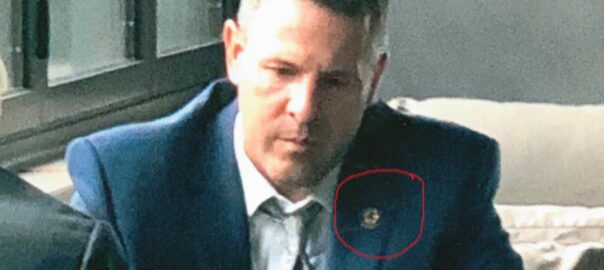
A justice official in Maryland has been indicted on mortgage-fraud charges. That's a serious matter, but the charges appear to pale in comparison to allegations of misconduct that have been swirling around a former Alabama justice official for months. We are talking about Jay E. Town, a Trump nominee for U.S. attorney in the Northern District of Alabama. An analysis at banbalch.com (BB) suggests the charges in Maryland might be minor league compared to the allegations surrounding Town. Does that mean Town soon could be the target of a Department of Justice (DOJ) investigation, much like the one in Maryland? BB publisher K.B. Forbes shares his thoughts on that question: 

Creating national headlines, the Office of the U.S. Attorney for Maryland indicted Baltimore City State’s Attorney Marilyn Mosby in January for alleged mortgage fraud.

The Baltimore Sun reported:

Mosby is charged with two counts of making false statements on a loan application and two counts of perjury. Mosby has pleaded not guilty to all charges and is expected to stand trial in early May. 

The Office of the U.S. Attorney in Maryland gave more details:

According to the four-count indictment… Mosby submitted “457(b) Coronavirus-Related Distribution Requests” for one-time withdrawals of $40,000 and $50,000, respectively, from City of Baltimore’s Deferred Compensation Plans.  In each request, the indictment alleges that Mosby falsely certified that she met at least one of the qualifications for a distribution as defined under the CARES Act, specifically, that she experienced adverse financial consequences from the Coronavirus as a result of being quarantined, furloughed, or laid off; having reduced work hours; being unable to work due to lack of childcare; or the closing or reduction of hours of a business she owned or operated.  The indictment alleges that Mosby did not experience any such financial hardships and in fact, Mosby received her full gross salary of $247,955.58….

Further, the indictment alleges that… Mosby made false statements in applications for a $490,500 mortgage to purchase a home in Kissimmee, Florida and for a $428,400 mortgage to purchase a condominium in Long Boat Key, Florida.  As part of both applications, Mosby was required to disclose her liabilities.  Mosby did not disclose on either application that she had unpaid federal taxes from a number of previous years ….

For anyone who follows legal news in Alabama, the mind naturally turns to Jay Town. Forbes indicates that's where the DOJ's focus should rest, too:

The allegations  against Mosby are nothing compared to the serious and appalling alleged misconduct by Ex-U.S. Attorney Jay E. Town who fled in the middle of the night after resigning in disgrace.

Sources confirmed to us this week that the alleged federal probe involving Town, Alabama Power’s secret million-dollar contracts, embattled law firm Balch and Bingham, the Matrix Meltdown, and alleged obstruction of justice is ablaze.  

And what are just a few of Town’s acts of alleged misconduct?

Here’s that list again:

How does the Town laundry list compare to the case in Maryland? Forbes summarizes nicely:

The alleged felonies and crimes connected to Town’s alleged prosecutorial misconduct is much worse than a prosecutor lying about her financial situation on a loan application or falsely alleging “hardship” to withdraw her retirement funds.

Today, Town would have been a U.S. Senate candidate. But the jaw-dropping photos and our three letters to the Office of Professional Responsibility at the U.S. Department of Justice ended his political career.

Now Town, Crosswhite, and other Balch stooges must face the consequences for their alleged foolish and corrupt misconduct.

Monday, March 14, 2022

Even the atrocities of war cannot dampen the Trump-Putin bromance, although Sean Hannity of Fox News tried his best to knock off at least some of the sheen

Sean Hannity and Donald Trump
 

The world's most prominent, and nausea-inducing, bromance apparently is so strong that even the brutalities of war cannot put a dent in it. Donald Trump suggested as much last week when a friendly, conservative TV host gave him multiple opportunities to criticize Russian President Vladimir Putin for his unprovoked attack on Ukraine -- and Trump refused to bite.

To his credit, Fox News' Sean Hannity tried several times to get Trump to say anything that wasn't fawning about the Russian leader, but Hannity came away with little to show for his effort. From a report at Politico:

Former President Donald Trump on Thursday was given several chances during a Fox News interview to reject autocrats and walk back his praise for President Vladimir Putin of Russia but didn’t.

Fox’s Sean Hannity set Trump up multiple times during the 30-minute exchange to criticize Putin, but the former president didn’t go along. He instead touted his relationships with Putin, the North Korean leader Kim Jong Un and President Xi Jinping of China.

Trump came under fire last month for describing Putin’s invasion of Ukraine as “genius” and “savvy,” keeping in line with his tendency to speak favorably of the Russian leader. Even House Minority Leader Kevin McCarthy, a Trump ally, broke with the former president this week, saying there was nothing “savvy or genius” about Putin. McCarthy went on to say that Putin was “evil,” condemning a war that has already left hundreds of civilians dead in Ukraine.

How hard did Hannity try to welcome Trump to the real world? Pretty darned hard:

Hannity not once, but twice, brought up the blow back to Trump’s comments.

“I think you also recognize he’s evil, do you not?” the Fox host said.

Trump again didn’t go that far, but Hannity gave it another try.

“Let me go back to the issue of the criticism, because I’ve known you well over 25 years,” he said. “And when you got criticized for saying that Vladimir Putin is smart, we’ve had many conversations, and you’ve often quoted to me Sun Tzu, ‘The Art of War’: Keep your friends close and your enemies closer. Is that how you viewed Vladimir? Did you view Vladimir Putin and people like President Xi and Kim Jong Un and the Iranian mullahs as enemies that you needed to keep close?”

Trump, in response, didn’t call his former counterparts enemies.

“I got along with these people. I got along with them well,” he said. “That doesn’t mean they are good people. It doesn’t mean anything other than the fact that I understood them and perhaps they understood me — maybe they understood me even better. That’s OK, because they knew there would be a big penalty.”

Hannity pressed yet again, telling the former president he wanted to understand his thinking, while also trying to put words into Trump’s mouth.

“The thinking is, we got along but you knew that they were looking out for their interests at all times,” Hannity said, with the former president interjecting, “One-hundred percent.”

The Fox News host continued: “And you understood that they were capable of evil things.”

“Putin is for Russia, and you see what happened,” Trump responded. “And that is all because they didn’t respect our leader. Look, there was nobody, and Putin will tell you this — if he was telling the truth, and I am sure he has told it to all of his inner sanctum — nobody was tougher on Russia than me.”

In his typical self-serving fashion, Trump laid all the blame on someone else (Joe Biden), while taking none for himself -- despite his repeated failures to stand up for the authority of NATO and his willingness to sew discord at home (as in Jan. 6).

Friday, March 11, 2022

Are the Alabama Supreme Court and Joe Biden's EPA about to usher in an era of environmental progressivism in highly conservative Alabama?

Alabama Power's Miller Steam Plant

Recent events suggest federal officials are keeping an eye on environmental problems in Alabama, and they intend to do something about the polluters who cause them. Writes Publisher K.B. Forbes at banbalch.com, under the headline "Tide is Turning in Alabama; “Unacceptable” Misconduct Draws Federal Scrutiny":

The Three Stooges (Alabama Power, Balch & Bingham, and Drummond Company) should be prepared to be slapped around by federal authorities and environmental groups.

Two major events occurred recently that show unequivocally that the tide is turning against some of the most powerful and wealthiest entities in Alabama.

WBHM reports:

The Alabama Supreme Court has sided with environmentalists who say the Birmingham Water Works Board (BWWB) is not abiding by a court order to protect land around Lake Purdy and parts of the Cahaba River, which are the largest source of drinking water in the Birmingham area.

The Supreme Court overturned an earlier court ruling that sided with the board and sent the case back to the circuit court.

The decision was unanimous. The conservative court sided with environmentalists, a surprising, if not stunning, defeat for industrial interests.

The win for environmental activists may cause more scrutiny of Alabama Power and its  allegedly toxic ash pond at the Miller Steam Plant.

In addition, Ketona Lakes may become a liability for Drummond as environmental groups research the alleged polluted lakes hidden away since 1985.

And who dare says there won’t be probes of these two sites or more criminal investigations?

That was not the only positive sign for those who care about clean air and water in The Heart of Dixie. Writes Forbes;

Michael S. Regan, the head of the U.S. Environmenal Protection Agency, also made headlines last week calling conditions in Alabama “unacceptable.”

AL.com reports:

On the eve of the Selma Jubilee, commemorating the “Bloody Sunday” march that helped catalyze support for the Voting Rights Act 57 years ago, the head of the U.S. Environmental Protection Agency toured Alabama’s Black Belt to witness a different kind of struggle: the battle for clean water and basic sanitation.

“It’s very sobering to see that in 2022, in the United States of America, there are people who are subjected to situations that I don’t think any of us would want to be subjected to,” EPA Administrator Michael Regan said after touring local homes dealing with wastewater system failures in Alabama’s Black Belt.

“Straight piping into lagoons, failing septic systems, waste and raw sewage backing up into yards into homes, seeing children have to walk around delicately so that they don’t sink or get bogged down into their own front yards. This is not the America that we all know it should be.”

“This is unacceptable,” Regan said. “Safe drinking water, safe sewer systems, you know, this is a basic right. These individuals deserve what every American deserves, which is clean water and a safe environment.”

Regan needs to now focus on the environmental racism and alleged corruption in North Birmingham. North Birmingham’s environmental conditions are neither clean, safe nor acceptable.

And even the Three Stooges know it.

Wednesday, March 9, 2022

Russia's Vladimir Putin is proving to be the butcher of Ukraine, and Donald Trump has a long history of siding with the butcher over Western interests

Trump and Putin

American President Joe Biden has been on the political scene long enough to recognize an adversary, and a threat, when he sees one. Biden, in fact, has referred to Russian leader Vladimir Putin as a "killer" -- and Putin seems to be doing his darnedest in Ukraine right now to prove Biden correct. America's most recent ex-president, Donald J. Trump -- unlike Biden -- can't seem to distinguish friend from foe. Trump even has a lengthy record of siding with Putin in Russia's longstanding struggles over Ukraine. That should give anyone considering a future MAGA vote cause for concern. Whether it will or not is another matter, even though Trump's distorted mindset is a clear threat to democracy in the U.S., Europe, and beyond.

How disturbing is Trump's chummy approach to Putin? John Harwood spells it out in an analysis at CNN,  under the headline "Trump has been on Putin's side in Ukraine's long struggle against Russian aggression":

Americans rarely pay much attention to international events. Busy lives leave little time for distant events with unfamiliar protagonists.

Russian President Vladimir Putin's invasion of Ukraine has become a rare exception, its butchery in plain view via saturation coverage for anyone with a video screen. But Americans may not yet have absorbed this disturbing reality: The American president who left office just 14 months ago sided with the butcher.
 
That's right: In the struggle now uniting the free world against an autocrat's lawless aggression, America's most recent ex-President sided with the autocrat.
 
It's not just that Donald Trump recently hailed the "genius" of Putin's strike against Ukraine. Since his political career began, Trump has backed Putin in ways connected directly to the Russian's quest to subjugate that country. 

 With scenes of Russia's devastation on a sovereign neighbor a regular feature on newcasts, there no longer is any excuse for American ignorance about Putin's true nature -- from Trump or anyone else. Writes Harwood:

For years, relations between Russia and the celebrity real estate executive were lubricated by money. There was the development financing Trump's sons boasted about, the Palm Beach mansion he sold to a Russian oligarch for $95 million four years after buying it for $41 million, the Manhattan project in association with a mob-linked Russian émigré.
 
He sought to place a Trump Tower in Moscow even as he ran for president. In 2013, when he staged a beauty pageant there, Trump asked on Twitter: "Will (Putin) become my new best friend?"
 
Putin seized Crimea from Ukraine the following year. Protests in Kyiv had forced a Kremlin ally to quit the presidency. The ousted president, who fled to Russia, had been advised by an American political consultant. That consultant, Paul Manafort, subsequently became Trump's 2016 campaign manager.

Did Trump seem concerned in the least about any of this? Nope:

Candidate Trump spoke forgivingly about Russia's violation of Ukrainian sovereignty. He mused about lifting sanctions to smooth relations with Putin.
 
"The people of Crimea, from what I've heard, would rather be with Russia than where they were," Trump told ABC News in July 2016. That had been Putin's justification for the invasion.
 
President Trump sought to undo one punishment imposed on Putin by proposing that Russia rejoin the G7, an organization of the world's major industrial economies. Other members, who had teamed with the US to kick Russia out during Barack Obama's presidency, declined to go along.
 
His administration implemented some new sanctions on Russia at the insistence of national security officials and Congress. Trump himself objected.
 
"In almost every case, the sanctions were imposed with Trump complaining about it and saying we were being too hard," his former national security adviser John Bolton said on Newsmax recently. 
Russia menaced Ukraine throughout Trump's term. He strengthened Putin's hand in several ways.
 

 In short, Trump hardly could have been a more reliable ally for Putin:

Trump cast doubt on America's decades-old commitment to defending European partners in the North Atlantic Treaty Organization. Aides feared he might try to withdraw from NATO if he won a second term.
 
He fomented discord at home, advancing Putin's objective of sapping American resolve. "Donald Trump is the first president in my lifetime who does not try to unite the American people," his former Defense Secretary James Mattis said in 2020.
 
Trump shielded Russia from opprobrium. Echoing Russian propaganda, he led fellow Republicans in smearing Ukraine by falsely suggesting that Kyiv rather than Moscow had interfered in the 2016 US presidential election.
 
"This is a fictional narrative that has been perpetrated and propagated by the Russian security services themselves," Fiona Hill, who had directed Russia policy on Trump's National Security Council, told a congressional impeachment inquiry in 2019.
 
Republicans protecting Trump cast the impeachment as Democratic partisanship. But it traced back to Trump's alignment with Russia against its vulnerable neighbor.
 
Congress had voted to provide Ukraine nearly $400 million in military aid. Trump delayed sending it.
"I would like you to do us a favor," Trump told Ukrainian President Volodymyr Zelensky in their infamous July 2019 telephone call.
 
The favor was for Zelensky to smear presidential rival Joe Biden by investigating him and his son, Hunter. Zelensky never complied.

Has the Trump-Putin alliance proved beneficial for either of them? The short-term answer is no, writes Harwood:

Things haven't worked out as either Trump or Putin wanted.
 
Trump lost his reelection bid. Biden, who defeated him, now leads the global effort to stop Putin's aggression.
 
Instead of splintering under military and economic pressure, NATO and the European Union have pulled together in support of Ukraine. Within the US, the two normally brawling political parties have joined to condemn Russian savagery.
 
Republican senators who voted to acquit Trump of those impeachment charges applauded as Biden excoriated the Russian leader in last week's State of the Union address. A Republican-sponsored "Putin Accountability Act" in Congress seeks to sanction, among others, the Russian oligarch who more than doubled Trump's money on that Palm Beach mansion.
 
Even Trump has changed his tune. A week after praising Putin's strategic acumen, he denounced Russia's attack on Ukraine as "a holocaust."
 
The former President remains the leading candidate for the Republican Party's nomination in 2024. But the longer the bloodshed in Ukraine goes on, the bigger a liability Putin will become.
 
Trump and those around him had wanted the controversy to go away. His former Secretary of State Mike Pompeo, who listened in the notorious Trump-Zelensky call, berated a reporter who asked about Ukraine a few months later.
 
"Do you think Americans care about Ukraine?" Pompeo shouted at National Public Radio's Mary Louise Kelly.
 
They may not have cared then. Unfortunately for Trump, they care now.

Tuesday, March 8, 2022

Loveland, Colorado, will pay $3 million to settle police-brutality case where the victim was a 73-year-old woman -- at 5-feet and 80 pounds, with dementia

The brutalization of Karen Garner, 73

A Colorado city has settled a police-brutality lawsuit, where the victim was a 73-year-old woman with dementia. Loveland, CO, police responded to a complaint from Wal-Mart employees who said Karen Garner walked out of the store without paying for several items. The cops hog-tied Garner, beat her up, and left her with serious injuries. She is 5-feet and weighs 80 pounds. From a report at the Denver Post:

What started last year in Loveland with a 73-year-old woman with dementia trying to leave Walmart with $13.88 in unpaid merchandise ended Wednesday with the city agreeing to pay a $3-million civil settlement.

The city of Loveland announced it will settle a federal lawsuit Karen Garner and her family brought after Garner was violently arrested by police in June 2020, bringing an end to a months-long saga that prompted widespread outrage, ended the careers of three Loveland police officers and brought about a third-party investigation into the police department.

“This settlement brings a measure of justice to the Garner family, but it does not deliver full justice,” the family’s attorney, Sarah Schielke, said during a news conference. “Full justice to Karen Garner and this community will happen at the moment that every individual who participated in this atrocity and who fostered the conditions and culture that made its happening possible is held accountable.”

Schielke called on Loveland Police Chief Bob Ticer to resign:

“We need change, we need them to change,” said Garner’s daughter, Alissa Swartz.

Ticer said he has no intention of resigning.

“I understand the emotion, I understand those demands,” he said. “But my responsibility here is to ensure the investigations (into the Garner incident) that are moving forward are handled professionally.”

How could a forgetful act by a small, elderly woman lead to such an ugly event? For one thing, it involved grossly unprofessional police behavior. The Denver Post reports:

In June 2020, Garner had started to walk out of a Walmart store in Loveland without paying for her items when she was stopped by employees, who took the items back. Employees still called Loveland police and Officer Austin Hopp confronted Garner as she was walking home, throwing the woman to the ground. Hopp broke Garner’s arm and dislocated her shoulder during the arrest, according to the lawsuit.

Video shows Hopp, Officer Daria Jalali and Officer Tyler Blackett later laughing about the arrest as Garner sat in a nearby cell. They rewatched the body camera footage and Hopp asked, “Ready for the pop?” Schielke said it was the sound of Hopp dislocating Garner’s shoulder.

Hopp, Jalali and Blackett all resigned from the police department. Hopp and Jalali, who were both involved in the arrest, are also facing criminal charges. Sgt. Phil Metzler, a supervising officer who responded to the scene and approved the use of force, is still on paid leave from the department.

A third-party investigation into the police department’s handling of the incident has concluded, but the results may not be public for several months, city officials said in a statement.

Why was any use of force needed in such a situation? Documents show multiple police officials signed off on it:

The settlement announcement follows Schielke’s release Tuesday of an internal police report that shows three different police supervisors signed off on Hopp’s use of force against Garner, as well as the release of body-camera footage that shows Metzler dismissing a bystander’s concerns about the incident. Ticer declined to address the supervisors’ approvals, except to point out that Hopp faces charges related to deception.

“That is why we have a comprehensive third-party investigation evaluating that and any other policies in the department that may or may not have been applicable in this arrest,” he said.

Ticer said that Garner’s arrest led to a change in the police department’s use-of-force review process. Use-of-force incidents are now reviewed by an assistant city attorney and city of Loveland human resources personnel, instead of just by police personnel.

“There is no excuse, under any circumstances, for what happened to Ms. Garner,” Ticer said. “We have agreed on steps we need to take to begin building back trust. Trust is very important. While these actions won’t change what Ms. Garner experienced, they will serve to improve this police department and hopefully restore faith that the LPD exists to serve those who live in and visit Loveland.”

The litigation process helped reveal a touching letter Garner had written several years ago:

The $3 million settlement will need to be approved by a probate court, and should be finalized within two or three months, Schielke said.

Swartz, Garner’s daughter, said the settlement money will be used to pay for the 24/7 dementia care that her mother now requires. When the family was considering whether to settle the case or continue to fight in court, she was guided by a letter Garner wrote years ago, when she knew dementia would later take hold of her.

The family discovered the letter a few weeks ago when going through Garner’s belongings.

“All I wanted all my life was someone to love, adore and care about,” she wrote. “And I find the world scary now, being alone. So value love as a treasured gift. It is all that matters. I want the best and fullest life possible for my children and grandchildren, and I feel the world is getting crueler. Don’t make it any rougher on yourselves by living in the past. Look out the front window and don’t dwell on what is in the rearview mirror.”

Monday, March 7, 2022

Lindsey Graham's suggestion that Putin's assassination, as an inside job, might end Russia's war in Ukraine draws bipartisan heat from sober minds

Lindsey Graham
 

U.S. Sen. Lindsey Graham (R-SC) has drawn fire from both sides of the political aisle for saying out loud what many Westerners probably are thinking: that the best way to end the war in Ukraine would be for someone inside Russia to assassinate President Vladimir Putin.

Graham's remarks probably have drawn thumbs up from bar stools across North America and Europe. But they have met with disapproval from those in higher circles, mostly in the form of "we don't do things like that here, and we certainly don't talk with such crudeness." Those points are well taken, but as someone who is not prone to defend the likes of Lindsey Graham, I will give him credit for this: At least he did not side with Putin and call his invasion of Ukraine an act of "genius" -- like another right-wing political figure with loose lips. And in fairness, we've seen signs that Graham's words have been misinterpreted in some quarters.

Many of Graham's critics have reacted with no sign of uncertainty. Politico, for example, called his statements an act of "stupidity." From opinion writer Jack Shafer:

Sen. Lindsey Graham’s call for a Russian citizen to perform a hit job on Vladimir Putin is such a self-evidently terrible idea that even Ted Cruz, himself a bottomless lode of 24-carat wretched thinking, dunked on its stupidity.

Graham proposed Putin’s assassination on both a Thursday broadcast of “Hannity” and on his Twitter feed. “Is there a Brutus in Russia?” Graham asked on Twitter. “The only way this ends is for somebody in Russia to take this guy out. You would be doing your country — and the world — a great service.”

As if addressing a five-year-old, Cruz used his brief tweet to explain to his fellow Republican senator that the assassination of a foreign head of state was not something that belonged in the American playbook. Sanction Russia, Cruz argued, provide military aid to the Ukrainians, boycott Russian gas and oil, but don’t encourage someone to whack him.

It probably is quite a feat to make Ted Cruz sound like the adult in the room. But Graham pulled it off,  and he caused NPR to provide background on his comments:

Sen. Lindsey Graham's suggestion that Russians should assassinate President Vladimir Putin has drawn the ire of Republicans and Democrats concerned over the war in Ukraine.

"Is there a Brutus in Russia? Is there a more successful Colonel Stauffenberg in the Russian military?" the South Carolina Republican asked in a tweet.

Roman Emperor Julius Caesar was assassinated by Brutus and others in the Rome Senate on the Ides of March. Graham was also referring to German Lt. Col. Claus von Stauffenberg, who tried to kill Adolf Hitler in the summer of 1944.

"The only way this ends is for somebody in Russia to take this guy out. You would be doing your country - and the world - a great service," Graham said.

Asked about the remarks during the White House news briefing on Friday afternoon, press secretary Jen Psaki said, "That is not the position of the United States government and certainly not a statement you'd hear come from the mouth of anybody working in this administration."

Why does Politico consider Graham's remarks stupid. Shafer seems to acknowledge that such statements have a certain low-level appeal. But he also suggests there are better ways to achieve peace -- and along the way -- he provides some fascinating history on the subject of political hit jobs; even the American government, it turns out, has not always been on the side of restraint in such matters:

The pitch to terminate Putin, Julius Caesar-style, may sound appealing. Who among us has never wished a maximally violent end on an evil dictator who is committing monstrous acts? But that’s not the way our government works anymore. Assigning Putin’s death might be plausible if we were already at war with Russia, but we’re not — yet! And the unintended consequences of murdering Putin need our consideration before we think of locking and loading.

Since President Gerald R. Ford prohibited the assassination of foreign leaders with an executive order in 1976, political assassination has been off the United States’ books (at least formally). But it wasn’t always that way. In the early 1960s, the U.S. government formulated several attempts and plans to kill Cuban leader Fidel Castro using exploding cigars, a pair of murderous mobsters, a femme fatale, an exploding seashell and a poison pen. One reason the U.S. backed away from assassinations was the loss of its own chief executive, John F. Kennedy, to a sniper’s rifle. As long as the U.S. maintained anything like an assassination bureau, it tacitly endorsed the legality of foreign nations setting up their own killing squads to take out our president. Graham may think he insulated President Joe Biden from Russian retaliation by assigning the death of Putin to a Russian, but think how well that argument would hold up if Putin ordered today that some American play Brutus in the coming days by ridding the world of Biden.

Yes, two can play the political-assassination game, and that might be the single strongest argument against Graham's line of thinking. Shafer goes a few steps further:

Granted, killing Putin would eliminate the architect of the criminal invasion of Ukraine. But we have no assurance that his replacement would reverse his military actions. We don’t even have a sound idea of who stands to inherit control of Russia or even an inkling of whether or not Putin’s absolute power would be handed down to just one new strongman. It’s conceivable that a Putin assassination would initiate a deadly, chaotic power struggle among top Kremlin and military leaders, whose outcome cannot be accurately predicted. For instance, who wants to see three or four Russian factions, each with nuclear capability, battling one another? Will one of them be authorized to make peace with the West or will we end up with several new nuclear adversaries instead of one? Never forget what followed the hanging of Saddam Hussein and the murder of Muammar Gaddafi. The death of a strongman almost never serves the remedy we seek.

It might be a different matter had Graham called for the assassination of Putin after the United States declared war on Russia. In times of absolute war, heads of state are legitimate targets. But no such state of war currently exists between our two countries. Did anybody in the U.S. Senate recommend the assassination of Nikita Khrushchev when he invaded Hungary or place an order for Leonid Brezhnev’s hide after he sent tanks into Czechoslovakia?

U.S. sponsorship of Putin’s assassination also could easily backfire if Russians interpreted his killing as an act of American escalation that would unite them in favor of new acts of counter-escalation. Russian citizens who share little affinity with Putin or his war today could become patriotic Putinites overnight.

 NPR provides more detail on the law that governs potential attacks on heads of state:

    Assassination during military conflict is specifically forbidden by the Lieber Code, which     President        Abraham Lincoln issued as a general order for U.S. forces in 1863.

   Section IX of the code states that the laws of war forbid declaring a member of a hostile force or a        citizen or subject of a hostile government to be an outlaw "who may be        slain without trial."

"Civilized nations look with horror upon offers of rewards for the assassination of               enemies  relapses into barbarism," according to the Lieber Code, which underpins international conventions on  warfare.

    Graham's remarks drew wide attention and criticism. In response, U.K. Prime Minister Boris                  Johnson's office said he believes Putin should be held responsible for any war crimes committee         citing an investigation by the International Criminal Court.

    The senator's communications director, Kevin Bishop, sought to clarify his comments.   

Graham "also expressed he was okay with a coup to remove Putin as well," Bishop said.   "Basic            point, Putin has to go," he said, adding that the Russian people should find the "off ramp" to the            international crisis.

As for misinterpretation of Graham's remarks, some have suggested he called for Putin's assassination. But that's not quite what he said; he suggested that Putin's demise would be the best way to end war in Ukraine. Even Politico used the phrase "U.S. sponsorship of Putin’s assassination," but I'm not aware that Graham made any hint of U.S. involvement; in fact, he seems to clearly suggest that any such action must come from inside Russia.  

Bottom line: Lindsey Graham is a U.S. senator, and he should realize he was raising a sensitive subject in a time of war. He should give his remarks more thought before he makes them, they should rise above the level of bar-stool chatter, and they probably should come behind closed doors.

To the extent that Graham's main idea was that Putin has to go, he has a point. But he needs to be more careful about how he makes that point.

Perhaps U.S. Rep. Ilhan Omar (D-MN) put it best, in a tweet:

    "I really wish our members of Congress would cool it and regulate their remarks as the                             administration works to avoid WWlll. As the world pays attention to how the US and its leaders are      responding, Lindsey's remarks, and remarks made by some House members aren't helpful."

Friday, March 4, 2022

Setting of a criminal-trial date in a case tied to Balch & Bingham proves "You Don't Mess Around with Journalism that Makes a Difference" in public life

Jim Croce
 

The late Jim Croce was one of our all-time favorite pop/folk musicians, and if he were still alive and following corruption in Alabama, he might have written a song that goes something like this (to the tune "You Don't Mess Around With Jim"):

You don't tug on Superman's cape;

You don't spit into the wind;

You don't pull the mask off the ole Lone Ranger;

And you don't mess around with Banbalch.com

Our revised version messes with the meter and rhyming pattern just a bit (OK, a lot). And the last line of this new verse surely would have confused Croce's fans of the day since the Internet was well into the future at the time he was alive, But it helps drive home a point for the purposes of this post: Birmingham-based banbalch.com, which we have come to follow and admire, does serious journalism that has led to an indictment for a one-time client of the Balch & Bingham law firm -- with a criminal-trial date set. And you don't mess around with that kind of reporting, which comes under the banner of the public charity Consejo De Latinos Unidos (CDLU). From  a post by CEO/Publisher K.B. Forbes, under the headline "Update: Motion Denied; Criminal Trial Date Set for Ex-CEO of Balch & Bingham Client":

In 2019, in Balch & Bingham’s 69-page brief before the Alabama Supreme Court in the Newsome Conspiracy Case, the embattled law firm complained that they were not mentioned in the Report by Special Counsel Robert S. Mueller III, writing:

BanBalch.com also stated that BanBalch.com/CDLU.org had been in contact with the Office of Special Counsel Robert Mueller about Balch. The now-public Mueller Report, however, does not mention Balch.

Did the foolish leadership at Balch truly believe that we were not in contact with the Office of the Special Counsel because Balch failed at getting an honorable mention in the redacted report? Were these clowns really this stupid?

Perhaps lawyers representing the firm should have considered the matter more fully before writing their brief:

In November of 2020, after three and a half years, our work bore fruit and the ex-CEO of Black Hall Aerospace, Paul Daigle, was indicted for exactly what we wrote to the Honorable Robert S. Mueller III about: possible financial fraud and alleged unqualified personnel.

The indictment shook Balch stooges and defenders who had foolishly dismissed our work with law enforcement.

The shoe dropped loudly, and now a criminal trial date has been set for April 4, 2022, nearly 5 years after we originally briefed Mr. Mueller.

 The lesson? The wheels of justice turn slowly, but hard-nosed journalism can help them lurch ahead in a forward direction:

Judge Abdul K. Kallon, who presided over the North Birmingham Bribery Trial, is presiding over Daigle’s criminal case. In December, Judge Kallon denied Daigle’s Motion to Dismiss the Indictment.

Will Kallon be presiding over additional criminal cases related to Balch & Bingham, Alabama Power, and/or Drummond Coal? The Three Stooges need to be closely investigated and held accountable.

Even if it takes three and a half or five years, inherent goodness shall prevail.

While we're at it, let's enjoy the original version of a Jim Croce classic, which probably ranks up there with "Bad Bad Leroy Brown," and "Time in a Bottle" among his best-known songs:


Thursday, March 3, 2022

Javelin missiles, the anti-tank weapons that could give underdog Ukraine a fighting chance in war with Putin's Russian army, are assembled in Troy, Alabama

A Javelin missile takes to the air

Javelin anti-tank missiles, the weapons that might give Ukraine a fighting chance in a war with Russia, are made in Alabama. From a report at al.com:

Photographs of weapons being used in the ongoing conflict between Ukraine and Russia put a spotlight on an Alabama manufacturer.

A tweet by Illia Ponomarenko, a defense reporter with the Kyiv Independent, showed a row of Javelin missiles, with the words stamped on the side:

Raytheon/Lockheed Martin

Javelin Joint Venture

Lockheed Martin

Troy, AL 36081

  How effective are the Javelins? Ponomarekno provides a clue:

“I’m afraid we should expect to see hundreds of Russian tanks burning, ladies and gentlemen,” Ponomarenko tweeted.

What about the Alabama connection? Here are details:

The missiles are the product of Lockheed Martin’s Pike County Operations facility in Troy, where about 350 employees manufacture, assemble and test many of the missile programs supported by Lockheed Martin Missiles and Fire Control, including the Javelin. Troy handles assembly.

Billed as “the world’s premier shoulder-fired anti-armor system,” Javelin is a lock-on-before launch shoulder-fired missile with automatic self guidance, which allows a gunner to take cover and reposition immediately after firing, to avoid counterfire. It can also be fired from inside buildings and bunkers, and employed against armored vehicles and buildings, among other targets.

Wednesday, March 2, 2022

Russia's Putin appears cornered and "addled," but that makes him more unpredictable and dangerous as the West seeks peaceful resolution to war in Ukraine

A Russian convoy

The Russia-Ukraine conflict might be at its most perilous moment, and a key word in the puzzle is "de-escalation" -- and how to achieve it without accidentally prodding Vladimir Putin to take more destructive acts than he's already taken. From a report at Axios, under the headline "Biden's dilemma: How to give Putin an off-ramp":

With Ukraine holding Russia off longer than many U.S. officials had expected, President Biden now faces a great unanswered question — how to give Vladimir Putin an off-ramp to avoid even greater calamity.

A cornered, humiliated Putin could unleash untold pain on the world, from cyberattacks to nuclear threats. After enacting brutal sanctions, the White House now must consider how the invasion can end without a new catastrophe.

Nobody knows what Putin would accept.

Many officials fear that we are heading into a very dangerous period — the punishing Western sanctions pushing an autocrat into a corner.

At least one U.S. official has questioned Putin's mental and emotional stability, and that could be a major wild card in the effort to seek peace:

Sen. Marco Rubio (R-Fla.), vice chair of the Senate intelligence committee, has hinted Putin could be addled.

"This is the most dangerous moment in 60 years," Rubio tweeted Sunday night. Putin, he said, "is facing a humiliating military fiasco & he has triggered extraordinary consequences on #Russia's economy & people that will not be easy to reverse ... And his only options to reset this imbalance are catastrophic ones."

A European diplomat told reporters at a briefing yesterday: "It's like the Sun Tzu thing of giving someone a golden bridge to retreat across. How do you get him to go in a different direction?"

"I think the door to diplomacy remains open," the diplomat continued. "Putin ... doesn't normally back down. But he also controls the information environment in his own country to such an extent that if he does, he can cover his tracks. ... So I think there is room for him to de-escalate — and that's certainly what we're pressing for."

The diplomat pointed to [Sunday's] Russia-Ukraine peace talks in Belarus as the most viable off-ramp in a sea of bad options, noting that negotiations lasted for four hours and appear headed for a second round.

No one seems to know what might be possible with Putin: 

Ukrainian President Volodymyr Zelensky said before the talks that he was willing to discuss "neutral status" for Ukraine — one of Putin's three demands.

But the other two — demilitarization and "denazification" of Ukraine, and recognition of Russia's claim to Crimea — suggest Putin will never accept a deal in which Zelensky remains in power.

The bottom line: The West's response to Putin — for so long, uncertain and halting — has moved at astonishing speed and ferocity over the past week. How Putin will respond — and whether de-escalation is even possible — is keeping national-security leaders up at night.

Tuesday, March 1, 2022

Ali Alexander, the right-wing extremist with Alabama ties, makes cryptic comments that suggest he might be playing a dangerous game with the Jan. 6 committee

Ali Alexander
 

Alabama-connected extremist Ali Alexander has a history of making inflammatory statements, some of which suggest he might be willing to test the boundaries of law to advance a right-wing agenda. One example came when he led a "victory or death" chant the night before the Jan. 6 mob assault on the U.S. Capitol. The latest example comes via a Media Matters report in which Alexander claims he is working behind the scenes to disrupt the committee investigating Jan. 6.

That raises at least two questions: (1) What tools does Alexander have at his disposal to disrupt a Congressional committee? (2) Is Alexander referring to a potential crime, such as obstruction of justice or the related obstruction of Congress?

Come to think of it, that raises two additional questions: (3) Does Alexander realize he could be talking about activity that amounts to a crime? (4) Why haven't his lawyers told him to keep his mouth shut after testifying before the committee on Dec. 9?

The Media Matters story is built around an online stream in which Alexander appears to reference an interview he did with Tucker Carlson of Fox News:

ALI ALEXANDER (“STOP THE STEAL” ORGANIZER): But something I wanted to say was if you watched that interview, you probably know more -- I'm not kidding -- than 95 percent of the public about the January 6 select committee process. And I'll tell you why it is. It's because most of the liberal media is actually not well-sourced on the issue, which is interesting. And then there are a couple of journalists who are on the left who are well-sourced on the issue, and they're dumping and leaking information that's being illegally leaked from the committee. And, and then on the right, it's not really being covered, which, don't worry, that will fix itself. I've got -- I -- like I said, Ali's hard at work. It's a full-time job right now, but it will pay off for the whole country. There's few things that I've been -- there are few things that I've done in my life that immediately help the country. And what I've been doing for the past four weeks behind the scenes is going to help over 100 million people. 

And so I'm really proud of that. And including a lawsuit with Nancy Pelosi, but again, it's just like the birth of "Stop the Steal." No one understands the crazy connections that I see. You can just either believe me or not, you know? And then everyone sees it. And then the left decides it's a threat. So the fortunate thing is I'm so underestimated by the left, and what I am doing behind the scenes will impact all of America, but it will positively impact at least the 75 million of us that voted for Trump.

Alexander might believe he's being clever or uncharacteristically coy, and in fact, his words might prove to be harmless enough. But there is this little matter called "obstruction of Congress," and Alexander's words suggest he, or someone on his behalf, might be traipsing close to a slippery legal boundary. 

Obstruction of Congress is a complex topic, and it can come in a variety of forms. One of the better definitions we've found comes under 18 U.S.C. 1505, which reads in part:

Whoever corruptly, or by threats or force, or by any threatening letter or communication influences, obstructs, or impedes or endeavors to influence, obstruct, or impede the due and proper administration of the law under which any pending proceeding is being had before any department or agency of the United States, or the due and proper exercise of the power of inquiry under which any inquiry or investigation is being had by either House, or any committee of either House or any joint committee of the Congress—

Shall be fined under this title, imprisoned not more than 5 years or, if the offense involves international or domestic terrorism (as defined in section 2331), imprisoned not more than 8 years, or both.

We are not sure where Alexander thinks he's headed with his behind-the-scenes work, but the words of Sec. 1505 suggest he should tread softly. 

The language of 1505 suggests fooling around with the work of a Congressional committee might make for entertaining social-media banter, but it probably is not a smart move. If Alexander himself does not understand that, his lawyers -- who probably aren't working for free -- would be wise to make sure he does.