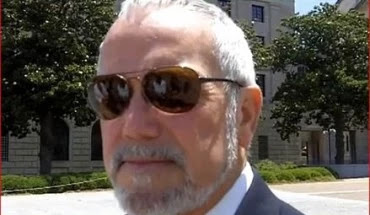
A judge in Birmingham, AL, is in the middle of a warm spotlight. If Circuit Judge Tamara Harris Johnson (D-Jefferson County, 10th Judicial Circuit, Place 22) finds the warmth a tad uncomfortable, she has no one but herself to blame.
Why? Johnson has presided over a $75-million lawsuit against Drummond Company and the Balch & Bingham law firm since former Drummond executive David Roberson filed it in 2019. On March 19, 2021, Johnson ordered the case file sealed and marked "confidential." We wrote at the time that Johnson's order was not grounded in law, but she has kept the file sealed, ensuring that no information about the case is available to the public.
That attracted the attention of The Energy and Policy Institute (EPI), which filed a motion to intervene, seeking to have the case unsealed.
That attracted the attention of AL.com, which filed a motion to intervene supporting EPI's efforts to have the case unsealed. It also drew notice from columnist John Archibald, who wrote a piece titled "Alabama judge says you have no right to know about lawsuit stemming from bribery scandal," explaining why the case matters beyond the four walls of Johnson's courtroom. Writes Archibald:
You want to know what happened when a former coal company executive – one convicted in the bribery of former Alabama Rep. Oliver Robinson – sued his powerful bosses and their powerful lawyers for putting him in that bind?
Of course you do. So do we.
But
don’t hold your breath. Even in those polluted neighborhoods that
started this thing. Finding basic facts – even the status of the case –
is like, well, like finding a body in a Walker County coal mine.
Good luck.
Because a Jefferson County judge says “this is not a public issue.”
Despite
the First Amendment. Despite Alabama open records laws. Despite
appearances and the stench emanating from Judge Tamara Harris Johnson’s
court.
“You just have to take my word,” she said.
With that, Johnson began to dig her hole a little deeper. Maybe that's because there is no way to explain the law related to an unlawful case sealing. That, of course, is because there is no such law -- and Johnson surely knows that. So why has she kept up the sealing charade for almost 28 months? The answer to that question might shatter any notion that Alabama courts even attempt to be fair and impartial -- in other words, the answer might reveal Alabama courts provide neither transparency nor justice.
Archibald used the word "stench" to describe the odor coming from Johnson's court -- and that ugly word certainly fits here. Why does the smell make you want to gag -- as in a "gag order"? Archibald explains by providing background on the case, showing that it hardly is a small-claims matter:
Former
Drummond Company VP David Roberson in 2019 sued coal giant Drummond
Co., one of Alabama’s Big Mules, and Balch & Bingham, a Birmingham
law firm and a Big Mule driver from way back. He claimed they hid and
misrepresented information that led to his conviction.
It is a suit that was dismissed, then taken all the way to the Alabama Supreme Court, which breathed life back into it.
It is a case that grew out of a huge public controversy, with admitted
bribes, important political figures, and profiteering off the continued
pollution of north Birmingham neighborhoods.
Johnson
has ordered the case sealed, lock, stock and coal-smoking barrel. Court
dates are invisible on Alacourt, the state’s online court-record
system, and elsewhere. Even headings of past and scheduled hearings are
stricken, because Johnson says it’s none of your business.
“This is not a public issue,” she told lawyers [last] week.
Why?
“It is strictly an employment matter,” she said.
As if that should make it a state secret.
We
only know any of this because the Energy and Policy Institute sought to
intervene in an attempt to open the records, and Alabama Media Group –
that’s us at AL.com – submitted a brief supporting transparency.
Johnson did say in court that reporting of that particular hearing would be allowed.
“I have no problem with it being reported because what I want is for both parties, well all three parties, to get a fair trial.”
If Johnson wants a fair trial for all parties, she has a strange way of going about it. And get this: She ultimately blames the press -- and that blasted transparency reporters always seem to want -- for her decision to seal. Writes Archibald:
When
a lawyer for EPI asked Johnson if she could review filings in the
future to determine if they contained anything that should be kept under
seal, she refused, saying she had about 800 cases and didn’t have time
for such a review.
Asked later how many of those 800 cases were sealed, she said three to five were under seal.
This one, let’s face it, is special.
In
a hearing on Monday to consider unveiling the case records, Johnson
said she was intent on keeping it sealed to preserve the integrity of a
jury. She also complained that case information had been leaked to an
unnamed blogger.
“Information was leaked out, information was distorted, it was an absolute violation of my court order,” she said.
Well now, I guess I will have to take that as a personal affront. At the time of the sealing, I know of two bloggers -- K.B. Forbes, of banbalch.com, and me -- who were writing regularly about the Roberson lawsuit. Given the nature of Johnson's statement and news coverage at the time, the "unamed blogger" pretty much has to be Forbes, me, or both of us.
Speaking for myself, I wrote a series of posts (see here, here, and here) about the actions of Johnson and the Alabama Supreme Court in the Roberson lawsuit. In brief, I explained to the public that Johnson got it wrong on the sealing issue and cited multiple examples of case law (even statutory law) to show exactly how she got it wrong. Perhaps Johnson is not used to that kind of scrutiny, and she might have a personal beef with me because I did what journalists are supposed to do -- I shined light on a matter of importance to the public, and it is particularly a public matter when you consider that Johnson's salary is paid with taxpayer (public) funds, and all resources related to her courtroom are paid with public funds.
Johnson's explanation that the Roberson case is not a public issue because it's strictly an employment matter is rubbish. Employment cases almost always are heard in federal court, and I know they are public because I've been involved in such a case, and I've written dozens of posts about it -- many of them based on information straight from public court files.
To falsely call my reporting "distorted" should be beneath Johnson, but it obviously isn't. And to let an unfounded personal gripe with me take precedence over the public's right to know comes across, to me, as an alarming level of arrogance. As for how Johnson went wrong on the sealing issue, here is how I explained it in one post:
An Alabama judge cites a case styled Holland v. Eads, 614 So. 2d 1012 (Ala. Sup. Ct., 1993) as grounds for sealing the record in a $75-million lawsuit related to Drummond Company,
the Balch Bingham law firm, and the North Birmingham Superfund bribery
scandal. The citation, from Jefferson County Circuit Judge Tamara Harris
Johnson, is ironic because the Holland opinion repeatedly states
that American courts favor open court records -- available to the
public and the press -- over secrecy. . . .
How do American courts view the public's right to access court records. Holland states the case in powerful language, beginning with the highest court in the land:
The United States Supreme Court has recognized a common law right of
public access to judicial records. Nixon v. Warner Communications, Inc.,
435 U.S. 589,
98 S. Ct. 1306, 55 L. Ed. 2d 570 (1978). "`It is clear that the courts
of this country recognize a general right to inspect and copy public
records and documents, including judicial records and documents.'"
United States v. Criden, 648 F.2d 814, 819 (3d Cir.1981), quoting Nixon,
supra, 435 U.S. at 597, 98 S. Ct. at 1312. In fact, this right of the
public to inspect and copy judicial records antedates the United States
Constitution. Criden, supra.
You read
that correctly: The public's right to inspect judicial records predates
the U.S. Constitution. But an Alabama judge, just a few days ago, sealed
the record in a case involving two of Alabama's most powerful and "Big
Mulish" corporate and legal entities. Would it be reasonable for an
Alabamian to assume our courts are tilted to favor the powerful and the
wealthy (and the white) -- even when the judge in questions is a black
female Democrat, with a history of making claims about standing up for the under-represented and oppressed in our society? It sure would, especially now that Johnson appears to be an unabashed corporatist, carrying Drummond's water.
What about the law on public court records in Alabama? Again, from Holland:
It has long been the rule of this State to allow public inspection of
judicial records. Brewer v. Watson, 61 Ala. 310, 311 (1878). More than a
century ago, this Court held that "[a]n inspection of the records of
judicial proceedings kept in the courts of the country, is held to be
the right of any citizen."; see also Ex parte Balogun, 516 So. 2d 606,
612 (Ala.1987) (holding that "the public generally has a right of
reasonable inspection of public records required by law to be kept,
except where inspection is merely out of curiosity or speculation or
where it unduly interferes with the public official's ability to perform
his duties"); Excise Comm'n of Citronelle v. State ex rel. Skinner, 179
Ala. 654, 657, 60 So. 812, 813 (1912). The public's right to inspect
court records derives from the "universal policy underlying the judicial
systems of this country [that] secrecy in the exercise of judicial
power ... is not tolerable or justifiable." Jackson v. Mobley, 157 Ala.
408, 411-12, 47 So. 590, 592 (1908).
In addition to a common law presumption of permitting public
inspection of judicial records, which has been recognized by the United
States Supreme Court and by this Court, public access to court records
is permitted by statute. Ala.Code 1975, § 36-12-40, grants the public
the right to inspect and copy "public writings," which term has been
interpreted to include judicial records. Ex parte Balogun, supra; Stone
v. Consolidated Publishing Co., 404 So. 2d 678,
681 (Ala.1981) (interpreting a "public writing" to be "a record as is
reasonably necessary to record the business and activities required to
be done or carried on by a public officer so that the status and
condition of such business and activities can be known by our
citizens"); State ex rel. Kernells v. Ezell, 291 Ala. 440, 442-43, 282 So. 2d 266,
268 (1973) (holding that records of the office of the probate judge are
"public writings" within the meaning of the predecessor to § 36-12-40
and are "free for examination [by] all persons, whether interested in
the same or not"); Excise Comm'n of Citronelle, supra; Brewer, supra.
Here is more on the same subject from another post:
The citation [to Holland v. Eads], from Jefferson County Circuit Judge Tamara Harris
Johnson, is ironic because the Holland opinion repeatedly states
that American courts favor open court records -- available to the
public and the press -- over secrecy.
So, is Johnson's ruling
based on remotely solid legal footing? Not that we can find. Does that
mean the judge has allowed herself to be intimidated by one of Alabama's
"Big Mule" corporations, one with a lengthy record of dubious activity
in South America -- and with likely motivation to keep the North
Birmingham scandal from being reopened in the civil arena? Sadly, that's
how it appears.
How do American courts view the public's right to access court records. Holland states the case in powerful language, beginning with the highest court in the land:
The United States Supreme Court has recognized a common law right of
public access to judicial records. Nixon v. Warner Communications, Inc.,
435 U.S. 589,
98 S. Ct. 1306, 55 L. Ed. 2d 570 (1978). "`It is clear that the courts
of this country recognize a general right to inspect and copy public
records and documents, including judicial records and documents.'"
United States v. Criden, 648 F.2d 814, 819 (3d Cir.1981), quoting Nixon,
supra, 435 U.S. at 597, 98 S. Ct. at 1312. In fact, this right of the
public to inspect and copy judicial records antedates the United States
Constitution. Criden, supra.
You read
that correctly: The public's right to inspect judicial records predates
the U.S. Constitution. But an Alabama judge, just a few days ago, sealed
the record in a case involving two of Alabama's most powerful and "Big
Mulish" corporate and legal entities. Would it be reasonable for an
Alabamian to assume our courts are tilted to favor the powerful and the
wealthy (and the white) -- even when the judge in questions is a black
female Democrat, with a history of making claims about standing up for the under-represented and oppressed in our society? It sure would, especially now that Johnson appears to be an unabashed corporatist, carrying Drummond's water.
What about the law on public court records in Alabama? Again, from Holland:
It has long been the rule of this State to allow public inspection of
judicial records. Brewer v. Watson, 61 Ala. 310, 311 (1878). More than a
century ago, this Court held that "[a]n inspection of the records of
judicial proceedings kept in the courts of the country, is held to be
the right of any citizen."; see also Ex parte Balogun, 516 So. 2d 606,
612 (Ala.1987) (holding that "the public generally has a right of
reasonable inspection of public records required by law to be kept,
except where inspection is merely out of curiosity or speculation or
where it unduly interferes with the public official's ability to perform
his duties"); Excise Comm'n of Citronelle v. State ex rel. Skinner, 179
Ala. 654, 657, 60 So. 812, 813 (1912). The public's right to inspect
court records derives from the "universal policy underlying the judicial
systems of this country [that] secrecy in the exercise of judicial
power ... is not tolerable or justifiable." Jackson v. Mobley, 157 Ala.
408, 411-12, 47 So. 590, 592 (1908).
In addition to a common law presumption of permitting public
inspection of judicial records, which has been recognized by the United
States Supreme Court and by this Court, public access to court records
is permitted by statute. Ala.Code 1975, § 36-12-40, grants the public
the right to inspect and copy "public writings," which term has been
interpreted to include judicial records. Ex parte Balogun, supra; Stone
v. Consolidated Publishing Co., 404 So. 2d 678,
681 (Ala.1981) (interpreting a "public writing" to be "a record as is
reasonably necessary to record the business and activities required to
be done or carried on by a public officer so that the status and
condition of such business and activities can be known by our
citizens"); State ex rel. Kernells v. Ezell, 291 Ala. 440, 442-43, 282 So. 2d 266,
268 (1973) (holding that records of the office of the probate judge are
"public writings" within the meaning of the predecessor to § 36-12-40
and are "free for examination [by] all persons, whether interested in
the same or not"); Excise Comm'n of Citronelle, supra; Brewer, supra.
We will close with more thoughts from John Archibald, who is absolutely right to note a foul odor coming from Judge Johson's courtroom:
When
a lawyer for EPI asked Johnson if she could review filings in the
future to determine if they contained anything that should be kept under
seal, [Johnson] refused, saying she had about 800 cases and didn’t have time
for such a review.
Asked later how many of those 800 cases were sealed, she said three to five were under seal.
This one, let’s face it, is special.
In
a [recent] hearing to consider unveiling the case records, Johnson
said she was intent on keeping it sealed to preserve the integrity of a
jury. She also complained that case information had been leaked to an
unnamed blogger.
“Information was leaked out, information was distorted, it was an absolute violation of my court order,” she said.
Michael Yancey, the lawyer for EPI, argued that more light, not less, would provide the world with true facts about the case.
But to no avail.
After
the hearing Johnson ordered that “this court finds it necessary to seal
the entire record of this case, including discovery, before trial and
during trial.”