Showing posts sorted by relevance for query bashinsky. Sort by date Show all posts

Thursday, March 14, 2013

Does Major Bashinsky's Quirky Older Brother Accurately Portray Their Father's Business Life?

Sloan Bashinsky Jr.

We are about to pass the third anniversary of the disappearance and death of prominent Alabama lawyer Major Bashinsky. We find no more reason to believe he actually committed suicide than there was three years ago.

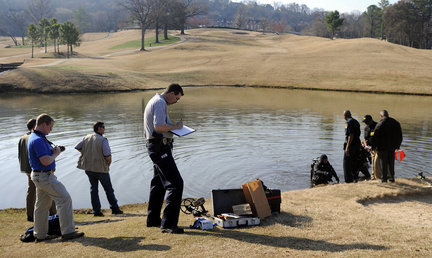
Major Bashinsky was reported missing on March 3, 2010. Twelve days later, his body was pulled from a water hazard at Highland Park Golf Course on Birmingham's Southside. Nine days after that, law-enforcement authorities tied a neat bow on the case by proclaiming that Major Bashinsky had killed himself.

That means it will be three years ago tomorrow since we learned that the disappearance of Major Bashinsky was more than a missing-person case; it was a death case. Was it a homicide case? We might never know the answer to that question, but it certainly is a shaky suicide case.

A close review of the medical-examiner's report reveals a multitude of reasons to doubt the official finding. As regular readers know, we are not prone to blindly accept the word of officials connected to law enforcement, especially when documents present clear grounds to question their conclusions. That is why we have followed the Bashinsky story long after mainstream reporters quit writing about it. And it's why we plan to have additional posts in the future.

We start today by focusing on a curious figure in the "suicide" of Major Bashinsky--his older brother, Sloan Y. Bashinsky Jr.

Sloan Bashinsky Jr. has been a practicing lawyer, has written several books on legal issues, and now writes multiple blogs from his base in Key West, Florida. He long has said that he buys the official finding that his brother committed suicide. But one of the grounds he has cited for that belief is based on false information, according to our review of court documents.

What does that mean? I would suggest it means the public should take a closer look at a lawsuit involving the Bashinskys' late father, Sloan Bashinsky Sr., the man who built the company that produces Golden Flake snack foods.

Bashinsky Jr. clearly is a bright fellow, and he makes no effort to hide his quirks. He often writes of hearing in his dreams from angels and other celestial beings that he refers to as the "Board of Directors."

Both in his posts and in e-mails to me and my journalistic colleague, Lori Alexander Moore, Bashinsky Jr. has said that he believes Major Bashinsky committed suicide and used rope and duct tape to tie himself up to make it look like a murder. Bashinsky Jr. also has claimed that his brother was bisexual and killed himself because he feared someone was about to out him in a way that would ruin his reputation in and around the tony suburb of Mountain Brook.

Bashinsky Jr. long has discounted any notion that his brother's disappearance and death had any connection to a contentious lawsuit involving more than $37 million their father had invested in oil and gas wells with the Birmingham firm of W & H Investments. The lawsuit was styled Estate of Sloan Y. Bashinsky Sr., et al. v. W & H Investments, et al, and a Jefferson County judge approved a settlement on March 1, 2010. Two days later, Major Bashinsky was reported missing--and 12 days after that, his body was found in a water hazard at Highland Park Golf Course on Birmingham's Southside.

While his brother was missing, Bashinsky Jr. received a visit in Key West from William Cobb "Chip" Hazelrig, one of the partner's in W & H Investments and a man who had provided financial advice to the senior Bashinsky for about 20 years. Bashinsky Jr. wrote two posts about the visit in spring 2010 and described the "handshake" arrangement that Hazelrig and Bashinsky Sr. had lived by.

According to Bashinsky Jr., his father liked to work in such an informal fashion, and the lawsuit was a means for representatives of his estate to unnecessarily harass Hazelrig and his partner, Fred Wedell. Here are Bashinsky's Jr.'s thoughts on the lawsuit, based on his conversation with Chip Hazelrig on March 13, 2010, in Key West. Two days after the conversation, Major Bashinsky's body was discovered:

The way Chip described my father and their business relationship, there was no doubt my father knew Chip and liked him. Chip described what sounded to me like a spurious lawsuit my father’s widow, Joann, and my father’s accountant, Owen Sims, and the former CEO of my father’s company, John Stein, as Trustees of my father’s estate, had filed against Chip and his business partner. I told Chip it sounded like something those three would do, and said his loose-handshake business dealings with my father was something my father would do. When Chip told me of a meeting Joann and Stein had demanded my father attend with Chip, and of my father telling then at that meeting to stay out of his business dealings with Chip and his partner, I said that sounded like my father and was what had caused those three to sue Chip and his business partner after my father died and was out of the picture.

Bashinsky Jr. expanded on this theme in a post dated July 1, 2012. Here is his recollection of the visit he had with Chip Hazelrig in Key West. Near the end of this segment, Bashinsky Jr. again addresses the meeting that preceded the lawsuit against Hazelrig's company:

Mostly we talked about Chip’s business and friendship with my father, and only a little about Major, who had been missing a few days. I said I did not yet have any sense of what had happened to Major. Chip clearly loved my father. We talked maybe an hour. Part of it was about the lawsuit my father’s widow and estate and business lawyer and trustees had filed against Chip and his partner’s oil and gas company for an accounting; H & W I think was the company’s name. Chip said the accounting was pretty loose, my father liked to operate on a handshake, and he liked to roll the dice on oil and gas bets. Over the years he won more bets than he lost, did pretty well if you aggregated the big tax write-offs with the royalties the good wells paid out. Sounded like my father, doing it on a handshake. Chip said he and my father once got dragged to a meeting by the future plaintiffs mentioned above, and they grilled Chip and my father until he told them to run the potato chip business and he would run the oil and gas business. That, too, sounded just like my father.

Bashinsky Jr.'s take seems to be this: His father was perfectly happy with the way Hazelrig and Wedell managed his investments and wanted the trustees of the estate to butt out. A letter in the court file, however, presents a different view. It shows Bashinsky Sr. being concerned about the status of his investments and instructing Wedell to supply the necessary information to Owen Sims, his accountant, and John P. McKleroy Jr., his attorney from the Birmingham firm of Spain & Gillon. The full letter, written by Sloan Y. Bashinsky Sr. to Fred Wedell and dated July 20, 2004, can be viewed at the end of this post. It states:

Dear Fred:
I have reviewed a copy of the information which you furnished to John McKleroy concerning my investments with W & H Investments. In order for me to work on my estate disposition plan and to properly analyze current and potential income, along with associated liabilities, I need substantially more information than what you furnished. Enclosed is a list of information which I would appreciate you furnishing to me, along with a copy to John McKleroy and Owen Sims.
Thank you for your attention in this matter. I look forward to receiving this information.

Yours very truly,
Sloan Y. Bashinsky Sr.

Bashinsky Sr. died on August 2, 2005, and court records indicate he never received an adequate response to his letter. The estate followed up with another request for information on January 12, 2006, and when that response also was inadequate, it filed a lawsuit on June 20, 2006.

Our review of the court file indicates the estate never received much of the information it sought--and again, this involved a substantial sum, the proceeds from more than $37 million in oil and gas investments. Although issues in the case apparently were not resolved, the two sides reached a settlement in January 2010, and the court approved it on March 1, 2010.

Two days later, Major Bashinsky went missing.

We contacted Chip Hazelrig prior to publication of this post in an effort to interview him about various matters connected to the Bashinsky-estate lawsuit. He declined our interview request.

Many questions remain about how and why Major Bashinsky died. But this much now seems clear: Sloan Bashinsky Sr. was less than thrilled about the response he received from Hazelrig and Wedell regarding the status of his investments. And Bashinsky Sr. joined with the trustees for his estate in wanting to know what happened to his money.


Bashinsky Lawsuit--Sloan Bashinsky Letter

Monday, October 22, 2012

A Push for Information About Investors Preceded The Mysterious Death of Lawyer Major Bashinsky

Chip Hazelrig

Attorneys for the Estate of Sloan Y. Bashinsky Sr. filed a court document in June 2009 seeking information about other individuals who had joined Mr. Bashinsky in placing their money with W & H Investments of Birmingham.

It's not clear if the estate ever received the information, but it is clear from court documents that W & H did not want to turn over the information. How contentious was this issue in a lawsuit styled Estate of Sloan Y. Bashinsky Sr., et al v. W & H Investments, et al?

Well, almost exactly nine months later, Mr. Bashinsky's youngest son, attorney Major Bashinsky, was reported missing. And 12 days after the disappearance was reported in the press, Major Bashinsky's body was found in a golf-course water hazard on Birmingham's Southside.

Is that a coincidence? We don't know. But court records do indicate that partners Fred Wedell ("W") and William Cobb "Chip" Hazelrig ("H") were not anxious to have their list of investors scrutinized.

We contacted Chip Hazelrig prior to publication of this post in an effort to interview him about various matters connected to the Bashinsky-estate lawsuit. He declined our interview request.

Why did the parties, given what appears to have been a major sticking point, suddenly reach a settlement that was approved by the court on March 1--for the curious amount of $300,000. Was it a coincidence that Major Bashinsky went missing two days later?

We don't have the answers to those questions. But it's clear that an awful lot of money was involved in the Bashinsky Estate--and that's why the $300,000 settlement figure seems odd.

According to court documents, Sloan Bashinsky invested more than $37 million in oil and gas wells with Wedell and Hazelrig, over about a 20-year period. In a 2004 letter, written roughly one year before his death, Mr. Bashinsky tried to get information about the status of his investments. Over a roughly six-month period following his death, the estate tried to get the same information. When it wasn't forthcoming, the estate filed a lawsuit, seeking an accounting of Mr. Bashinsky's funds, plus any damages that might have been due from breach of contract, breach of fiduciary duty, etc.

If W & H handled the Bashinsky funds properly, there should have been no damages at all. If the firm mishandled more than $37 million in investments, you would expect the damages to be substantial--way more than $300,000. So why did the parties agree to that figure? It seems the damages should have been zero or in the tens of millions of dollars.

Court records indicate that W & H engaged in sloppy bookkeeping regarding its Bashinsky accounts, and in some cases, the firm claimed records had been shifted to another company. The estate responded by essentially saying, "OK, if you can't show us directly how much was due to Mr. Bashinsky, then show us information about other investors, and we can determine in an indirect manner the proper amount."

Under the circumstances, that seemed to be a reasonable request--and the court must have agreed because it granted the estate's motion to compel.

The motion to compel can be read at the end of this post, followed by the settlement agreement. The Bashinsky funds went into an oil-investment account called the Birmingham Exploration Venture (BEV) Partnerships. The key information can be found on page 2 of the motion to compel, under "B. Documents Regarding Other Investors of W & H."

Here is what the estate had been seeking since its first request for production of documents:

17. All documents showing the names and identities of other investors or persons with an interest in W & H, W & H Promoted Investments, and/or BEV Partnerships and/or other Entity.

And here was the response:

Response: Defendant objects to this request as being irrelevant and immaterial except to say Bashinsky was an investor, participant, and/or joint venturer with W & H in certain of the referenced oil and gas ventures.

Clearly, Wedell and Hazelrig were not anxious to turn over the requested information. Then we have this from the estate:

18. For all individuals or entities named in response to Request for Production No. 17 above, produce all documents relating to: 
* The amount each person or entity invested. 
* The amount of payments and distributions made to each.

Again, Wedell, Hazelrig, and their lawyers wanted nothing to do with this line of inquiry:

Response: With regards to Bashinsky and W & H, to the extent these documents exist, they are made available. The Defendant objects to the production of any documents relating to any other individuals or entities as being irrelevant and immaterial.

Here is how the estate explained the request in its motion to compel:

The purpose of requesting these documents is to provide verification of the correctness of the distributions made to Mr. Bashinsky. W & H apparently does not have complete books and records for the oil and gas projects in which it was involved with Mr. Bashinsky. The well-lease assignments list each investor and their interest by percentage in the profits. For many if not all of the wells at issue, a Bashinsky/W & H project such as BEV IV was only one investor among others who also held an interest in the well's profits. Therefore, if one has documents showing a given investor's distribution income for a particular well, it may be possible to extrapolate Mr. Bashinsky's proportionate share. This is potentially an effective means to verify the correctness of the distributions made by W & H to Mr. Bashinsky in the absence of complete books and records.

A judge apparently found this to be a reasonable approach, because the motion to compel was granted. Did Wedell and Hazelrig turn over the information? It's hard to tell from the court file. We only know for sure that a member of the Bashinsky family wound up floating in a golf course water hazard, the victim of an apparent "suicide"--even though nothing in the medical examiner's report presents solid evidence that Major Bashinsky actually shot himself.

  Bashinsky Lawsuit--Motion to Compel2
Bashinsky Lawsuit Settlement Agreement

Thursday, November 17, 2011

A Mystery Deepens: Coroner's Explanation for Bashinsky Suicide Has Serious Holes

Major Bashinsky

A medical examiner's finding that prominent Alabama attorney Major Bashinsky killed himself in March 2010 is based almost entirely on reports that Bashinsky visited a hardware store to purchase rope and duct tape similar to that found on his body.

Reports from a private investigator, however, indicate that employees at the hardware store could not positively identify Bashinsky as the man who purchased the rope and tape. In fact, according to the PI's report, law-enforcement officials told store employees that it was Bashinsky, not the other way around.

Also, a recent report about former Mobile County Commissioner Stephen Nodine and the shooting death of his longtime girlfriend, Angel Downs, provides new insights into the Bashinsky case.

The PI's findings add to an already substantial body of evidence that indicates the manner of death in the Bashinsky case should have been classified as "undetermined," followed by a serious investigation. Instead, the public is left with a suicide finding that is supported by almost no evidence of any kind.

We already have shown that the suicide finding in the Bashinsky case is filled with holes. ("Suicide Finding In the Major Bashinsky Case Springs Multiple Leaks.") We also have shown that the official finding from Jefferson County Coroner Gary T. Simmons is supported by zero forensic evidence. ("Suicide of Former Baseball Star Prompts Questions About the Major Bashinsky Case.")

In his summary, Simmons bases the suicide finding almost entirely on reports about Bashinsky's supposed visit to the Five Points Hardware. But now we know that visit might have never happened.

Five Points Hardware
An Alabama-based private investigator took a look at the case several months ago. The PI was not being paid, so he was unable to conduct a full-scale investigation. But he visited the golf-course water hazard where Bashinsky's body was found, walked the path Bashinsky supposedly took from Five Points South to the Highland Park Golf Course, and stopped by the hardware store and a nearby coffee shop--both of which Bashinsky reportedly visited in the hours leading to his death.

A source tells Legal Schnauzer that the PI visited with hardware-store employees and found they had no idea if Bashinsky had visited the store. From our source, in an e-mail on the date of the PI's investigation:

Just got off the phone with my friend who went by the Hardware store. He spoke with the owner and he told me that he was not very friendly, rude actually. The FBI came in and told (the owner) that it was Major that came in and purchased the items and the case was closed. . . .

(The PI) then went to Starbucks and talked with two females. One said (Major) had come in with his son . . . I am assuming Brooks. They gave him a number to call to speak with another girl.

He went to the golf course and is there now. The guy at the golf course wouldn't say anything about it. Another fellow told him to leave. He is going down to the pond now and taking pictures.

To my knowledge, the investigation went no further. But we now know that law enforcement officials decided it was Major Bashinsky in the hardware store, regardless of what store employees could determine.

That blows a significant hole in the official finding of suicide.

News reports about the Stephen Nodine case in Mobile also blow holes in the Bashinsky suicide finding. A recent report indicates prosecutors might try to hold Nodine criminally accountable for Angel Downs' shooting death--even if it's proven that she killed herself.

That sounds like a novel and shaky legal theory, to say the least. But the Nodine story tells us something interesting about the Bashinsky case. Consider this from al.com, which addresses a hung jury in the first Nodine trial:

In December, then-Baldwin County District Attorney Judy Newcomb presented evidence that she argued would show Nodine shot Downs, his longtime girlfriend, in the driveway of her Gulf Shores condominium. The jury could not reach a unanimous verdict.

Assistant state medical examiner Dr. Eugene Hart testified at the December trial that Downs’ death was consistent with suicide but he ruled the cause as "undetermined" because he could not prove that she pulled the trigger.

A medical examiner must prove the decedent pulled the trigger in order to determine a gunshot death was a suicide? You never would know that from reading the ME's report in the Bashinsky case. Jefferson County Coroner Gary T. Simmons presents zero evidence that Bashinsky pulled the trigger. Simmons notes that a gun was found in the pond with Bashinsky's body, but is not able to tie the gun to Bashinsky's death, and no bullet was found to match the gun. Simmons doesn't even address the key issue in the Bashinky case: Who pulled the trigger?

The Stephen Nodine story adds to a mountain of evidence indicating that Major Bashinsky's death should have been classified as "undetermined."

Why were Jefferson County officials so quick to rule it a suicide when they had almost no evidence pointing in that direction?

Wednesday, July 20, 2011

Suicide Finding in the Major Bashinsky Case Springs Multiple Leaks

The scene of Major Bashinsky's death


Editor's Note: This post is a joint reporting effort by Lori Alexander Moore and Roger Shuler.


We have reported on two issues that raise serious questions about the suicide finding in the March 2010 death of prominent Alabama attorney Major Bashinsky. After a full review of the medical examiner's report, we have even more questions about a manner-of-death finding that never seemed to add up from the outset.

The Bashinsky case is particularly compelling because it was the first of what has become a string of mysterious suicides in Alabama.

Did Major Bashinsky kill himself? We find it unlikely. Should the public focus on events surrounding a lawsuit brought by individuals connected to the Bashinsky family against a Birmingham investment firm with ties to Alabama Republican politics and the gaming industry? The answer, in our mind, is yes. Has law enforcement in Alabama shown any inclination to look beyond the original finding of suicide? The answer is no, and that is disturbing considering the numerous oddities found in the medical examiner's report.

We already have discussed two such oddities: (1) The ME's report presents no forensic evidence to support a finding of suicide. The clear language of the report indicates that the finding is based entirely on the work of law-enforcement investigators, but there is no science to back that up; (2) The gun tied to the Bashinsky shooting is a Belgian model from the World War II era (and earlier) that now is considered a collector's item. That seems to be a strange choice of a weapon for someone planning to shoot himself, and the report does not state conclusively that the gun found was the one used to shoot Major Bashinsky in the head.

Let's ponder a few more oddities that we've discovered after reviewing the entire ME's report. You can read the entire autopsy report at the end of this post:

* An absence of stippling--Stippling is a pattern of abrasions around an entrance wound and is a key factor in determining the range of fire. Here is a description from an article titled "Practical Pathology of Gunshot Wounds":

The principle indicator of close range fire is stippling, that is, a pattern of tiny, punctuate abrasions in the skin surrounding the entrance wound . . . .  Stippling is caused by unburned particles of gunpowder striking the skin. In contrast to other substances that may be deposited on the skin, such as soot, stippling cannot be washed away. The presence of stippling indicates that the muzzle of the gun was within 2 feet of the victim’s body when it was discharged.

The article goes on to state: "Contact range wounds are commonly seen in suicidal firearm injuries."

Major Bashinsky's body was found in a golf-course water hazard, but we now know that stippling cannot be washed away. We also know that firearm suicides almost always are at close range, even contact range. That means stippling certainly should have been present if Major Bashinsky shot himself. But on page 5, the ME's report states:

Obvious gunpowder residue is observed within the wound along the soft tissue extending to the skull. Additionally, there is a small amount of gunpowder residue noted on the outer table of bone adjacent to the entrance defect on the skull. The gunshot wound does not have stippling.


The absence of stippling means the shot was from a distance of more than two feet. Why would someone shoot themselves in the head from a distance of more than two feet? Is that even possible for most people?

In the case summary of the Bashinsky autopsy, the report states "the decedent had a perforating contact gunshot wound of the head with resultant skull fractures and perforation of the brain as described." If that was the case, why was there no stippling? The ME seems to be contradicting himself here.

* A left-to-right shooting--The ME's report makes it clear that the bullet that killed Major Bashinsky traveled on a left-to-right path. From page 6 of the report:

The course of the gunshot wound is left to right, with an approximate 10-degree deviation upward and no significant anterior/posterior deviation.

Sloan Bashinsky Jr., Major's brother who lives in Key West, Florida, has written on his blog that Major was right-handed. (Sloan also has written that he accepts the suicide finding.)

Are we to believe that Major Bashinsky, who was right handed, used his left hand to shoot himself in the head, with the gun at a distance of more than two feet? That might not be physically impossible, but it sure seems unlikely.

* A matter of duct tape--It has been widely reported that duct tape was found around Bashinsky's mouth. But the ME's report states that the taping job was more substantial than has been reported. From page 4 of the report:

Around the decedent's mouth and lower face is grey duct tap which has been wrapped completely around the head approximately 3-4 times. The edges of the duct tape grossly appear to have been "cleanly" cut.

Major Bashinsky wrapped his own head completely with duct tape, going around three or four times? He did this while making "clean" cuts on the tape. And since he must have been alone during a suicide, he did all of this while standing in a pond--or he did it on the edge of the pond while walking into the water? Again, that might not be physically impossible, but it sure seems unlikely.

* What about footwear?--The law-enforcement version of events has Bashinsky parking his car in the Five Points South shopping district and walking to the Highland Park Golf Course, where his body was found. I've made that same general walk a number of times, and I'm guessing it's about 15 to 20 blocks, about 2.5 to 3 miles. It's a pleasant walk, but it's a pretty good hike, and you certainly would want to be wearing comfortable footwear.

The ME report, on page 2, says Bashinsky was wearing "a pair of loafer type shoes. . . . They are two toned with a black and brown appearance but are otherwise unremarkable."

The report goes into excruciating detail about every aspect of Bashinsky's clothing. But it makes no mention of socks. Was he not wearing socks? That's how it appears.

Would someone planning to walk a pretty good distance to shoot himself in the head, do it by wearing loafers with no socks? That's certainly a strange choice in footwear for the occasion.

* Signing and dating the autopsy report--The suicide finding in the Bashinsky case was announced on March 24, 2010. But the two individuals who made the findings--Dr. Gary T. Simmons and Dr. Diane C. Peterson, of the UAB Department of Pathology--did not sign the report until March 30, 2010. Why the difference of six days? Were the findings even official at the time they were made public?


What about the lawsuit that might shine light on Major Bashinsky's death? Here is how we described the circumstances surrounding the lawsuit in an earlier post:

Major Bashinsky was the son of the late Sloan Bashinsky Sr., the man behind Golden Flake snack foods and one of the best known entrepreneurs in Alabama history. The Estate of Sloan Bashinsky was engaged in a lawsuit with W&H Investments, a Birmingham firm with which the elder Bashinsky had invested some $37 million, mostly in oil wells and other energy-related ventures.

The estate filed the lawsuit to get an accounting of Mr. Bashinsky's investments, and public records indicate that W&H officials were less than forthcoming with information. In fact, lawyers for the estate had to file some half dozen motions to compel, seeking records about the Bashinsky account.

The "H" in W&H stands for Hazelrig, as in William Cobb "Chip" Hazelrig, a Birmingham businessman with documented ties to former Governor Bob Riley, his son Rob Riley, and Tuscaloosa entrepreneur Robert Sigler. Hazelrig is a founding investor in Paragon Gaming, one of Sigler's far-flung companies. Hazelrig made headlines in 2002 when he gave $10,000 to Bob Riley's campaign for governor, only to have it returned when it was discovered he had connections to gambling.

Ironically, the governor-to-be's own son was an attorney and board member with Crimsonica, the parent company for Paragon Gaming. Rob Riley later tried to distance himself from the company.

Court records indicate the Bashinsky estate never received much of the information it was seeking, but the lawsuit officially was settled on March 1, 2010. Two days later, Major Bashinsky was reported missing. His body was found floating in a Birmingham golf-course pond on March 15, and nine days later, authorities ruled it a suicide.

The death of Major Bashinsky is filled with questions and oddities, and we will address more of them in future posts. For now, here is the full medical examiner's report.

(To be continued)


Bashinsky Autopsy

Monday, May 3, 2010

Florida Visit Adds Twist to Major Bashinsky Case

A Birmingham businessman who has ties to Governor Bob Riley met in Key West, Florida, with the brother of Major Bashinsky--two days before Bashinsky's body was found in a golf-course pond.

William Cobb "Chip" Hazelrig--who has interests in real estate, oil, gaming, and investments--met with Sloan Bashinsky Jr., Major's older brother, on March 13. Major Bashinsky, a prominent Alabama attorney, had been reported missing on March 3, and his body was discovered on March 15. The death has been ruled a suicide, but we have noted a number of reasons to question that finding in posts here and here.

Sloan Bashinsky discloses the Hazelrig meeting in a post today at his blog, goodmorningfloridakeys.com. One of Hazelrig's companies, W&H Investments, had been involved in a lawsuit with the Estate of Sloan Bashinsky in the weeks and months leading up to Major Bashinsky's disappearance. Court documents indicate a settlement in the lawsuit was approved on March 1, two days before Major Bashinsky was reported missing.

Sloan Bashinsky Sr., the late father of Sloan Jr. and Major, was the CEO of Golden Enterprises, maker of Golden Flake snack foods. According to court documents, Bashinsky Sr. invested some $37 million with W&H Investments, mostly in oil wells, over a number of years. Fred Wedell is Hazelrig's partner in the investment firm.

The Estate of Sloan Bashinsky sued W&H Investments, seeking an accounting of funds Bashinsky Sr. had invested with the firm. Court documents indicate W&H was not forthcoming with information, and lawyers for the estate had to file seven motions seeking to compel the defendants to turn over information.

Court records indicate discovery issues still were in dispute when the parties abruptly reached a settlement on January 27, 2010. The agreement called for W&H to pay the estate $300,000. The court approved the settlement on March 1.

Major Bashinsky was reported missing two days later. And 10 days after that, Chip Hazelrig appeared unannounced in Key West, Florida, seeking a meeting with Sloan Bashinsky Jr.

In a post dated March 14, Bashinsky references a meeting the day before with an unnamed visitor from Birmingham, a man who had provided investment advice to his father for roughly 20 years. In today's post, Bashinsky reveals the visitor was Chip Hazelrig.

What prompted Bashinsky to reveal that information? Lori Moore, a reporter with the houstoncountynewsonline.com, had sent Bashinsky an e-mail, saying that she was investigating his brother's death and asking for an interview. Moore notes in the e-mail that she is aware of the lawsuit involving Hazelrig and Wedell--and their connections to Governor Bob Riley and his son, Homewood attorney Rob Riley. She also notes that she has seen documents that call the suicide ruling into question.

In an e-mail reply, Bashinsky references Moore's "theory" that Riley and/or Hazelrig had Major Bashinsky killed--even though Moore had expressed no such theory. Sloan Bashinsky then writes:

If Chip Hazelrig had had anything to do with Major’s death, the angels assigned to me would have told me right after Chip and I met in Key West, after he had miraculously located my cell phone number through a bizarre series of encounters with Key West people he did not know, who knew me well. Chip had come to Key West on a fishing trip with a friend from south Florida about a week after Major went missing. He got burned out fishing and was knocking around town, waiting on his friend to come back in to the dock. He decided to try to look me up because he had been in business with my father and Major had gone missing. I don’t think I’d ever met Chip, nor did I know anything about him, although I had heard his name.

We talked about an hour, mostly about his relationship with my father. I did not know they’d had business dealings for 20 years (as I recall the time span). The way Chip described my father and their business relationship, there was no doubt my father knew Chip and liked him. Chip described what sounded to me like a spurious lawsuit my father’s widow, Joann, and my father’s accountant, Owen Simms, and the former CEO of my father’s company, John Stein, as Trustees of my father’s estate, had filed against Chip and his business partner. I told Chip it sounded like something those three would do, and said his loose-handshake business dealings with my father was something my father would do. When Chip told me of a meeting Joann and Stein had demanded my father attend with Chip, and of my father telling then at that meeting to stay out of his business dealings with Chip and his partner, I said that sounded like my father and was what had caused those three to sue Chip and his business partner after my father died and was out of the picture.

Sloan Bashinsky describes the meeting with Hazelrig as pleasant, and he seems to consider it happenstance that Hazelrig would appear in Key West just days after Major Bashinky had disappeared--and days after a settlement had been reached in a lawsuit with the Sloan Bashinsky estate.

Perhaps Sloan Bashinsky is right about the coincidental nature of Chip Hazelrig's visit. But perhaps Hazelrig's actions, along with details about the lawsuit against W&H Investments, deserve further scrutiny.

We know this much about Chip Hazelrig:

* He has some 20 traffic offenses on his record, and his driver's license has been suspended six times. In his most recent driving misadventure (that we know of), Hazelrig was clocked driving 112 mph in a 55 zone on Highway 280;

* Despite Hazelrig's dismal driving record, UAB was more than happy to take a $5 million gift from him in order to help construct a new radiation-oncology facility on campus. It's the largest individual donation in university history;

* Hazelrig gave $10,000 to Bob Riley's campaign for governor in 2002. That's the election in which Riley defeated Democrat Don Siegelman when votes in Baldwin County mysteriously disappeared overnight;

* Hazelrig is a stockholder in Paragon Gaming, a Las Vegas-based outfit that was formed in 2000 to help Indian tribes develop casino gambling on their reservations;

* Both Hazelrig and Rob Riley have had ties to a company in Tuscaloosa called Crimsonica. The company is run by Robert Sigler, who was the principal founder of Paragon Gaming. And who was once an attorney and board member for Crimsonica? Rob Riley.

So you can see why Lori Moore was asking questions about Chip Hazelrig, the Rileys, and the W&H Investments lawsuit. Any good reporter would ask such questions, especially when there is no known scientific evidence proving that Major Bashinsky committed suicide.

Sloan Bashinsky accepts the suicide finding, but he writes about the dismal performance of Alabama's mainstream press on the story:

The News’ reporting of the coroner’s and law enforcement’s findings was the sorriest piece of reporting I have seen in my life, which is saying something, because I’ve had a lot of dealings with newspapers. You can quote me on that, if, and only if, you quote this entire email verbatim in what you write in what your newspaper publishes. If you and your newspaper quote me without including this entire email verbatim, and I learn of it, you will see yourself and your newspaper highlighted on my websites, goodmorningkeyfloridakeys.com and goodmorningkeywest.com.

We have provided a link to Sloan's post, which includes the full e-mail, so we are respecting his wishes. And we encourage Legal Schnauzer readers to examine the exchange between Sloan and Lori Moore.

What do we take from today's developments? We think it shows there are many valid questions that remain about the death of Major Bashinsky.

Wednesday, June 20, 2012

Was Major Bashinsky's Death Connected to a Lawsuit Involving Oil Wells and Millions of Dollars?

Major Bashinsky

More than two years have passed since the body of Alabama attorney Major Bashinsky was found in a golf-course water hazard on Birmingham's Southside. The public still has no solid information about how Bashinsky died or why.

We have a coroner's finding that Bashinsky died from a self-inflicted gunshot wound to the head--and he used duct tape and rope to tie himself up in order to make it look like a murder. But the coroner's report provides zero scientific proof of suicide. And authorities have pointed to no evidence--a note, any signs of personal or financial problems--that indicate Bashinsky wanted to kill himself.

Poor health certainly was not an issue. The coroner's report shows that Bashinsky, aside from the need to take cholesterol medication, was a very healthy 63-year-old guy. In fact, news reports state that he picked up a prescription on the day he disappeared--a strange thing to do if you are planning to kill yourself.

Our research indicates the investigation of Major Bashinsky's death was marked by incompetence, dubious motives, or both. Studies have shown that many medical examiners are reluctant to make a suicide finding if the evidence raises any doubts; for that reason, suicide tends to be under-reported, experts say. From one article:


The validity and reliability of certifications of suicide are decreased for several reasons. . . . The determination of suicide requires that the death be established as both self-inflicted and intentional. For most certifiers, establishing intentionality is the most difficult criterion. A coroner or medical examiner who suspects suicide may be reluctant to impose social stigma, guilt, and loss of insurance benefits on the victim's family.


So why did officials make a rush to judgment in the Bashinsky case, issuing a finding that is supported by no scientific evidence?

Was there another explanation for the Bashinsky death, one that officials refused to examine? Well, public records show that the Bashinsky family was embroiled in a contentious lawsuit, one involving oil wells and tens (perhaps hundreds) of millions of dollars. In fact, a Jefferson County judge approved a curious settlement in the lawsuit on March 1, 2010--and Major Bashinsky disappeared two days later. Twelve days after the disappearance, his body was discovered in a pond at Highland Park Golf Course.

Did authorities investigate the circumstances surrounding the lawsuit--styled Estate of Sloan Y. Bashinsky Sr., et al v. W&H Investments, et al--and its ties to the toxic political environment that has permeated Alabama for the past 12 years or so? If not, why not?

We have examined records from the Bashinsky Estate lawsuit, and they are filled with signs that someone was extraordinarily sloppy on recordkeeping about vast sums of money--and someone was reluctant to provide information about where all that money went.

Major Bashinsky apparently was not directly involved in the estate matter. But individuals connected to his father's estate were aggressively seeking financial documents to which they were entitled under the law--and court records show they were being stonewalled at most every turn.

What was at stake in the estate lawsuit? Here is how the plaintiffs summed it up in one court document:

This action, filed June 20, 2006, arises from the need of the Estate of Sloan Y. Bashinsky Sr. ("Bashinsky") to ascertain the value of investments Bashinsky held through his membership in various oil and gas partnerships ("the BEV Partnerships") with Defendants--partnerships into which Bashinsky invested more than thirty-seven million dollars.

Unlike many lawsuits, this one was not primarily about money damages. Records show that the estate's No. 1 goal was to receive an accounting of the investments Mr. Bashinsky had made with W&H Investments. If the accounting revealed wrongdoing--breach of contract, breach of fiduciary duty--money damages were set to come into play. But essentially, the estate was saying, "Mr. Bashinsky has died, and we now are responsible for his business affairs, and we need to know for tax and other purposes, what happened to the money he invested with W&H?"

With that as the primary issue, and with the estate apparently never having received the accounting that it sought, why did the parties reach a settle agreement dated January 27, 2010? Why did the estate settle for $300,000 in a matter involving investment income that likely ranged into nine figures? Why did the court approve the settlement on March 1, 2010?

Most importantly, why did Major Bashinsky disappear on March 3, 2010, two days after the settlement cleared? What information was uncovered in the almost four years of discovery in the estate lawsuit? Was somebody in the process unhappy about the outcome? Was somebody feeling pressured, deceived, or double-crossed?

Here is the No. 1 question on our list: Could discovery in the lawsuit have revealed sensitive financial information about political figures in Alabama or beyond? That is not a far-fetched question. The "W" in W&H Investments stands for Fred Wedell; the "H" stands for William Cobb "Chip" Hazelrig--and we have written extensively about Hazelrig's ties to gambling and Alabama's GOP power structure. Here is how we described it in an earlier post:

The "H" in W&H stands for Hazelrig, as in William Cobb "Chip" Hazelrig, a Birmingham businessman with documented ties to former Governor Bob Riley, his son Rob Riley, and Tuscaloosa entrepreneur Robert Sigler. Hazelrig is a founding investor in Paragon Gaming, one of Sigler's far-flung companies. 
Hazelrig made headlines in 2002 when he gave $10,000 to Bob Riley's campaign for governor, only to have it returned when it was discovered he had connections to gambling 
Ironically, the governor-to-be's own son was an attorney and board member with Crimsonica, the parent company for Paragon Gaming. Rob Riley later tried to distance himself from the company.

We know that Chip Hazelrig took some curious actions during the 12 days that Major Bashinsky was missing in March 2010. He just happened to show up in Key West, Florida, for a visit with Sloan Bashinsky Jr., Major's older brother. Two days after the visit, Major's body was discovered in the golf-course pond.

What was the purpose of Chip Hazelrig's trip to Key West while Major Bashinsky was missing? We've never heard a solid answer to that question. That's one of many unanswered questions that still surround the death of Major Bashinsky, almost 28 months after it happened.

Many citizens probably have accepted the suicide ruling and moved on. But we have uncovered numerous reasons to doubt that finding. Quite a few of those reasons grow out of the estate lawsuit. In a series of upcoming posts, we will be taking a close look at the case.


(To be continued)

Thursday, March 25, 2010

Should We Doubt A Finding of Suicide in Major Bashinsky's Death?

Law-enforcement officials have ruled Major Bashinsky's death a suicide. But we see reasons to doubt that conclusion in the disappearance and death of the prominent Alabama attorney.

Particularly surprising is the officials' finding that Bashinsky died on March 3, the day he disappeared. That means his body remained in a shallow golf-course water hazard for 12 days, in a heavily trafficked area, without being noticed.

Will members of Bashinsky's family question the suicide finding? We suspect they will. Comments in the press about a week ago from Leslie Hewett Bashinsky, Major's widow, and her brother, Steve Hewett, indicate that they saw no signs pointing to suicide.

Sloan Y. Bashinsky Jr., Major's older brother, states in a post this morning that he accepts the suicide finding. But Sloan says he suspects someone pressured Major about something--perhaps disclosure that he had Peyroine's disease and was bisexual--and that drove Major to suicide.

Previously, Sloan had written that he thought Major might have felt business pressures, possibly from improper sales of securities. But Sloan quotes a business associate who says Major was fully licensed to sell securities. Via e-mail, the person wrote:

Good morning,

I have been following your blog since the whole story broke and I have enjoyed reading your past blogs.

I did want to comment on your blog today (3/24). Major did have all securities licenses needed to sell any kind of investment he wanted. Even though he was an attorney, his main business was an investment advisor practice thru First Protective, a subsidiary of Protective Life. Although I do not know for sure, his business seemed to be legit, so I would lean more towards his personal life for the reasons behind his suicide. I just thought you should know.

I hope you find closure and peace.


Because of that note, Sloan writes, he believes Major was pressured about something personal, not involving the law or business, that drove him to suicide.

We admire Sloan's efforts to sort out the truth about a painful chapter in his family's history, through his goodmorningfloridakeys.com blog. But we're not sure we agree with either of his findings, so far. We have doubts about the suicide finding, and we suspect Major Bashinsky's concerns might have been more professional than personal.

This much is clear: Many questions remain about Major Bashinsky's disappearance and death, and we suspect many of those questions might never be answered now that his death has been ruled a suicide. Consider just a few questions that seemingly have not been properly addressed:

* If Major Bashinsky waded into the golf-course water hazard on March 3 and shot himself, how could his body go unnoticed for 12 days?

An article in the print version of today's Birmingham News provides the official account. (The same version does not appear to be available online.)

Authorities said they believe Bashinsky died March 3, the day he disappeared from his Mountain Brook office. His Toyota Camry was found in Southside, in the 2100 block of 11th Court, on March 7. His body was found March 15 in the golf course pond.

Here's what investigators believe happened:

The day he disappeared, Bashinsky went into a Southside coffee shop and bought coffee, then went to a nearby hardware store and purchased rope and duct tape.

A clerk at that store told The Birmingham News he sold duct tape and rope to a man that day. He said investigators visited him, showed him a picture of Bashinsky and asked if that was who he sold it to. The clerk said the picture, taken from a surveillance camera at the shop, was blurry and he would need to see a better photo.

Authorities say Bashinsky wrapped rope around parts of his body and attached a bottle that contained a copy of the note they found in his car. He stuck a label from a Golden Flake bag in the roof of his mouth and loosely bound his mouth with duct tape and his hands with rope. He then walked into the pond and shot himself.

If he waded into the water, obviously the water was shallow. Being in Alabama in early March, the water probably was not terribly cold. This was on a public golf course where many people come and go. And yet the body remained submerged and unnoticed for roughly 12 days?

I don't pretend to be a forensic pathologist, but this seems unlikely--and officials gave no indication that the body was weighted down by any object.

In a post dated March 23, Sloan Bashinsky shined light on this issue, quoting a relative named Charles "Bubba" Major, who is a well known golfer in the Birmingham area. In an e-mail, Bubba Major wrote:

You probably did not know that I ran Highland Golf Course for 15 yrs 83-98 and thought it was ironic that they found Major’s body at Highland Golf Course, still have not heard the cause of death, but guess it will come out soon. For the record there is no way the body could have been there several days, without being seen because Hooters had golf tourney there Sat and had over 120 people going by that pond every 3 minutes.

After disclosing that e-mail, Sloan Bashinsky writes:

Background note: Major’s body was spotted by golfers Monday following the Hooters tournament. He went missing 12 days before his body was found. He was alive most of that time. There was no ransom demand. There was no note to law enforcement or the family or the media. There was only silence.

But now law-enforcement officials are saying Major was not alive all that time. In fact, they are saying that 120 people could have been going by that pond every three minutes and not noticed his corpse.

* Has anyone checked for evidence that Major Bashinsky might have been abducted?

I've seen nothing in the press that indicates this question even has been asked. Major's office was in the Luckie Building, off Highway 280. It's a nice, modern-looking building. Does it have security cameras? Were there any signs of unexpected visitors to Major Bashinsky's office?

* Has anyone looked into circumstances surrounding a lawsuit, Estate of Sloan Bashinsky v. W & H Investments, which involved a dispute over money the late Sloan Bashinsky Sr. had invested in oil wells?

Sources tell Legal Schnauzer that the lawsuit was settled just a few days before Major Bashinsky disappeared. Was the settlement amicable and satisfactory to all parties involved? What about parties who were not directly involved? I know from personal experience that discovery in lawsuits can be wide ranging and can include information that might not be admissible in court. For example, in a lawsuit against an investment firm, plaintiff's might seek information about other accounts at the firm, not just the one in question--and a judge might be inclined to allow such an inquiry. That could unearth information that might make someone very uncomfortable.

* In a post dated March 14, Sloan Bashinsky Jr. wrote about an unnamed visitor who showed up in Key West, Florida, tracked him down, and talked with him for about an hour on matters related to the senior Bashinsky's business. Who was this person?

Here is how Sloan Bashinsky describes the encounter:


Five minutes after returning to Key West I received a phone call showing a 205 (Birmingham, Alabama) area code on my cell phone display. The caller asked if he had reached Sloan Bashinsky? Ascertaining he had, he identified himself as having given my father investment advice for twenty years. He was in Key West with a friend who was out fishing. Could we get together? I ascertained where he was, a coin toss from Sloppy Joes, and said to hang there and I’d be along shortly.

We left Sloppy Joe’s because of the noise, and found a quiet place in the shade to sit and talk for maybe an hour and a half. He told me a lot of things I didn’t know about my father’s business affairs and his dealings with my father’s widow, my father’s lawyer, my father’s accountant, and the fellow who had run my father’s company before he went into semi-retirment and then became ill. Maybe all I should say now is that my sentiments that my father had surrounded himself with somewhat less than the sharpest pencils on the block, and more than somewhat greedy, were confirmed.

Then Sloan writes:

Most interesting, I suppose, was how this fellow got my cell phone number. He went into Irish Kevin’s, a popular bar just up the street from Sloppy Joe’s, and asked the first man he saw if he knew Sloan Bashinsky? Yes. Did he know Sloan’s phone number? No, but he knew someone one who probably did, and called him and got my phone number.

It sounds like Sloan and the fellow from Birmingham had a pleasant visit. But the blog post indicates they met on March 13. That's 10 days after Major Bashinsky's disappearance and two days before his body would be discovered.

The fellow from Birmingham just happened to appear in Key West, Florida, at this time, looking for Sloan Bashinsky and wanting to discuss the senior Bashinsky's business affairs? This doesn't sound like a chance encounter. Who was this person and why did he go to considerable trouble to find Sloan Bashinsky Jr.?

There might be reasonable and logical answers to all of these questions--and more.

Perhaps the strongest sign pointing to suicide is a statement from officials that a computer flash drive recovered from Bashinsky's car had drafts of a letter that had been sent to Golden Enterprises just before he disappeared. The letter, like the copies in the car and the bottle, was critical of the Bashinsky family's business practices.

But here is our concern: Now that Major Bashinsky's death has been ruled a suicide, will many questions even be asked?

Thursday, April 1, 2010

What Evidence Points to Suicide in the Major Bashinsky Death?

One week has passed since the death of prominent Birmingham attorney Major Bashinsky was ruled a suicide.

In that time, the only substantive information available to the general public about the suicide finding came from an article in last Thursday's Birmingham News.

According to the article, the 63-year-old Bashinsky waded into a pond at the Highland Park Golf Course, mouth and hands loosely bound, and shot himself in the side of the head. "All of our evidence supports that," Jefferson County Chief Deputy Coroner Pat Curry said.

But when you read the article closely, how much evidence is presented that clearly points to suicide? Answer: Zero.

The article, written by Carol Robinson, is a classic case of "trust me" journalism. The reporter presents a case that Bashinsky committed suicide, but we see no sign that she examined any documents or asked any tough questions of public officials. (Note: Robinson has the reputation of being one of the News' better reporters. It's possible her piece was highly edited and sanitized by higher-ups at the paper. It's also possible that Robinson knew it would be good for her job standing at the paper to write a weak story and not ask any questions.)

The final version of the News' coverage is not available online. But you can read the article in its entirety at the bottom of this post.

First, let's consider what the article does not include:

* No quotes from either Dr. Robert Brissie or Dr. Gary Simmons, of the Jefferson County Coroner/Medical Examiner's Office. The quotes come from Pat Curry, who is a former sheriff's deputy. Brissie and Simmons are pathologists, but the story includes no quotes from them. (Note: Both Brissie and Simmons serve on the Department of Pathology faculty at the University of Alabama at Birmingham [UAB]. They work under the umbrella of the University of Alabama Board of Trustees, whose ex oficio president is Governor Bob Riley. Jefferson County District Attorney Brandon Falls, who almost certainly played a hand in the investigation, is a Riley appointee.)

* No reference to a medical examiner's report, signed by Brissie or Simmons.

* No reference to an autopsy.

* No reference to a toxicology report.

* No reference to scientific information of any kind that points to cause of death--homicide, suicide, accident, what have you.

Now, let's consider what the article does say:

* Authorities say they believe Bashinsky died March 3, the day he disappeared from his Mountain Brook office.

Why do authorities believe this? The story does not say. Shouldn't a scientific examination of the body be able to provide an estimate regarding time of death? Why isn't this information presented?

* Authorities say Bashinsky went into a Southside coffee shop and bought coffee and then went to a nearby hardware store to purchase rope and duct tape.

Why do authorities believe this? The article says officials presented a blurry photo from a security camera, but a clerk at the hardware store could not identify the man as Bashinsky. Clear photos of Bashinsky, which appear to be of recent vintage, are available all over the Web. Why were those photos not used for possible ID. The story does not say. Robinson, to her credit, did interview the clerk at the hardware store. But she did not report his name or the name of the hardware store. Why? (It almost has to be Five Points South Hardware, which is the only hardware store in the area. The store, by the way, is a true Birmingham gem, and any hardware junkie should pay a visit when in our fair city. A brief piece by Glynn Wilson at Locust Fork News and Journal gives a feel for the store's classic flavor.)

* Authorities say Bashinsky loosely bound his hands and feet and stuck a label from a Golden Flake bag in the roof of his mouth.

How do authorities know that Bashinsky did all of this himself? What scientific evidence supports this? The story does not say. The story does say there was no sign of struggle against the tape or rope. But what if Bashinsky had been drugged or poisoned already? Did a toxicology screen check for that possibility?

* Authorities say Bashinsky walked into the golf-course pond and shot himself.

What scientific evidence points to this? Was there one set of footprints leading into the pond? Were any other footprints present? Did any footprints match the shoes that Bashinsky was wearing? An adult male wading into a marshy area probably would leave a deep impression on the soft bottom of the pond. Was such an impression present at the scene? The article addresses none of these questions.

* Authorities say a computer flash drive, containing drafts of a letter that had been sent to Golden Enterprises prior to his disappearance, was found in Bashinsky's car.

How do authorities know that the flash drive wasn't planted in Bashinsky's car by someone else? Even if the flash drive belonged to Bashinsky, does its presence prove he wrote the letter? I'm not a computer geek, but my understanding is that a USB flash drive is essentially a new form of floppy disk, a device for storing digital information and moving it from one place to another. To my knowledge, it says nothing about how the material originated. For example, it has been reported that members of the Bashinsky family received copies of the letter. If Major Bashinsky received a copy, couldn't he have scanned it and kept a copy in the flash drive? Did authorities check any computers that Major Bashinsky was known to use to see if there are signs that he actually wrote the letter? The story does not address these questions.

* Authorities found a gun, with the serial number buffed off, that they believe was used. And they found an unfired cartridge in Bashinsky's car that they believe will match the gun.

Well, did the unfired cartridge match the gun? The News has done no followup reporting on this story--and we aren't holding our breath waiting for any. Was there any scientific evidence regarding the gun or the body that proves Bashinsky fired the gun into his own head? The story does not say. And why would Major Bashinsky have a gun with the serial number buffed off? Sounds like just the item an estate attorney would keep in his possession.

* Authorities say a second dive, last Wednesday morning, turned up a roll of duct tape, scissors, and a set of Toyota car keys.

Do the car keys match Bashinsky's vehicle? Is there any evidence that the duct tape and scissors came from the hardware store where Bashinsky supposedly bought them? Could scientific tests determine how long these objects had been in the pond? It sounds like these objects were found rather quickly on the second dive. Why were they not found on the first dive? The story addresses none of these questions.

* Authorities say the fired cartridge, from the fatal shot, has not been found.

Well, has it been found one week later? Again, no followup reporting on this story. If that cartridge is not found in the pond, isn't it pretty hard to say conclusively that Major Bashinsky was shot in the pond--much less that he shot himself in the pond?

Speaking of the press, reporting on this story has been curious. The News posted its early version of the story about the suicide finding at 9:40 a.m. last Wednesday on al.com, the paper's Web affiliate. It appears that other media outlets pretty much picked up on the al.com piece and did virtually no original reporting. I've seen no signs that a press conference was conducted early last Wednesday morning. My check of Web sites for local television affiliates turned up no stories that included on-camera interviews with any officials who helped make the suicide finding.

In short, the Alabama press apparently asked few, if any, questions last Wednesday. And we've seen no signs that any questions have been asked since then.

Is it possible that Major Bashinsky did commit suicide? Sure it is. His brother, Sloan Y. Bashinsky Jr., has written on his blog that he accepts the suicide finding, saying that his brother was deeply troubled and conflicted on several fronts.

But based on information that is available to the public so far, is there any evidence that actually proves Major Bashinsky killed himself with a gunshot to the head?

The answer is no, not even close.

Public officials, and the mainstream press, seem to be sending this message: "Trust us. We got it right."

Well folks, we don't trust you. And we see plenty of reasons to think you didn't get it right.

bashinsky suicide5

Monday, October 17, 2011

Could a Private Investigator Uncover the Truth in the Major Bashinsky "Suicide"?

Arturo Gatti

If I were a member of Birmingham's Bashinsky family--and had plenty of money, as they seem to have--I would promptly put in a call to Paul Ciolino.

Who is Paul Ciolino? He is a Chicago-based private investigator who recently announced that he had helped determine that the death of boxing great Arturo Gatti was not a suicide, contrary to the official findings of authorities in Brazil. Gatti was found dead in his room at a Brazilian resort in July 2009, and it was ruled a suicide by hanging.

The private investigation proved so compelling that officials in Brazil announced that they are reopening their official inquiry. What did the PIs find? Reports the Associated Press:

Experts said . . . Gatti suffered a head injury before being strangled. They also said the strap he allegedly used wasn't strong enough to hold up his body.

Noted forensic pathologist Cyril Wecht says the position of the body and other evidence shows Gatti was the victim of strangulation.

One can only wonder what the Gatti PIs would make of the Major Bashinsky case. A prominent lawyer and the son of a well-known Alabama businessman, Bashinsky was reported missing in March 2010, and his body was found floating in a golf-course water hazard. Officials found that Bashinsky died from a self-inflicted gunshot wound to the head, although there have been no reports of anything that might have driven the affluent, 63-year-old attorney to take his own life.

The Bashinsky autopsy report presents no scientific evidence that points to suicide. News reports, and the autopsy report itself, have been filled with inconsistencies and unanswered questions.

Circumstances surrounding the Arturo Gatti death have been bizarre from the outset--but they probably have nothing on the Bashinsky case. Gatti lived in New Jersey, and here is how a newspaper there described his death:

The immensely popular Gatti, who was born in Montreal but called Jersey City home, was found dead in his room by his wife, Amanda Rodrigues, on July 11, 2009. She was initially charged with murder but on July 30 the charges were dropped and Rodrigues was released by Brazilian authorities. Gatti's death was ruled a suicide by hanging.

Authorities in Brazil said at the time that Gatti was drunk and despondent over his failing marriage. They said he used Rodrigues' purse strap to hang himself, as his wife and son, Arturo Jr., slept upstairs.

Brazilian officials actually came up with a more believable story than the one we've been handed in the Bashinsky case. They at least stated that Gatti was "drunk and despondent over his failing marriage."

Major Bashinsky death scene
Alabama officials have never given any reason that Major Bashinsky might have wanted to kill himself. In fact, multiple news outlets have reported that Bashinsky refilled a prescription for cholesterol medication just hours before his disappearance. Does that sound like the act of a man who planned to kill himself?

What does a private investigator think about the official explanation in the Arturo Gatti case? Not much:

Ciolino told The Jersey Journal . . . that the Brazilian investigation was "half-assed" and "The autopsy was totally incomplete. They did a lot of things that were not acceptable practice anywhere in the world. It was just totally inaccurate."

We have published the medical examiner's report in the Bashinsky case (see document below), and we'd say that investigation would have to improve to reach the "half-assed" level.

The Bashinsky family would not have to go all the way to Chicago to find a capable PI. I'm sure we have plenty of them right here in Alabama or elsewhere in the South.

For the record, we do not know that someone in the Bashinsky family hasn't already consulted a PI. We only know that nothing has been reported about it. In a disturbing twist to the Major Bashinsky story, one of his cousins, Charles "Bubba" Major, was reported to have expressed doubts about the official finding and wound up dead himself--also reportedly a suicide.

Bubba Major was one of Alabama's finest golfers, and I interviewed him several times during my days as a sportswriter at the now-defunct Birmingham Post-Herald. Bubba Major was a big man, with a big personality, and I got the impression that he would not be easily intimidated or quieted. Did he ask too many questions for his own good regarding the death of his cousin?

Perhaps now is a good time to clear up something. I've had several readers ask, "Who do you think murdered Major Bashinsky?" or "Why do you think he was murdered?" I've never said that I think Major Bashinsky was murdered. The main point I've tried to get across is this: The information that we have from news accounts and the autopsy report does not lead to a conclusion of suicide; in fact, it doesn't even point very strongly in that direction.

Based on my research, the manner of death in the Major Bashinsky case should have been classified as "undetermined"--and a serious investigation should have ensued. That never happened. And that's why another set of professional eyes needs to take a look at the case.

If I were a friend or relative of Major Bashinsky--and had the necessary resources--I would not rest until a real investigation was conducted.

Actually, I am aware of one private investigator who has taken a brief look at the Bashinsky case. He was not being paid by anyone, so he could only do so much. But he visited the apparent crime scene and talked with individuals at a key location in the Bashinsky story. He discovered information that adds even more doubts to the official finding of suicide. We will examine that information in an upcoming post.

Bashinsky Autopsy

Thursday, July 12, 2012

Was Major Bashinsky the Target of Attempted Extortion Before He Died?

Sloan Y. Bashinsky Jr.

Alabama lawyer Major Bashinsky killed himself because someone was about to "out" him as bisexual, according to a recent blog post by his older brother, Sloan Y. Bashinsky Jr.

This information, by itself, is not news. Sloan Bashsinky Jr. has written it several times on various blogs from his base in Key West, Florida. The most recent post, titled "Major Bashinsky Suicide Redoubt," was published on July 1 at GoodMorningBirmingham.com. That came 11 days after my post titled "Was Major Bashinsky's Death Connected to a Lawsuit Involving Oil and Millions of Dollars?"

Bashinsky Jr. seems to make a hobby of trying to rebut my work, and this was just the latest example. I show that there are ample reasons to doubt the official finding of suicide in Major Bashinsky's death, while the deceased's older brother says, "Nope, move along, nothing to see here. He was bisexual, couldn't bear the thought of his Mountain Brook image being sullied, and shot himself in the head while trying to make it look like a murder."

The Web, of course, is a fine place for spirited debate on matters both big and small. But Bashinsky Jr.'s recent post, the most explicit so far on what he believes caused his brother's death, raises a big question: Was Major Bashinsky the victim of a crime?

I'm not talking about murder--although my review of the public record convinces me that the odds are at least 50-50 that he was murdered. No, I'm talking about extortion, what is sometimes called blackmail.

Here is one legal definition of blackmail:

Blackmail is the crime of threatening to reveal embarrassing, disgraceful or damaging information about a person to the public, family, spouse or associates unless money is paid to purchase silence. It is a form of extortion. Because the information is usually substantially true, it is not revealing the information that is criminal, but demanding money to withhold it.

Alabama is one of several states that does not recognize a separate crime for blackmail, rather encompassing it under a statute for extortion (Code of Alabama 13A-8-13). Bashinsky Jr. seems to be describing a clear act of blackmail, but it apparently took place in Alabama, so we will use the term extortion.

In the most recent post about his brother, Bashinsky Jr. writes of a woman who claims to have knowledge of Major's secret gay life:

Recently, I received an email from out of the blue from someone who once had lived in Birmingham and who once had a gay friend who had invited her to a gay gathering in Birmingham. She was not gay, but went to the gathering for reasons she explained, which made sense to me but are not relevant to this telling. She said she learned after arriving at the gathering that it consisted of gay Birmingham men, some pretty well fixed in business and/or prominent Birmingham families, etc. One of the men she was told was so deep in the closet, that … She was told he was one of the Golden Flake owner’s sons … He had a nick name she thought might be a former US President’s … She wrote reams to me about her experiences with these men, fostered by her knowing one of them. She did not report getting to know Major, but her friend in the group told her a good bit about Major’s general and very involved relationship with that circle. It was all news to me, but it was not news to me that Major had a secret gay life. I had known that since around 1970. My first four wives also knew it. He did not tell us directly, but indirectly he told us without even realizing it.

Bashinsky Jr. uses this information to support the theory that his brother killed himself because he feared being outed:

My correspondent made me promise ahead of time not to write about what she was going to tell me, which I suspected was about Major being bi-sexual. That put me in a serious bind because her news was the first solid human evidence Major had a secret gay life in Birmingham. I had gone way out on a limb in numerous posts after Major went missing and his body was later found in the pond at the bottom of hole #1 on Highland Golf Course, writing Major killed himself and tried to make it look like someone else did it because he was bi-sexual and someone was going to out him and there was nothing he could do to stop it.

The post provides no clues about who wanted to out Major Bashinsky and why. It also provides no direct clues about how this person came to possess such information. But it does say that the younger Bashinsky was traumatized because "there was nothing he could do to stop it."

That hints this went beyond mere gossip. It suggests there was powerful evidence that could be distributed and cause Major Bashinsky significant embarrassment.

Why would someone do this? The post does not say, but Major Bashinsky was a wealthy man--and he came from a family with one of Alabama's most substantial business fortunes--so it appears the motive was money. And that would be a crime.

Taking Sloan Bashinsky Jr.'s theory as true, here are key questions that come to mind: What kind of evidence could prove that Major Bashinsky was bisexual, how did he become aware of the evidence, and how did someone threaten to distribute it?

Let's do a little common-sense psychological/legal analysis here: If I get word that someone is spreading potentially embarrassing information about me, the first question to myself would be, "Is this true or not?" If it's not true, I probably would shrug and not worry about it. I could, however, take legal action to stop it--and as a lawyer, Major Bashinsky certainly would have known how to do this. If it is true, I probably would see no reason to worry about it unless my antagonist had absolute proof. And I would ask myself, "How could they have proof?"

If my problem was a matter of public record, there would not be much I could do about it. I probably would just say, "Well, I screwed up back when, it's out there now, we'll see what happens." But if it was not something that could be found in public documents, how would the person have proof?

That's my primary question about Sloan Bashinsky Jr.'s version of events. Why would Major Bashinsky be shaken up about this information, assuming it was true, unless someone with ill intent had absolute proof--in the form of a photograph, an audiotape, a videotape?

How would someone get such proof? My guess is that it would take professional experience and resources to get it done--someone, either an individual or an organization, with high-level knowledge of surveillance.

That kind of thing costs money. And that tells me someone had serious motivation--a need to get leverage over a member of the Bashinsky family, for some reason. And that reason probably involved big bucks.

Sloan Bashinsky Jr. has a law degree, and he's a bright guy--I've read two of his books on legal issues--so he has to know that he is strongly hinting at criminal activity. And he knows this activity had ugly consequences--by his own account, it led to his brother's death.

So why, upon reading the post from GoodMorningBirmingham.com, do you get the uneasy feeling that Sloan Bashinsky Jr. is not particularly concerned about it? Why do you get the feeling that he hasn't reported anything to authorities? Why do you get the feeling that it hasn't even crossed his mind?

Monday, March 29, 2010

Should Suicide Ruling Leave Bashinsky Family Feeling Safe?

The brother of deceased Alabama attorney Major Bashinsky wrote last week that family members should not have to feel concerned for their safety now that the death has been ruled a suicide.

But what if you don't buy the ruling that Major Bashinsky waded into a golf-course pond and shot himself in the head, trying to make it look like a homicide? What if incompetence or corruption, or a combination of both, caused Jefferson County law-enforcement officials to get it wrong? Given what we know about the "justice system" in Alabama, is there reason to believe it can get anything right?

Sloan Y. Bashinsky Jr., Major's older brother, has written on his blog goodmorningfloridakeys.com that he accepts the suicide ruling. But we have followed news coverage of the case closely, and it has left us with serious doubts about the findings of the coroner's office. And we suspect some members of the Bashinsky family share those doubts.

So does that mean family members still should be concerned for their safety? We doubt it. If Major Bashinsky was murdered, it probably was a gruesome "calling card," a threat of the most terrifying kind. The message, we suspect, was, "If certain information remains under wraps, there will be no more unfortunate incidents such as this one. But should you consider divulging certain information, this should be taken as notice that serious repercussions could occur."

If Major Bashinsky was murdered, our guess is that only a small handful of people connected to his family know about the existence of the hot-button information. Most of the family members have no way of revealing what they don't even know. Given what happened to Major Bashinsky, we suspect the few in the know will remain extremely tight-lipped.

We already have pointed to several issues that cause us to question the finding of suicide. Many other puzzling questions remain:

* Why did authorities wait until after Bashinsky's memorial service to announce their findings?

The body was recovered on March 15, the memorial service was held on March 23, and the suicide ruling was made on the morning of March 24. Public statements from law-enforcement officials indicate they considered it a pretty clear suicide, a case that did not require extensive investigation. So why the delay? One take might be that it was out of respect for the family. Another take might be that officials knew the finding would be viewed as questionable, and they didn't want anyone speaking out before the television cameras that were sure to be present at the memorial service.

* What was the purpose of a second dive and investigation at the golf course on March 24, nine days after the original dive and investigation? And why was it delayed until the morning after the memorial service?

In a post at 8:30 a.m. on March 24, al.com reported that authorities had found a set of Toyota car keys, scissors, and a roll of tape in the pond. In a post at 9:40 a.m., just 1 hour and 10 minutes later, al.com reported that the death had been ruled a suicide?

Boy, that didn't take long. A cause of death had been unknown for nine days, but the entire mystery was solved only 1 hour and 10 minutes after car keys, scissors, and a roll of tape had been found? Seems that somebody was in a rush to wrap this case up. And press reports do not indicate that the keys matched Major Bashinsky's car. But hey, case closed.

So why the second investigation/dive? Here's a theory: It seems clear that someone on the original investigation/dive team had loose lips. Sloan Bashinsky reported on his blog, accurately it turns out, that Major had been shot in the head and that his hands had been bound. Was the purpose of the second investigation to make sure that any loose lips had been purged from the team and a finding could be a released before a new set of loose lips could develop?

* Why did law-enforcement officials rely on a blurry photo of Major Bashinsky in an effort to get identification from a hardware-store employee who said he had sold scissors and duct tape to a customer?

Recent, crystal-clear photos of Major Bashinsky are all over the Internet. Why did officials use a blurry photo, taken from a security camera, to try to get identification? As it turns out, the store employee told a reporter he could not identify the customer as Major Bashinsky.

But authorities proceeded to treat it as established fact that the man was Bashinsky? "All of our evidence supports (suicide)," Jefferson County Chief Deputy Coroner Pat Curry said.

Really? A key part of your story is that Major Bashinsky walked into a hardware store and bought duct tape and scissors. But the man who sold the items said he could not positively identify the man as Bashinsky.

Sounds like your evidence isn't all that strong, Mr. Deputy Coroner. But hey, case closed.

* Who identified Major Bashinsky at a coffee shop, and how did that identification come about?

Authorities say Bashinsky stopped at a Southside coffee shop and bought coffee before going to a nearby hardware store. How do authorities know the man at the coffee shop was Bashinsky? Did they use the same blurry photo they used to try to identify the man at the hardware store? If the clerk at the hardware store was uncertain about Bashinsky's identity, how can we be certain about the man at the coffee shop? Is it common for a person to stop for a cup of coffee before proceeding to "off" himself?

The case is a long way from being closed in our book. We might eventually learn that Major Bashinsky committed suicide--and why. But the "proof" we've seen so far is a long way from being convincing.

And here is the No. 1 reason we have doubts about the findings in this case: Since we started this blog in June 2007, we have presented a mountain of evidence that raises doubts about the integrity of our justice system--in Alabama and beyond.

Just in Alabama, we have shown that federal prosecutors in Montgomery and Birmingham have acted corruptly, that federal judges in Montgomery and Birmingham have acted corruptly or in highly irregular ways, that federal juries have reached questionable conclusions, that state judges in Shelby and Jefferson counties have acted unlawfully, that the sheriff of Shelby County makes little effort to hide his unlawful actions, and domestic-relations court in Jefferson County is a sleaze pit of monstrous proportions.

To top it off, our governor appears to be bought and paid for by Mississippi gambling interests, he has documented ties to disgraced GOP lobbyist Jack Abramoff, his family treats Alabama like their personal piggy bank, and substantial evidence indicates the governor is in office only because of a stolen election in 2002. This governor, who might go down as the most corrupt chief executive in our state's history, has considerable sway over the state's justice apparatus.

This is the environment in which we learned last week that Major Bashinsky supposedly killed himself--even though his widow, Leslie Hewett Bashinsky, had stated publicly that such a notion was beyond her "realm."

We're supposed to believe that authorities in Alabama got it right?